Regular mowing makes your lawn appealing. But if the lawnmower blade isn't sharp enough, it will tear grass instead of cutting it with precision.
Not only will it ruin the aesthetics of your lawn, but it will also expose the grass to diseases because of the torn blades.
Thus, it is necessary to ensure the blade is sharp enough to cut the grass seamlessly and offer excellent results. But the question is: "How to sharpen lawn mower blades?"
That's what we will explain in this article. After reading this, you'll be able to identify when your lawnmower blade needs sharpening and do everything on your own.
When Should You Sharpen a Lawnmower Blade?
Typically, you need to sharpen a lawnmower blade 2 to 3 times per mowing season or after every 20 to 25 hours of use.
Here are some signs that tell your lawnmower blade needs sharpening.
Ragged Grass Tips
When you see ragged grass tips after mowing, it's a clear indication that your lawnmower blade needs sharpening. It's not able to cut grass and has lost its sharp edge.
Look at the grass tips carefully. If they are torn or uneven, get ready to sharpen the blade. And do not mow again without sharpening if you want to save your lawn from diseases.
Damages on the Blade
If you see any visible nicks or gouges on the blade, it's better to sharpen it before it gets worse. These nicks tear the grass tips and make uneven cuts. And if the condition is too bad, you should replace it.

Heavy Rusting
With continuous contact with damp grass and water, the lawnmower blade rusts over time. When the rust covers the sharp edges, it makes the lawnmower unable to cut grass cleanly. With some sharpening, you can make the blade perform like a new one.
Accidental Impact
When you hit a stone or a hard object accidentally with a lawnmower blade, it will damage the sharp edge. You might see some visible gouges on it. If the damage is minimal, you can get the blade fixed through sharpening. Otherwise, you will have to replace it.
Before Winterizing Lawnmower
Before storing your lawnmower in winter, it's better to clean the lawnmower and sharpen the blade. It is necessary if you want your mower to work perfectly during the spring lawn care. It is one of the most important steps to do before you winterize your lawnmower.

Preparations Before Sharpening a Lawnmower Blade
Gather Tools
Gather the tools you need for sharpening the blade. You need the following items.
- Wrench or socket set
- Vice
- Metal file or angle grinder
- Wire brush
Use PPE
While sharpening the blades, you need personal protective equipment (PPE). Here's what you should have:
- Heavy-duty work gloves
- Safety googles
Disconnect the Spark Plug
Before you do anything on the mower, disconnect the spark plug. Remove the connector or cover from the plug to avoid any accidental start. It's the first safety step. If it's a battery-powered mower, remove the battery. In the case of an electric mower, disconnect the cord.

Empty the Tank
For enhanced safety and to save fuel, it is better to empty the tank. You can use a siphon pump or remove the fuel line from the carburetor and empty the tank into a container.
How to Remove a Lawnmower Blade Safely?
Step 1: To access the mower blade, you need to tilt it. The best practice is to tilt the mower on its side, while ensuring the carburetor and air filter are facing upwards. It prevents fuel leakage and the risk of engine oil getting into the air filter.

Step 2: You will see a nut in the center of the blade. It holds the blade in its place. You need to remove this nut to take out the blade. Hold the blade with one hand and use the other to remove the nut. Use a suitable wrench or socket with a ratchet to loosen it. Rotate anti-clockwise and take out the nut safely.

Note: If you need to apply too much pressure, it's better to use a piece of wood to block the blade from spinning and remove the nut easily.
Step 3: Once the nut is removed, take out the blade carefully. You don't need to apply pressure here.
How to Sharpen a Lawnmower Blade Like a New One?
After removing the blade, examine it. If there are minor nicks and gouges, you can easily sharpen the blade and make it as sharp as a new one. But if the blade is bent or there are too many nicks and deep gouges, you should replace the blade instead of sharpening it.
Here's how you can sharpen lawn mower blades.
Step 1: Clean the blade and get rid of grass clippings. Then, use a wire brush to remove the debris from the surface.
Step 2: Clamp the blade in a vice. The sharp edge should be upward to work easily.

Step 3: Now, you can use an angle grinder to sharpen the blade. Keep your hands steady while moving. Beginners can use a metal file. Just use both hands and file with even strokes. Anything you use, make sure to maintain a 30⁰ or 45⁰ angle throughout the blade. Start from the center and go outwards.

Step 4: After sharpening the blade, reinstall it. Place it on the bolt and tighten the nut. To properly tighten it, you need to hold the blade with one hand or block its motion with a piece of wood.
Tired of Sharpening Lawnmower Blades? Get a Robotic Lawnmower
Traditional lawnmowers have large and heavy blades made from a thick metal. They required frequent sharpening after every 20-25 hours of use.
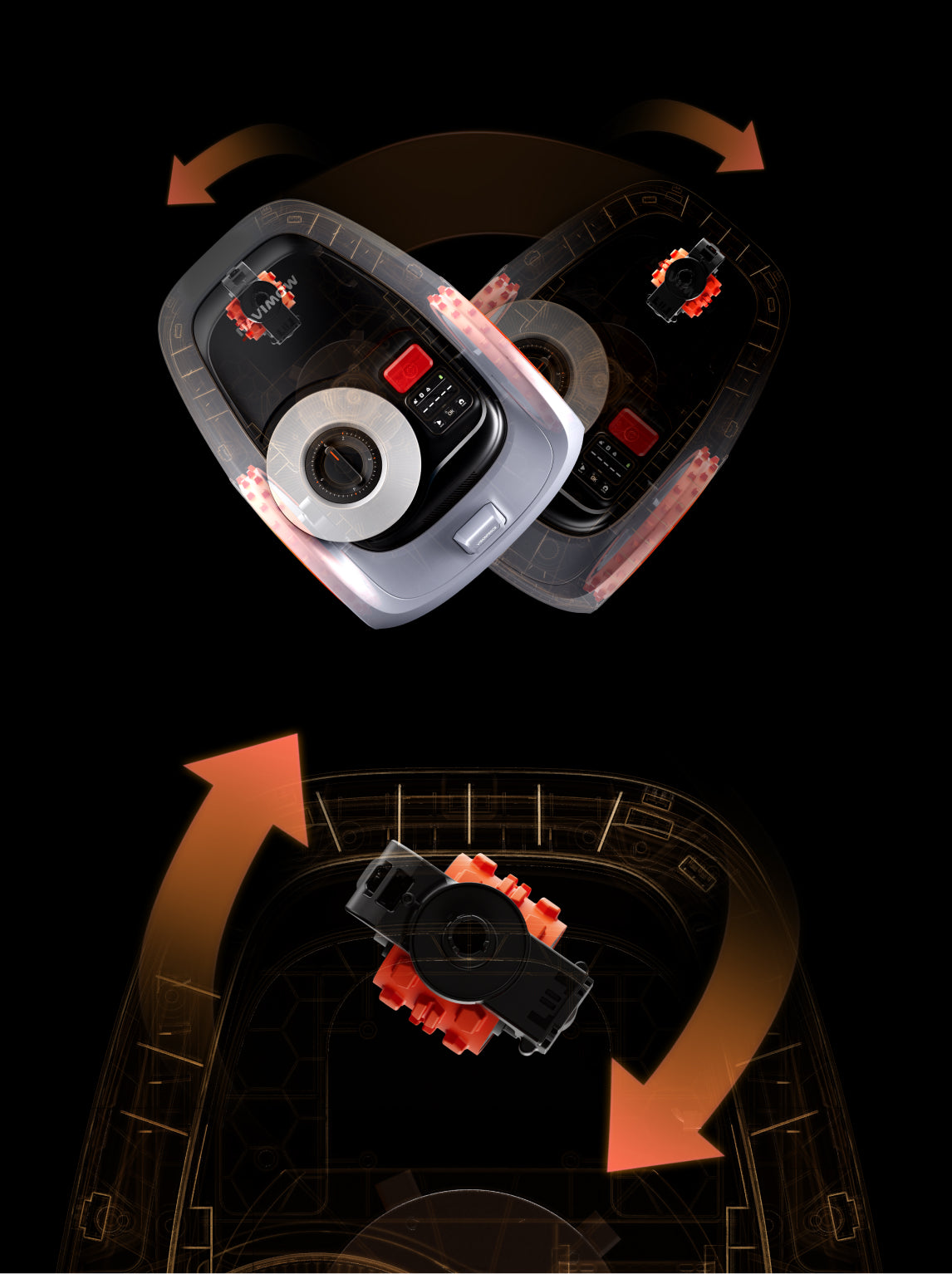
On the other hand, robotic lawnmowers use disposable blades. You can easily replace them by loosening and tightening a screw. Replacing them is effortless and requires minimal time. But the important point is that the blades last longer. They can last up to 100-150 hours of use or longer. They are thin and extremely sharp to cut grass tips with utmost perfection.
That's why you can switch to a robotic lawnmower to make your life easier. Not only can it help you get rid of the frequent blade sharpening, but it can also make lawn mowing automated. You only need to set the schedule, and the mower automatically mows your lawn.
Navimow i110 is an excellent choice for easy and quick replacement of blades. It can mow your lawn with perfection with its sharp blades. It can work in complex lawns as it can detect obstacles, which is an added protection for the blades. There are fewer chances of damaging the blades.

You can control the mower through the application, schedule mowing, and get real-time updates. It also keeps an eye on the real-time weather forecast to mow your lawn when it's the best time to cut grass. If you want hassle-free lawn mowing, get it and put lawn maintenance on automation.
FAQs
What is the easiest way to sharpen a lawn mower blade?
The easiest way is to use an angle grinder and sharpen the blade in no time. It removes the rust from the surface, gets rid of nicks, and ensures a smooth finish. Just maintain a 30⁰ or 45⁰ consistent angle throughout.
Can I sharpen my lawn mower blade without removing it?
No, it is not recommended to sharpen a lawnmower blade without removing it. You won't be able to sharpen it properly. Secondly, you might end up harming the lawnmower during sharpening. Thus, it is better to remove the blade. You only need to remove one nut. Then, place it on a vice and sharpen it with perfection.
Is it worth sharpening lawn mower blades?
Yes, sharpening is worth it. It helps in the smooth cutting of the grass blades and gives your lawn an aesthetic appeal. It also reduces the number of passes. But it is only effective if the wear and tear on the blade is bearable. If it is extensively damaged, you should replace it.
What is the best tool to sharpen mower blades?
A metal file is the best tool for beginners and precise sharpening. It is easy to control the angle and get excellent results. However, it requires time and effort. In contrast, an angle grinder is a better option for removing nicks on the blade and doing quick sharpening.