Does your lawn look thin and patchy? Many people would have suggested overseeding it in spring. But you’re still confused about how to complete that process.
It’s not just sprinkling some seed on the soil and hoping water will do the rest. You need to prepare the soil first and then follow a proper sequence of steps to overseed correctly.
In this blog, you will find all the steps you need to follow to overseed a lawn in spring. We’ll cover every important detail so you get the results you expect after putting in the effort.
What is Lawn Overseeding?
In your lawn, you might have seen thin patches, weak growth, or areas with little to no grass. That’s very common, probably because of the seasonal changes or foot traffic. Overseeding is a common annual practice to solve this.
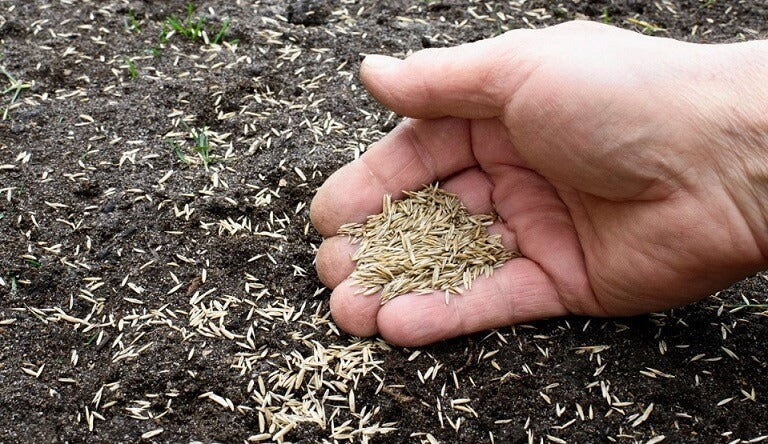
Lawn overseeding means spreading new grass seed over an existing lawn without tearing everything up. It refreshes the turf, improves density, and helps the lawn recover from damage or seasonal stress.
It is done to boost lawn health, improve color, repair worn-out areas, and maintain a full look throughout the season. Overseeding also helps counter natural turf decline because most grass varieties slow down as they age.

Fall vs Spring Overseeding
There’s often a lot of debate on the right season for overseeding. Some say fall, some say spring. Actually, both options can work. The choice is actually dictated by the nature of the grass you plan to plant.
For cool-season grasses, Fall is best. Spring works as a second option when soil temps reach 50–65°F, around mid-March through May 15. Seeding beyond May 15 becomes increasingly risky as summer heat and weed pressure intensify.

Whereas, for warm-season grasses (Bermuda, Zoysia, centipede), Spring is ideal, specifically late spring when soil temperatures climb above 65°F.

|
Fall (Cool Season) |
Spring (Cool-season) |
Spring (Warm-season) |
|
|
Soil Temp |
Warm (65°F) |
50–65°F |
65–75° |
|
Weed Pressure |
Low |
High |
Moderate |
|
Germination Speed |
Fast (soil warmth helps) |
Slower — cold soil risk |
Good in late spring |
|
Ideal Timing |
Late Aug – mid Sept |
Mid-March – May 15 |
Late April – June |
|
Verdict |
Best for cool-season |
Second best option |
Best for warm-season |
How to Overseed a Lawn: All Key Steps
Overseeding works best when you follow a clear plan. You first prepare the soil so it’s ready to support new growth, and then you introduce a new guest (fresh seed) so it gets the conditions it needs to settle and sprout.
1) Diagnosis of Lawn Problems
In certain cases, there might be underlying soil issues that block healthy growth. Compacted soil, heavy thatch, or nutrient imbalance - all of them weaken the lawn and reduce germination. Moving forward with overseeding without identifying these problems would only repeat the same results, even after adding new seed.
One key check is the soil’s pH. It signals how acidic or alkaline the soil is, which directly affects nutrient availability. If it’s too low or too high, the lawn won’t absorb nutrients properly. In that case, you may need amendments like adding lime to raise the pH or sulfur to lower it. Compost can also help improve structure and organic content before you overseed.

2) Mowing
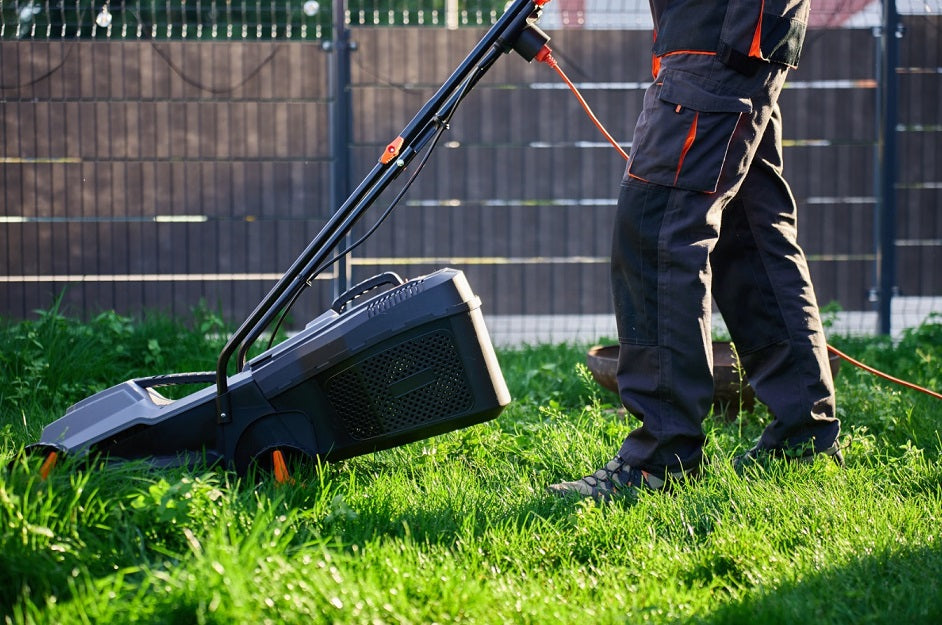
A couple of days before you plan to overseed, it’s recommended to mow the lawn to around 1.5 to 2 inches. Don’t scalp the grass. Just keep it short enough so the soil surface is more exposed and the seeds can settle.
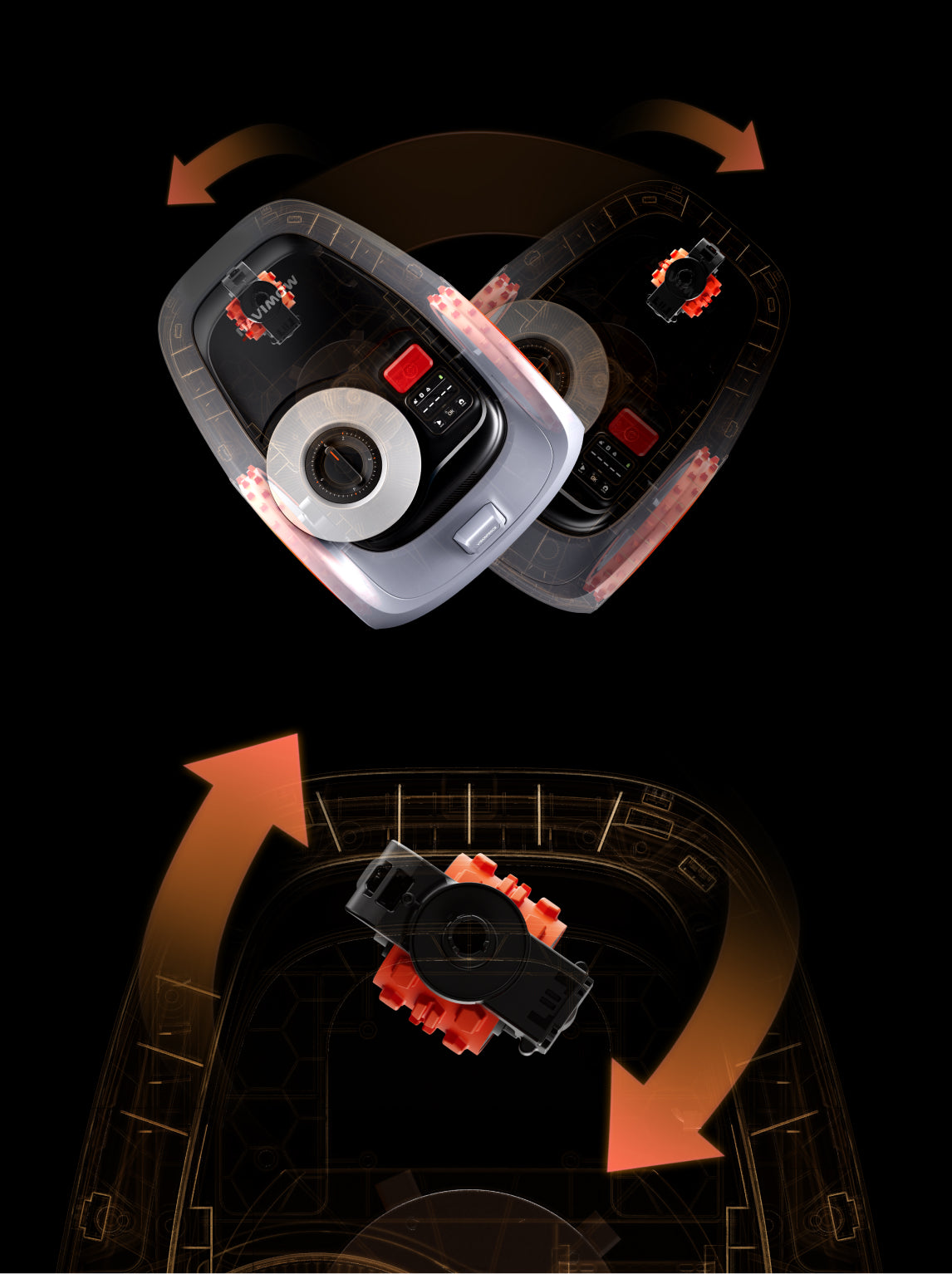
For quick and easy mowing, you may use a robotic lawn mower. It will save you a lot of time and automatically mow the grass and maintain it at the height you want. After mowing, don’t leave the clippings on the lawn. Collect them so they don’t form a layer that blocks the seed from reaching the soil.

3) Aeration and Dethatching (If Needed)
Aeration in spring or before overseeding is optional and depends entirely on your lawn’s condition.
If you have a thick thatch layer that feels spongy or you notice the seed is unable to touch the soil properly, dethatching is the method to choose. It clears the dead grass layer and removes the barrier that blocks water, air, and seed from reaching the soil.

Whereas, if the soil feels hard underfoot or the grass roots look shallow, aeration is better. The compacted soil stops water and nutrients from moving down to the root zone. Aeration opens small holes in the soil, reducing compaction and creating spots where new seeds can settle.
You don’t always need both. Some lawns only need dethatching, some only need aeration, and some need neither. The goal is to improve seed-to-soil contact, because without that, overseeding won’t perform well.

4) Topdressing
A thin layer of compost or topsoil (no more than ¼ to ½ inch) applied after spreading seed dramatically improves seed-to-soil contact, retains moisture, and protects seeds from drying out or washing away.

Peat moss works particularly well as a topdressing because it changes color, dark when moist, light brown when dry, which gives you a visual cue for when to water.
5) Selection of Grass
You have two basic choices: stick with the same grass you already have or introduce something different. You can keep the same mix already growing in your lawn, or you can use this overseeding round to upgrade the turf.
Here, I want to clarify between two terms, interseeding and overseeding, which often get mixed up a lot. Interseeding means adding seed of the same species into the existing stand. Overseeding means applying a new species of seeds to an existing lawn.
Be mindful of the location, too. Choose a grass type that fits your climate. Cool-season grasses work best in northern, eastern, and western regions. Warm-season grasses fit southern and southwestern areas where soil temperatures rise earlier and stay warm longer.
Grass growth rate also varies largely. Some grasses germinate quickly, which helps in spring’s short window. For instance, the Perennial ryegrass sprouts in about 5 to 10 days, making it a safe pick if you’re overseeding early or mid-spring. Whereas Kentucky bluegrass takes longer. It may take 14 to 30 days before you see anything.
If you overseed late with a slow-germinating grass, the seedlings may not toughen up before summer heat, and you might need to overseed again in fall.

6) Calculating the Amount of Grass Seed Needed
Measure the dimensions of the lawn you plan to overseed and multiply them to obtain the area. For example, if the patch is 10 ft by 100 ft, that’s 1,000 sq. ft. If the space is irregular or you’re overseeding the entire lawn, break it into smaller rectangles, measure each, and add them up.
Once you have the total area, look at the seeding rate. This is usually written on the seed bag. If it isn’t, follow these general guidelines:
- For routine maintenance where grass is still fairly thick, use 2 to 4 pounds per 1,000 sq. ft.
- For lawns with bare patches, use 4 to 8 pounds per 1,000 sq. ft.
- For renovation-grade thinning, 8 to 12 pounds per 1,000 sq. ft.
To calculate the amount of seed you should buy, divide your measured area by 1,000 and multiply by the seeding rate.
Amount of Seed (lb) = Area (sq ft) / 1000 x Seeding Rate (lb per 1,000 sq ft)
Using the 1,000 sq. ft. example with a mid-range overseeding rate of 6 pounds per 1,000 sq. ft., the calculation would be:
1,000 ÷ 1,000 × 6 = 6 pounds of seed
If you're overseeding into a lawn that still has reasonable coverage, you can reduce the standard rate by up to 50%. For example, Kentucky bluegrass typically calls for 3–4 lbs/1,000 sq ft on bare ground, but only 1–2 lbs/1,000 sq ft when overseeding an existing stand.
|
Grass Type |
Seed rate / 1,000 sq ft |
Overseeding rate |
|
Creeping bentgrass |
1–1.5 lb |
1 lb |
|
Kentucky bluegrass |
3–4 lb |
1–2 lb |
|
Red fescue |
4–6 lb |
2–3 lb |
|
Turf-type tall fescue |
6–8 lb |
3–4 lb |
|
Tall fescue |
8–10 lb |
4–5 lb |
|
Annual ryegrass |
7–9 lb |
3.5–4 lb |
|
Perennial ryegrass |
7–9 lb |
3.5–4 lb |
7) Fertilization
Fertilization can be done before or after overseeding. Both approaches are common, and each has its own logic.
If you apply fertilizer before overseeding, it prepares the soil with nutrients that help early root development. A light starter fertilizer works here because starter formulas carry phosphorus, which supports new roots.
If you apply fertilizer after overseeding, the idea is to avoid disturbing the seedbed during prep. You put the seed down first, then lightly fertilize so the nutrients are available as soon as the seed starts to germinate.
Further reading: How to Fertilize Your Lawn?

8) Spreading Seeds
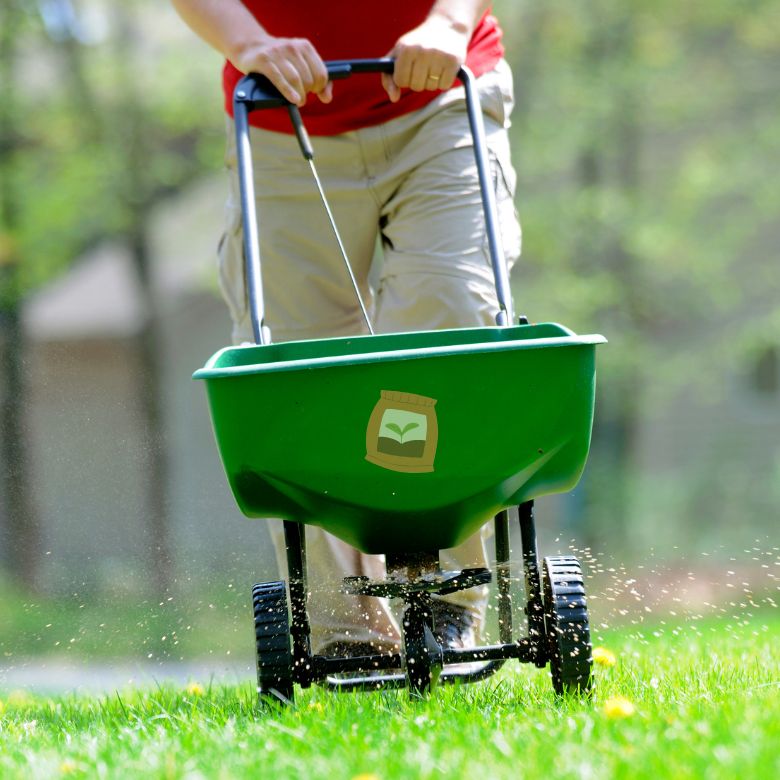
Once the soil is prepared, you can spread the seed. Choose the tool based on the size of your area. For small patches, you can do the job with a handheld spreader. For medium to large-sized areas, the recommended option is a drop spreader or broadcast spreader.
Here’s how to spread seeds:
- Fill the spreader with seed.
- Set the dial to half the rate printed on the seed bag.
- Walk straight lines back and forth to apply the first half.
- Turn 90 degrees and repeat for the second half.
-
Use the back of a rake and pull lightly over the surface so the seed settles into the topsoil.
9) Roll After Seeding for Better Seed-to-Soil Contact
After raking seed into the soil, press it in using a lawn roller. Rolling presses seeds firmly into the ground, improving germination rates significantly. This step is one of the most commonly skipped and one of the most commonly blamed for poor germination results. For large lawns, you can rent a water-filled roller at most hardware stores.

10) Watering
You should know how long to water new grass seeds. New seeds need consistent moisture, not heavy soaking. So, you must be careful about the duration and frequency.
Lightly water the overseeded area at least twice a day. Keep each session short, around 10 to 15 minutes. Continue this pattern until the seeds germinate, which usually takes 2 to 4 weeks, depending on the grass type.
Once the seedlings strengthen, move to the regular lawn care: once or twice a week with about 1 to 1.5 inches total.

How to Control Weeds When Overseeding?
When overseeding, there’s often a concern about weeds taking advantage of spring conditions. Spring has warm soil and shifting temperatures, so weed seeds have the same opportunity as the grass seed does.
You can apply different approaches based on grass types. In case of warm-season lawns, you usually have enough time to apply a pre-emergent early in spring. One early application can hold off common weeds for about 9 to 12 weeks.
However, for cool-season lawns, the timing is tighter. These grasses need to be overseeded earlier in spring, which means you can’t wait for a long pre-emergent window to pass. In this case, rely on traditional weed-control options, like hand plucking or the use of herbicides (with mesotrione) to control weed growth.
Final Words
Spring is considered one of the ideal times to overseed, as the temperature and conditions support early growth. But overseeding requires more than just picking a season.
You have to carefully assess your lawn, prepare the soil, mow it right, and follow each step in order, so the lawn gets a complete reset before new seed goes in. Only after doing the groundwork properly can you expect the new grass to take hold and give you the thicker lawn you’re aiming for.
FAQs
What is the difference between overseeding and interseeding?
Overseeding is adding new seed to an existing lawn, usually a different type. Interseeding is more specific and means adding seed of the same species to boost density without changing the lawn’s makeup.
How to overseed an existing lawn in spring?
Mow short, clean up debris, fix soil issues, spread the seed at the right rate, rake lightly for soil contact, and keep the top layer moist until germination.
Can I overseed without aerating?
Yes, as long as the soil isn’t compacted and the seed can reach the soil. Aeration is only needed if the ground feels hard.
What are the pros and cons of spring overseeding?
Spring overseeding helps fill thin spots and gives the lawn a quick boost before summer, especially if you missed the fall window or have warm-season grasses. The downside is that spring comes with higher weed pressure and a shorter establishment period, so seedlings must be managed carefully to survive the heat.