Have St. Augustine in your lawn and want to keep it healthy? How short should it be cut, how much water does it need, and why does it sometimes turn pale or thin out?
Many of these questions come up because St. Augustine behaves differently from other warm-season grasses. It spreads through stolons, prefers a taller mowing height, and reacts promptly to changes in water and soil nutrition. However, when inputs are well managed, they form a dense lawn that holds up in warm climates.
This article explains how to care for St. Augustine grass step by step. You will learn how to water, mow, fertilize, and prevent pests and diseases before they spread.
An Overview of St. Augustine Grass
St. Augustine grass (Stenotaphrum secundatum) is a warm-season turfgrass believed to have originated in the Gulf of Mexico. Today, it is widely used across the southern United States, Mexico, Australia, and other warm coastal and subtropical regions. You may also hear it called buffalo turf in Australia or Charleston grass in some parts of the United States.
It belongs to the Poaceae family, which is the true grass family that includes cereal crops and turf species. St. Augustine forms a dense lawn through stolons that creep across the soil surface. The leaves are broad (around ⅓ inches) compared to most turfgrasses, usually medium to dark green, which makes it easy to identify.

One of the key traits of St. Augustine is shade tolerance. It's an excellent warm-season grass for shade. Although it prefers sunlight, it performs better in partial shade than most warm-season grasses. Another important characteristic is salt tolerance, which makes it common in coastal environments.
|
St Augustine Characteristics Table |
|
|
Scientific Name |
Stenotaphrum secundatum |
|
Common Colors |
Medium to dark green |
|
Types / Cultivars |
Floratam, Raleigh, Palmetto, Seville, Sapphire, Delmar |
|
Blade Width |
Broad; typically 4–10 mm |
|
Recommended Mowing Height |
About 2.5–4 inches (6–10 cm) |
|
Native / Origin Regions |
Caribbean, Gulf Coast, Central America, coastal subtropics |
Ideal Growing Conditions
For any grass, growth depends mainly on climate, soil, and sunlight. St. Augustine grass performs well when these three conditions line up with its natural biology.
Climate
St. Augustine is a warm-season grass, which means it grows best in temperatures between about 80–100°F (27–38°C). It tolerates heat and humidity well and is common in coastal and subtropical regions. Growth slows as temperatures drop below 60°F (15°C), and the grass may go dormant in colder climates.
Sunlight
It can stay healthy in partial shade where many warm-season grasses fail. Around 4 to 6 hours of direct or filtered sunlight per day is usually enough for most cultivars.

Soil
St. Augustine grows well in a wide range of soils, from sandy coastal soils to heavier loams. It prefers well-drained soil with a pH between 5.0 and 7.5. Poor drainage, compaction, or waterlogged soil increases the risk of disease and root decline.
Watering Requirements
Augustine is one of those grasses that heavily relies on water for steady growth. However, once it is well-established, it develops moderate drought tolerance and can survive short dry periods. Its water needs are similar to most warm-season turfgrasses, averaging about 1 inch of water per week. For more details, check out how long to water grass.
How Often to Water
The frequency of watering depends on soil type and weather. Sandy soils drain quickly, so they may need lighter but more frequent watering. Clay soils hold water longer, so watering can be deeper and less frequent.
In hot summer conditions, the grass may require additional irrigation to prevent stress. During cooler months, watering frequency can be reduced as growth slows. Experts recommend watering deeply and infrequently. The soil should be moistened 6–8 inches deep to encourage deeper roots.

Underwatering Signs
Footprints remaining visible after walking, blades folding lengthwise, or a dull bluish-green color developing across the turf. Overwatering is also not recommended since it weakens its roots and harbors diseases.
Mowing Practices
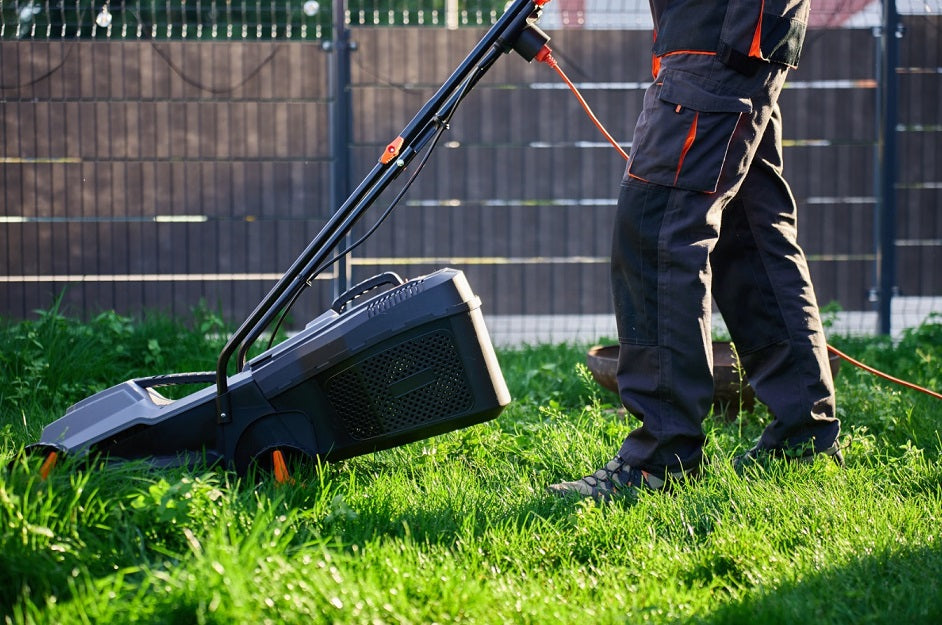
Mowing is necessary for every lawn because it keeps the grass at a height that supports root health, density, and resilience.
Mowing Height
For St. Augustine grass, the recommended mowing height generally falls between about 2 1⁄2 and 4 inches, with many turf specialists suggesting around 3–4 inches for most conditions. Refer to our grass cutting height chart for more details.
One-Third Rule of Cutting
A fundamental guideline in mowing is the one-third rule, i.e., you should never remove more than one-third of the grass blade length in a single mowing. Cutting more than this stresses the plant and slows recovery.

When to Mow?
In active spring and summer growth, weekly or biweekly mowing is common. In cooler weather or during slower growth, reduce frequency. Always use a sharp blade to make clean cuts; dull blades tear the grass and increase stress. Here is a detailed guide on how often to mow your lawn.
Clipping return, or mulching, is mostly preferred because clippings decompose quickly and return nutrients to the soil. Bagging is acceptable if the lawn has disease or a heavy thatch layer.
Fertilization Guide
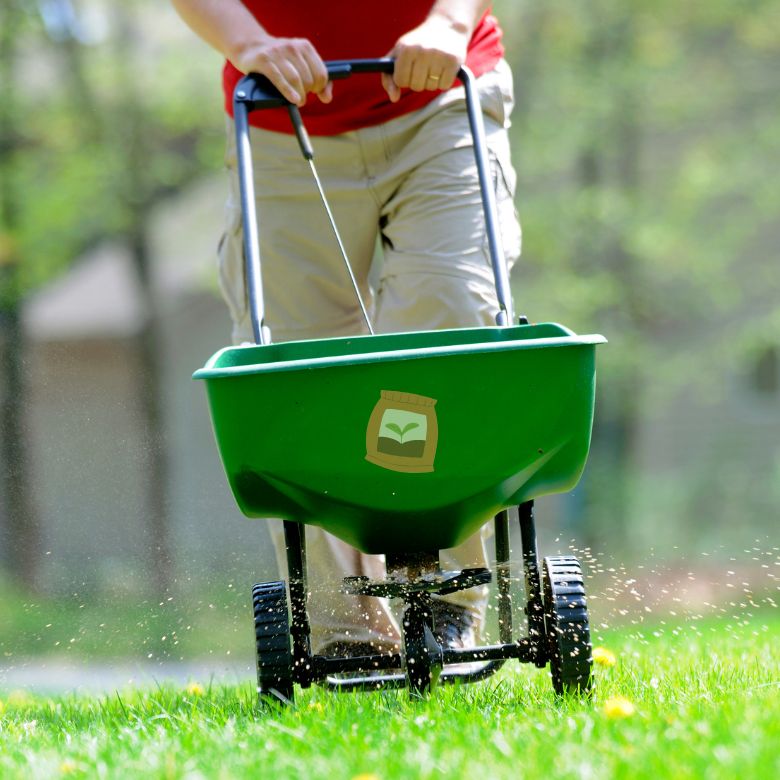
St. Augustine grass depends heavily on nitrogen for leaf growth and color. As per an estimate, its nitrogen demand is twice that of Bermuda. A recommendation is about 2 to 4 pounds of actual nitrogen per 1,000 square feet per growing season.
You can begin fertilizing after the lawn has fully greened up in spring. For the exact time, check out when to fertilize your lawn in spring. Apply fertilizer when the grass is actively growing and not under heat or drought stress, at least once a year.

Some of the experts we talked to suggested splitting the annual nitrogen into two to three applications during the growing season. Like you can do one in late spring and once before late summer ends.
Have a higher nitrogen number relative to phosphorus and potassium (for example, 3:1:2 or 4:1:2), unless a soil test indicates otherwise.
Weed Control
Most weed problems start when the turf is stressed by low mowing, drought, compaction, or poor nutrition. So the first line of defense should be cultural care.
Pre-emergent Control
To stop annual weeds like crabgrass before they sprout, apply a pre-emergent herbicide in early spring, just before soil temperatures warm into the germination range. In some regions, a second application in late fall may be useful for winter weeds.
Cultural Prevention
Weeds usually decrease when:
- Mowing height is kept at 3–4 inches
- Soil is not compacted
- The lawn receives consistent moisture
- Fertilization follows recommended nitrogen rates
Pest and Disease Management
St. Augustine grass is not completely immune to pests and diseases. Some common threats include:
Chinch Bugs
These insects suck sap from St. Augustine grass and inject toxins, which cause dry, yellow-brown patches that often start in sunny areas during hot weather. Damage can look like drought stress.
To prevent this, keep thatch (the hiding place for such bugs) low and water correctly so the lawn is not stressed. If activity is confirmed and populations are high, use an insecticide for spot treatment. In the case of too much thatch, you can do lawn dethatching.
Grubs
White grubs feed on roots below the soil, leading to weak turf that lifts easily from the ground. Its damage is often worse in late summer. The prevention of such bugs is water and aeration. However, if their counts are high, apply insecticides (Carbaryl or trichlorfon) at the specific place.

Gray Leaf Spot
This fungal disease creates small gray-brown leaf lesions during warm & humid conditions and can thin the turf if severe. For treatment, fungicides are recommended.
Brown Patch (Large Patch)
Appears as circular or irregular yellow-brown areas, usually in humid or poorly drained conditions where grass blades stay wet. Improve drainage, avoid evening watering, and do not overfertilize with nitrogen in warm, wet weather. Fungicides can also help when applied early in disease development.
Take-All Root Rot
A soil-borne fungus that attacks the root system, leading to thinning turf and slowly expanding yellow-green patches. The grass often pulls up easily due to root decline. It is common in humid regions and poorly drained soils.
In this case, fungicides are not that effective. You need to avoid heavy nitrogen, improve drainage, and maintain proper mowing height.
Thatch and Aeration
Thatch is the layer of undecomposed organic material that sits between the soil and the green grass blades. A thin layer under about ½ inch is normal and useful because it helps moderate soil temperature and retain moisture.
Problems begin when thatch becomes thicker than ½ inch. At that point, essential nutrients struggle to reach the soil. The lawn becomes shallow-rooted, and the warm, moist layer can support pests and fungal disease.

Compared to many other warm-season grasses, St. Augustine is not especially prone to thatch buildup. However, if it does develop thatch, the best time to remove it is late spring to early summer when the grass is actively growing.
Aeration
Aeration removes small plugs of soil and opens channels so air, water, and nutrients move back into the root zone.
Aerate St. Augustine in early summer during peak growth so the turf recovers quickly. Clay soils often require annual aeration, while sandy soils normally need it every two to three years.
A simple way to test if the soil needs aeration is to push a screwdriver into the soil. If it barely penetrates, aeration is needed. If it slides in easily, the soil is still open and breathable.
Further reading: Should you aerate your lawn in spring?

Overseeding and Repair
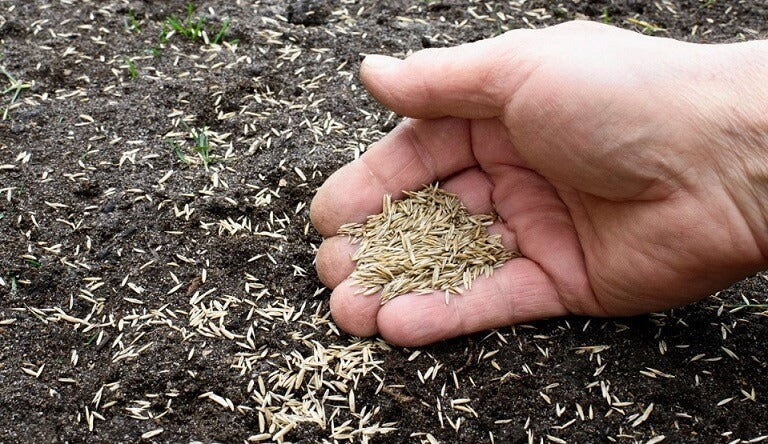
Overseeding is common with some warm-season grasses like Bermudagrass, but it is not recommended for St. Augustine.
There is another key limitation: St. Augustine produces far fewer viable seeds than other turf species, so seed is not commercially available in most regions. That means you cannot overseed thinning areas or bare spots the same way you would with cool-season grasses.
If you need to establish or repair a St. Augustine lawn, plugging or sodding is the correct approach. Early summer, around June, is often ideal because the grass is in its active growth phase. Warm soil and stable temperatures help the sod root faster. Planting later in the season is still possible, but heat and drought pressure can slow establishment in hotter regions such as Texas.
As a general rule for warm-season turf, establishment works best when soil temperatures are between about 65 and 70°F and daytime air temperatures fall between 70 and 95°F.
Conclusion
One thing is clear: lawn care, whether it's St. Augustine or any other turf, works best when you follow sound cultural practices. Proper watering, the right mowing height, periodic fertilization, and good soil management do most of the work. When these basics are handled well, the lawn stays healthy without any intervention.
Mowing, however, is still the most repetitive and time-consuming task. That's where Segway Navimow changes the experience. Our robotic mowers handle the cutting for you, maintain a consistent height, and return to their charging dock when the job is done.
Explore our robotic lawn mower range to see how automation can fit into your lawn care routine!