If you are a lawn owner, you might have heard about the 1/3 rule. And if you are unsure about what it is and how you can follow it, you’re not alone.
The 1/3 rule for lawns is a golden rule to determine the right height to mow grass to ensure its optimal health and growth. However, it often confuses beginners.
We’re here with a complete guide on the 1/3 rule for lawns. We will explain what it is, why it matters, when & when not to follow it, and everything else you should know. It will clear all your doubts and answer most questions.
What is the 1/3 Rule?
The one-third rule for lawns is a principle that many lawn owners follow to manage their grass height. It’s a golden rule that allows them to cut their grass while ensuring its optimal health and preventing weed overgrowth.
The rule is extremely simple:
You can mow no more than 1/3 of the grass blade’s total height. For instance, if the height is 3 inches, you can mow at most 1 inch at a time. You can do less, but not more.
Further reading: Best Height to Cut Grass
Why Does the 1/3 Rule Matter?
The 1/3 rule is extremely beneficial for the lawn. Let’s see how.
Protects Energy Reserves
Your grass has limited energy, and it’s stored in the lower 1/3rd part of the grass blade. When you follow the 1/3 rule, the lower part remains intact, which means the reserved energy is not wasted.
This energy is used by the grass for its growth, which translates to better health. You’ll witness lush, green, and healthy grass on your lawn.
Prevents Over/Under Sun Exposure
If the grass is too long, it won’t allow the sunlight to reach the soil, which keeps the soil damp for a long time, creating a favorable environment for pathogens.
And if the grass is too short, it is over-exposed to sunlight. The water evaporates quickly, and it affects the grass’s health. If you overdo mowing, your green lawn will soon have patches, which will eventually lead to a scalped lawn.

But when you follow the one-third rule, you keep the grass at an optimal height. It is helpful in avoiding sunburn.
Avoids Uncontrolled Weed Growth
It is essential to control weed growth before it’s too late. The one-third rule helps you control weed growth naturally. If you follow it regularly, you won’t need to use chemicals in your lawn.
Because of the 1/3 rule, your grass blades have a thicker top. It makes your lawn denser. Due to this, the sunlight does not reach weed seeds and prevents their growth.
Keeps Grass Out of Stress
If you cut the lower portion of the grass where its energy is stored, you put it under stress. The grass loses its stored energy.
Secondly, it starts using the available energy to regrow the missing leaves because of mowing. It directs its energy from the roots to the upper part, which slows down or even stops the root growth.
The roots start suffering from a lack of nutrients. It becomes weaker over time and eventually dies. And then you see your green grass turning brown.
When You Should Opt for the 1/3 Rule?
As a Standard Practice
The 1/3 rule should be your standard practice to mow your lawn. It does not matter what the season is; you can mow with this rule. Just make sure your grass is healthy and not overgrown.
By choosing this as your standard practice, you can ensure the optimal health of your lawn year-round. It improves the lawn’s growth and makes it a thick and lush green lawn.
During Peak Spring Growth
During the peak spring growth season, you need to be extra careful. This is when your grass grows rapidly and reaches even 4.5 inches in a few days. It is because of the optimal temperature and frequent rains.
If you leave long grass on your lawn, it will promote diseases as the sunlight won’t be able to reach the bottom and create a damp environment for a long time. You need to mow more frequently to ensure the optimal health of your lawn.

After Fertilization
After fertilization, your grass grows rapidly and needs more frequent maintenance. It is better to mow only one-third of the height as the bottom is the fresh growth that you should keep.
It does not waste the fertilizer as the energy reserves are still intact at the bottom. It promotes excellent root growth and enhances the health of your lawn.
The Frequency to Mow Your Lawn by the 1/3 Rule
The 1/3 rule automatically defines the frequency of mowing.
You don’t need to dedicate specific days. Instead, you need to pay attention to the height of the grass blade.
There is no fixed number of mows per month; it could be more or less, depending on the season. For instance, you need to mow more frequently during the spring season.
First, you need to decide on the target height. Let’s say your target height is 3 inches. So, when the grass reaches 4.5 inches, you can cut one-third of it (1.5 inches).
Thus, it does not depend on the day or date. Whenever the height reaches 4.5 inches, it means you are ready to mow.
Maintaining 3 inches is suitable for most grass types and seasons. However, you can target 4 inches during hot summers.
Further reading: How often to mow your lawn?
When to Break the 1/3 Rule?
The 1/3 rule should be your standard practice. But when there is severe overgrowth, you must break it.
Typically, when the grass blades are 6 inches or higher, you should not follow the one-third rule. Just set your lawnmower to the highest setting and mow it. You can leave the grass about 4-5 inches after the mowing.
After that, let your grass recover for 2 to 3 days. Then, mow the grass again and bring it to the target height. And once that height is achieved, you can start mowing with the one-third rule to maintain your lawn.
Further reading: When to stop mowing your lawn
The Best Way to Implement the 1/3 Rule Hassle-free
Following the one-third rule is difficult for many lawn owners. The reason is that there is no fixed day or date.
Often, people dedicate weekends to mowing. But when you follow the one-third rule, you need to mow when the grass reaches a certain height, and it could be any day. You might not have time on that day, and that’s why the grass overgrows.
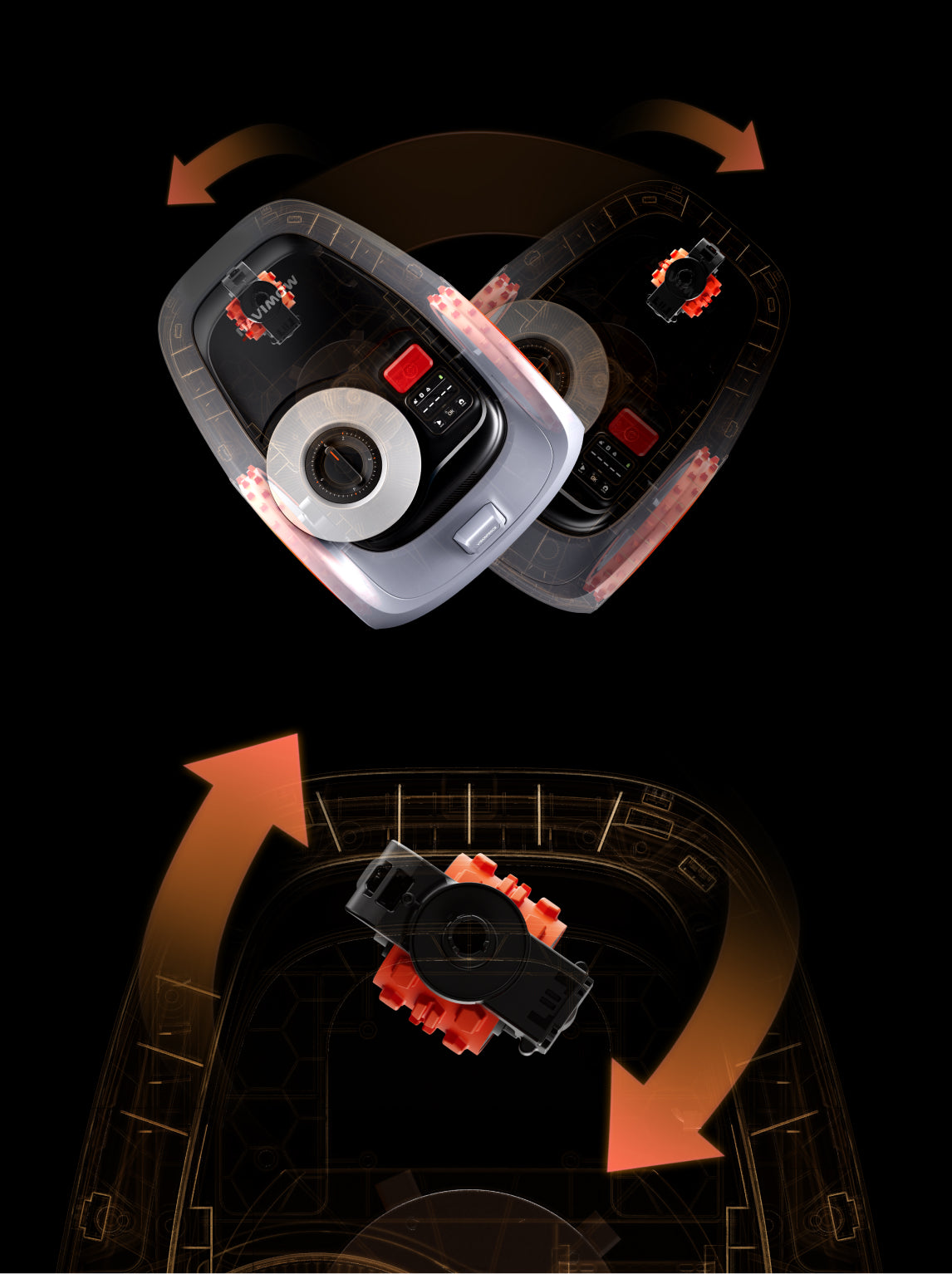
The best way to follow the one-third rule is to use a robotic lawn mower. You can schedule mowing according to height, and the mower will do everything on its own. Whether you are busy or out of the home, the mower will mow the grass at the selected time.
You can opt for Navimow i2 AWD. It’s an innovative robotic lawnmower that can be controlled remotely with an app. You can set the schedule and zone, and it mows the lawn automatically while dodging obstacles.

It mows your lawn precisely according to the adjusted height. It’s an AI-assisted robot that can work on any kind of lawn and terrain and understand the boundaries. It can intelligently monitor the weather forecast to mow your lawn at the right time.
FAQs
How much is 1/3 of a blade of grass?
Check the current height of a blade of grass. Divide the height by 3, and you will get one-third of the height. You can cut your grass no more than the answer you have obtained.
What height should you cut the lawn?
If your grass is not overgrown (above 6 inches), you should follow the one-third rule. Cut one-third of the grass height at a time.
Can I cut my grass two days in a row?
It is better to wait a few days after your first mow. It will allow the grass to recover from the stress and adapt to the changes. Mowing two days in a row is not recommended.