Every fall, fallen leaves raise a familiar question for lawn owners. Should they be removed, or can they be safely mulched into the grass?
Because many homeowners have faced patchy lawns in spring with dead spots where leaf piles sat too long, leaving them convinced that mulching is a gamble they can't afford to take. However, mulched leaves don't inherently kill grass; they only do so when applied too thickly or left as a pile without regular mowing.
In this article, we’ll explore the science behind mulching leaves, when it helps versus harms your lawn, and how modern lawncare tools (robotic mowers) have quietly transformed what's possible.
What Mulching Leaves Actually Means
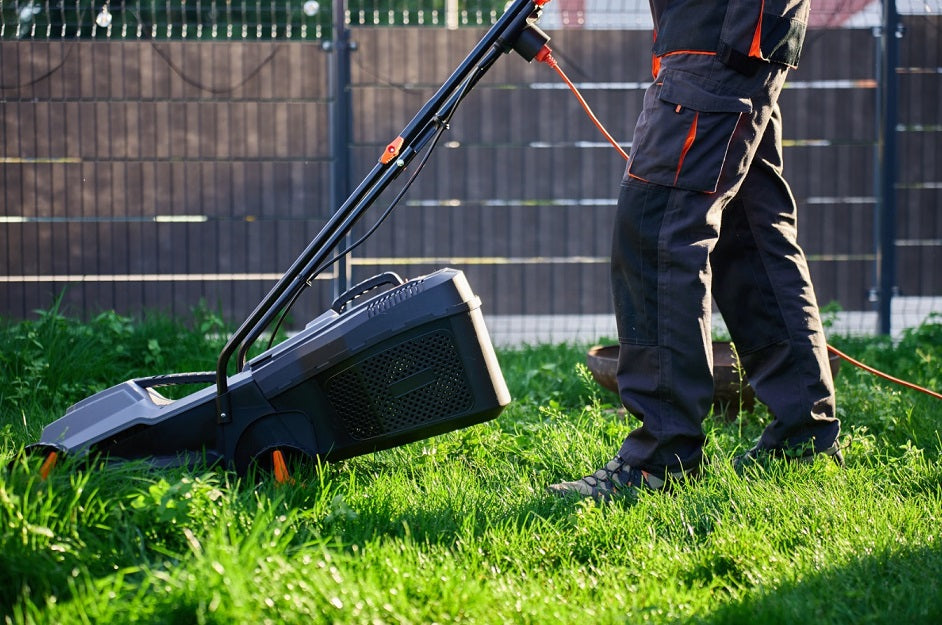
Mulching leaves is the practice of mechanically shredding fallen leaves and redistributing them across your lawn, rather than raking and bagging them for disposal. A lawn mower, traditional or robotic, is usually the tool that chops leaves into smaller and smaller pieces that can settle into the turf canopy.
When leaves are finely chopped, they decompose quickly with the help of soil microorganisms and return organic matter/nutrients to the turf system. But problems arise when leaves remain whole or are only partially cut. Large pieces not only decompose slowly but also form a dense mat that restricts air exchange and light penetration.
Benefits of Mulching Leaves
When leaves are finely mulched and allowed to decompose naturally on your lawn, they become one of the most effective and free-soil amendments available to homeowners.
Organic Matter Return
Mulched leaves add essential organic material back into your soil, improving its structure and texture over time. As leaf particles break down, they create tiny spaces in the soil that allow air and water to penetrate more deeply. This, in turn, helps the soil retain moisture during dry periods.
Microbial Activity Boost
Decomposing leaves are a feast for beneficial soil organisms: bacteria, fungi, earthworms, and countless microscopic creatures that form the foundation of healthy soil. These organisms break down organic matter, suppress disease-causing pathogens, and create nutrients in forms grass roots can easily absorb.
Slow-Release Nutrients
Leaves are packed with nutrients that trees have pulled from deep in the soil and concentrated in their foliage. When mulched, these nutrients are released gradually as decomposition occurs:
Carbon feeds soil biology and helps build long-term soil fertility. Trace minerals like calcium, magnesium, and potassium strengthen grass cell walls and improve stress tolerance. Nitrogen, though initially tied up during decomposition, is eventually released back to the grass in a steady, non-burning form.
Different leaves bring in different nutrients based on their nature. For instance, a mature oak tree's leaves can return up to 80 pounds of organic matter annually, the equivalent of one or two premium fertilizer applications.
Economic Benefits
Properly executed leaf mulching minimizes and, at times, eliminates the need for synthetic fertilizers. This can save you $50-150 annually. You also avoid the cost of yard waste bags and municipal pickup fees that many communities now charge.
When Mulched Leaves Can Harm or Kill Grass
So, you see, mulched leaves have a lot of benefits, but why do homeowners complain of grass being harmed or killed by mulching? Well, that only happens in certain circumstances.

#1: Excessive Leaf Load
The most common cause of grass damage is simply too much leaf material in one place. When unshredded leaves form a layer thicker (an inch or more), they create a physical barrier that blocks sunlight from reaching grass blades below.
Without light, photosynthesis stops, and grass begins to yellow and weaken within days. The thick layer also restricts airflow to the soil surface, creating anaerobic (oxygen-deprived) conditions that stress grass roots and promote harmful bacteria.
#2: Poor Shredding and Matting
Coarsely chopped leaves don't settle into the turf; they sit on top of it, overlapping to form an impermeable mat. This is quite problematic with broad leaves from oak, maple, and sycamore trees, which have large surface areas and can interlock like shingles on a roof.
#3: Nitrogen Immobilization
Did you know that leaves have a very high carbon-to-nitrogen ratio, around 50:1 or 60:1? When large volumes of leaves decompose all at once, soil microbes need nitrogen to break down all that carbon.
If there isn't enough nitrogen available in the soil, microbes will pull it from the surrounding soil, nitrogen that your grass roots desperately need. This temporary “nitrogen tie-up" or immobilization causes grass to turn yellow and show stunted growth.
#4: Disease Promotion
Prolonged moisture retention under thick leaf layers creates ideal conditions for turfgrass diseases. Fungal pathogens thrive in dark, damp environments with poor air circulation, exactly what a heavy leaf covering provides.
Snow mold is particularly common when leaves are left on the lawn going into winter, as the insulating leaf layer traps moisture against the grass during freeze-thaw cycles.
Also Read: The Complete Lawn Care Guide
How to Avoid Leaf Mulching Problems
So, what’s the solution to preventing grass damage while still enjoying the benefits of mulched leaves? Well, there are primarily two ways: the old-school manual approach and the modern automated method.
The Traditional Approach: Mulch and Spread
If you're using a traditional mower, you can chop the leaves into fine particles and then spread them evenly throughout your lawn with a rake or blower.
Get the shredded leaves scattered across the lawn surface, not piled in clumps or left in heavy windrows. Never bag mulched leaves and dump them in one spot, as this defeats the entire purpose and creates the exact smothering problem we're trying to avoid.
However, this approach is periodic and labor-intensive. You'll have to monitor leaf accumulation constantly, mow at least weekly during peak fall (sometimes twice weekly under heavy tree cover), and spend additional time after each mowing session redistributing any leaf piles.
The Modern Solution: Use Robotic Lawn Mowers
Robotic lawn mowers are autonomous tools that cut grass on a programmed schedule, and instead of bagging clippings, they mulch everything, grass and leaves alike, into fine particles.

Early Bird Discounts: Best AWD and LiDaR Mowers
Due to their continuous operation, they process small amounts of fallen leaves every single day or every other day, preventing the accumulation that causes grass damage. You set the schedule once, and the mower handles the rest automatically throughout the entire fall season without any manual spreading.
Conclusion
The grass-killing problem stems from the volume, not from the act of mulching itself. Grass does not respond negatively to mulched leaves. It responds to suffocation. When leaves are left unshredded or allowed to accumulate at one place on the turf, that’s when problems begin.
If you eliminate the labor involved in mulching and spreading leaves, switch to a robotic lawn mower. At Segway Navimow, we have a wide collection of robotic lawn mowers. Check out our mower guide for shortlisting one that matches your yard size and terrain requirements.