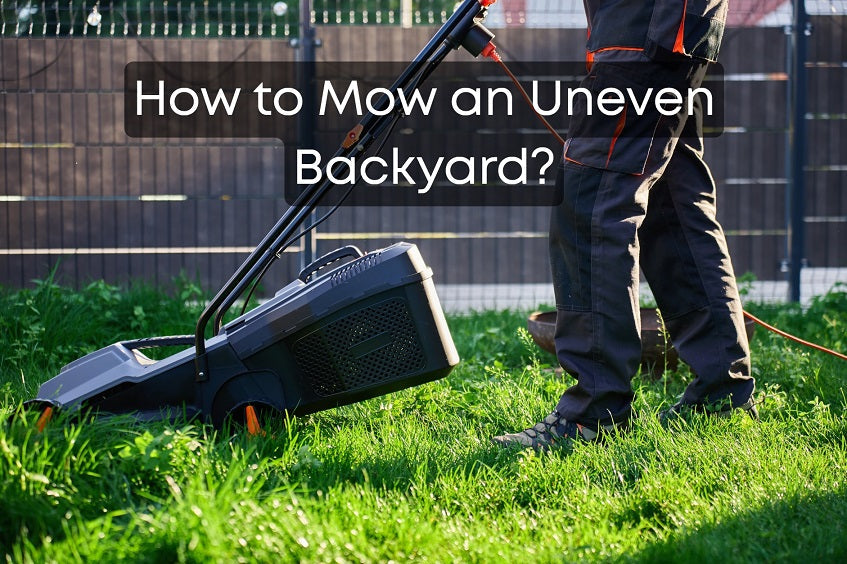
The sun is beating down on your neck. You can practically see the heat as it radiates off the pavement.
It's a Saturday morning, and while you should be at the lake, on a hike, or just sitting on your patio with a cold drink, you're staring down a formidable jungle in your backyard. The grass grew three inches since Tuesday, and you dread walking into the garage to drag out the heavy, dusty machine that smells like stale gasoline.
This is the weekend lawn-mowing dilemma. It steals your free time. It demands physical exertion when you'd rather be relaxing. It drains you.
Fortunately, you have choices to fix this. You don't just have to accept the sweat-drenched status quo. In this guide, we're going to break down the three main contenders in the lawn care game: the classic push mower, the helpful self-propelled mower, and the newest, the robotic mower.
We want you to stop working on your lawn and instead make your lawn work for you. By the time you reach the end of this guide, you'll understand exactly which machine will fit best in your life, and why. We'll also explain to you why smart technology like Navimow isn't just a luxury, but instead, is a necessary evolution for anyone who values their time.
Push Mowers: An Overview
You know these well: they're the traditional beasts of burden in the landscaping world. A push mower requires you to provide all the forward momentum. Although the engine spins the blade, it's your legs that do the rest.

You'll generally find three variations here:
- Reel Mowers: These are the old-school, non-motorized cylinders with blades. They snip the grass like scissors as you push. They are quiet but demand serious elbow grease. Check out what is a reel mower is for more details.
- Gas-Powered: The standard suburban noisemaker. You pull a cord, an engine roars to life, and you shove it across the turf.
- Electric/Battery-Powered: These ditch the gas can for a cord or a lithium-ion battery. They are quieter and start with a button press, yet you still have to push the weight of the unit.
The biggest advantage of a push mower is that it's cheap. If you have a tight budget, this is where you'll want to start your search. They also work fairly well on small lawns (ideally those that are perfectly flat). However, the downsides are significant, namely when it comes to labor. You pay with your energy; on a hot day in July, pushing a 60-pound machine through thick St. Augustine grass feels less like a chore and more like a grueling punishment.
Self-Propelled Mowers: An Overview
These machines bridge the gap between manual labor and automation. They look like push mowers, but have a built-in transmission system that drives the wheels. You engage a lever, and the mower pulls itself forward. All you have to do is steer.

The nuance in self-propelled mowers lies in which wheels happen to be turning.
A front-wheel drive (FWD) mower is great for flat yards with lots of obstacles, since you can easily tip the mower back to turn it, while a rear-wheel drive (RWD) mower is better for a lawn where extra traction is needed. RWD mowers work especially well if you bag your clippings, since the weight on the rear helps the tires grip.
Finally, there are all-wheel drive (AWD) mowers, which are the real tanks of the mowing world. They're designed to climb hills and power through rough terrain without slipping.
Self-propelled mowers are great because they significantly reduce the physical strain. With one of these mowers, you aren't shoving the weight anymore, but instead, are just guiding it. This makes them suitable for larger yards or properties with slopes that would make a push mower impossible to manage otherwise.
However, you do still have to be there. You're still walking every single square foot of your property, and you still have to clean the carburetor, do oil changes, replace spark plugs, and perform belt maintenance. Easier, but still works.
Comparing the Options: Push vs Self -Propelled Mowers
Now that you know the basics of each mower, let's dig deeper by comparing the key usage and impact of the two in our daily lives.
| Feature | Push Mower | Self-Propelled |
|---|---|---|
| Convenience/Effort | High - you're the motor | Medium - must guide & walk |
| Noise Level | 85-95 dB (gas) / 70-75 dB (electric) | 85-95+ dB |
| Cut Quality | ⭐⭐ | ⭐⭐⭐ |
| Slope Capability | Flat lawns only | Moderate slopes |
| Maintenance | Low (manual) / Moderate (gas) | High - belts, transmission |
| Maintenance | Low (manual) / Moderate (gas) | High - belts, transmission |
| Smart Features | None | None |
| Safety Risk | High - blade exposure, physical strain | Medium |
| Initial Cost | $150-$400 | $500-$800 |
| Time Investment | ~70 hrs/year | ~50 hrs/year |
Ease of Use
This is often the most important factor for homeowners: how much effort do you have to put in to get a decent result?
With physical mowers, the physical toll is high. There's simply no way around it: you're the motor. If your grass is wet or tall, the resistance increases. After 45 minutes, there's a good chance that your back will be aching, your shoes will be green, and you will be exhausted.
Self-propelled mowers offer reduced effort but are still very hands-on. You don't have to push, but you do have to walk at the mower's pace. If the mower is heavy, turning it at the end of a row takes muscle.
Lawn Suitability
Not all lawns are created equal. In fact, the topography of your lawn dictates which machine will survive it the best.
Push mowers are, again, strictly for small, flat lawns. If you have half an acre or significant hills to maneuver around, a push mower is a recipe for injury or burnout. They struggle on uneven ground, too, because the user has to stabilize the unit while pushing it uphill.

Self-propelled mowers are better suited for medium to large lawns, and if you have slopes, a rear wheel or all-wheel-drive model should be able to conquer them just fine. They handle bumpy terrain well because the large wheels and heavy decks provide momentum. Before buying a mower, you should know how much does a lawn mower weigh.
Cutting Efficiency
So, how does the grass actually look when you're done?
Push mower decks are usually smaller, meaning you have to make multiple passes to finish the yard. The pace tends to be inconsistent because it depends on how fast you walk. If you get tired and slow down, the blade speed might drop on some models, resulting in a more ragged cut.
Self-propelled mowers tend to boast wider cutting decks, allowing you to finish faster. Yet the quality of the cut still ultimately depends on your guidance. If you miss a strip or overlap too much, it shows.

Noise Levels
We mentioned noise and vibrations in the ease of use section, but noise deserves its own spotlight. It's a genuine source of discomfort for both the user and neighbors. Imagine mowing on a Saturday morning with a gas-powered machine roaring at full throttle; the sound disrupts the entire block.
In terms of noise order, gas-powered mowers lead as the loudest, followed by self-propelled models, and then robotic mowers as the quietest option. Gas mowers operate between 85-95 decibels, comparable to standing next to a busy highway. Electric mowers are better at 70-75 decibels, about as loud as a vacuum cleaner, but still noticeable enough to interrupt outdoor peace.
We have detailed out how loud a lawn mower is in a separate guide. You may go through it if you want to dive deeper into the science of lawn mower noise and its impact on hearing health.
Maintenance Requirements
You likely want to spend time enjoying your yard, not fixing tools in the garage.
Push mowers offer a simple design, which is a plus on the maintenance front. But if it's gas, you have oil, filters, and spark plugs to worry about. And if it's electric, you need to think about battery degradation over time.
Self-propelled mowers can be trickier to maintain because they have more moving parts. Transmissions fail. Drive belts snap. Cables stretch. Regular upkeep, then, is mandatory if you want the self-propel feature to actually work for you next season.
For electric versions, you might need to occasionally brush off grass clippings or change lawn mower blades a few times per season, but that's it. These mowers are designed for long-term reliability without the messy fluids or complex belts of gas engines. For more details, check out Gas vs Electric Lawn Mower.

Cost and Value
Low upfront cost matters, but the real cost of your labor is high. That's the unfortunate reality of push mowers. With self-propelled mowers, you'll experience a moderate to high cost, as a good one can run you $500 to $800. Robotic mowers come with the highest initial investment; you might spend $1,500 or more.
However, you need to calculate the value of your time. The average American spends about 70 hours per year on lawn care. If you value your free time at even just $20 an hour, a gas mower costs you $1,400 per year in lost time. A robotic mower will pay for itself in the first two seasons simply by giving that lost time back to you.
Environmental Impact
The world is shifting from fuel-based vehicles to electric options in order to reduce carbon emissions and adopt sustainable practices for a greener world. The same logic applies to lawn care equipment.
Well, the two old-school options, gas push and self-propelled mowers, are significant polluters. Studies have shown that a gas mower running for just one hour can produce emissions equivalent to driving a car for over 100 miles. If you mow weekly during the growing season, that's a surprisingly large carbon footprint just from maintaining your yard.
Electric mowers are cleaner since they produce zero direct emissions. However, their environmental impact also depends on how your local electricity is generated. If you’re a sustainable electricity source, such as solar for charging, the whole points seem more compelling.
The Modern Mowing Solution: Robotic Mowers
Then there are robotic mowers, which is where things get really interesting.
A robotic lawn mower is an autonomous robot that's designed to maintain your lawn without requiring you to lift a finger. It's kind of like a vacuum robot, but for the outdoors, and equipped with razor-sharp blades. 
These units are fully automated and live on a charging station in your yard. When the battery is full, and the schedule says "go," they deploy, using smart navigation systems to map your yard, avoid obstacles, and cut the grass a tiny bit at a time.
The pros here are overwhelming, particularly if you value time. You set it up once, and then it handles the rest. And while the upfront cost is absolutely higher than a cheap gas mower, you're buying back hundreds of hours of your life over the machine's lifespan. You get convenience, silence, and a lawn that looks like a golf course because it's being maintained daily rather than hacked at weekly.
Why Robotic Mowers Are the Future
We're far past the point where technology is not a gimmick anymore. It's a lifestyle shift. The transition from gas to electric robotics is happening fast, and for good reason.
Convenience and Time Savings
What if you could have a weekend that you didn't have to plan around the weather forecast? What if you could stop rushing home on Friday to beat the rain, or waking up early on Saturday to beat the heat?
With a robotic mower, you "set it and forget it," and reclaim your weekends entirely. You can schedule the mowing times via a smartphone app, or even have it mow at 10:00 AM on a Tuesday while you're still at work.
On the convenience side, these mowers operate fully autonomously. In the event of rain or wind, you don’t have to manually mow them around. They return to their charging docks on their own and resume work automatically when conditions become favourable.
Built-In Safety and Navigation Systems
Robotic mowers reduce many of the safety risks through built-in safety systems. Sensors detect obstacles, lift events, and abnormal movement, triggering automatic shutdown when needed.

Child and pet safety is also better managed around autonomous equipment. Segway Navimow mowers, especially our latest i2 AWD Series, feature EFLS™ technology to help mowers understand their surroundings more accurately, which improves obstacle detection and avoidance during operation.
Quick and Fine Grass Cutting
Robotic mowers provide the best overall cut in comparison to gas or self-propelled mowers. Since they don't cut tall grass once a week, instead trimming the tips of the grass constantly, it's healthier for the turf.

Not to mention, the Navimow X4 series cutter employs dual 180W cutters, which provide faster cutting (upto 2.6 ft/second), enabling you to complete the yard in one day, which would have taken multiple days with traditional options.
Variable Terrain and Yard Handling Capabilities
So, whatever the lawn size, small, medium, or large, you’re no longer worried upon strain that would result from mowing larger lawn. Robotic mowers ease that journey.

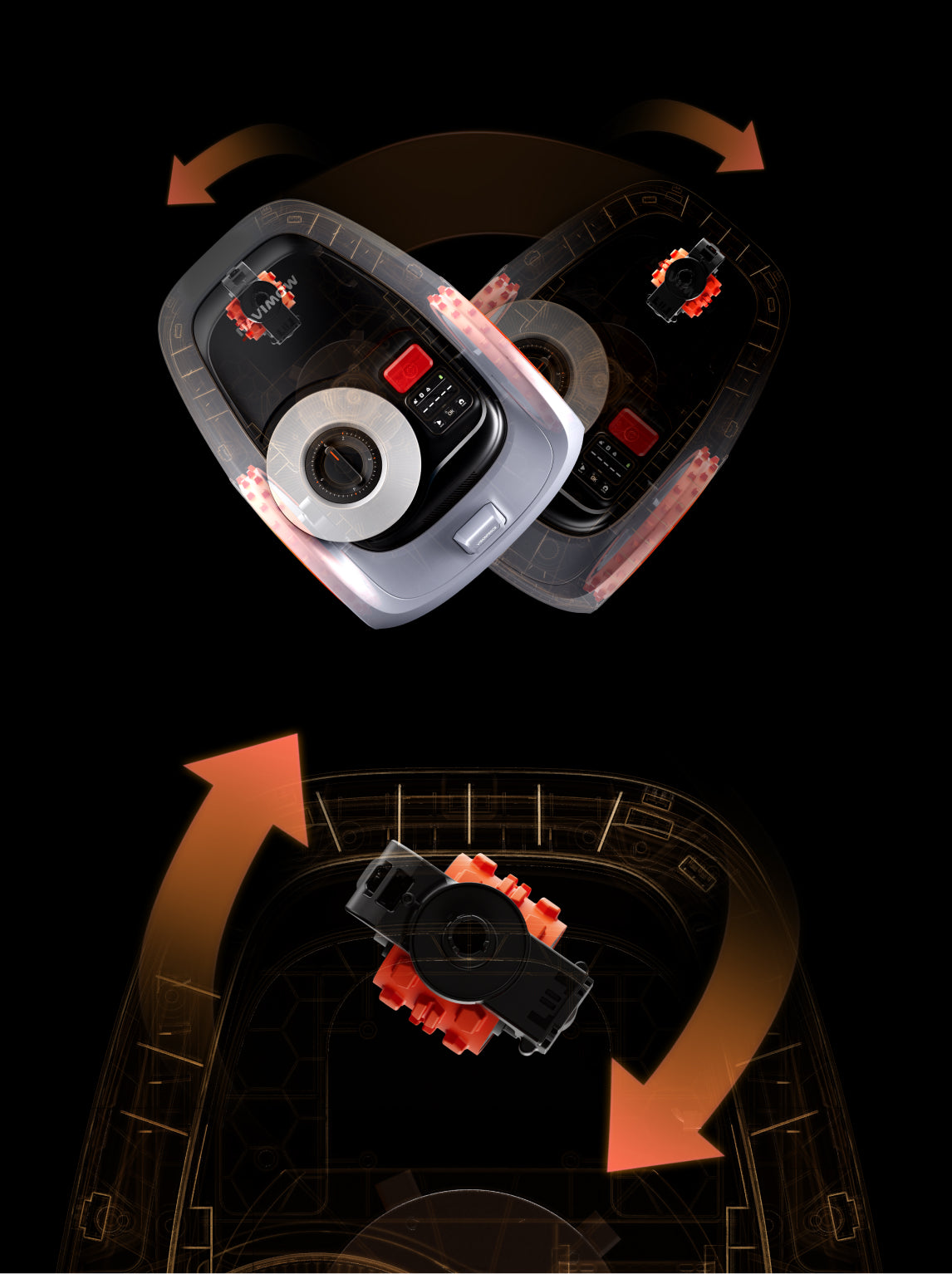
We have got mowers with AWD options, which allow for seamless movement on flat as well slope surfaces. Our models can handle slopes up to 40° (84%) and obstacles up to 3 inches tall. Not only that, with the all-new XeroTurn technology, it navigates uneven terrain without tearing up your lawn.
Quiet, Eco-Friendly Operation
Robotic lawn mowers are the least noisy among other mowing options, operating at only 55-60 decibels, comparable to a normal conversation. Moreover, their use doesn’t generate any carbon footprint, since no fuel burning/combustion is involved.
How to Make the Right Choice
You have the data. Now, you need to make a decision based on your reality. Some things to consider as you look at your property:
- What's the lawn size and terrain? Is it a flat square or rolling hills?
- What's your budget and value? Are you looking to spend the least amount today, or save the most time over the next five years?
- Do you actually enjoy mowing (be honest)? Or do you view it as a chore?
Choose a push mower if you're strictly budget-conscious. You have a very small, flat lawn (under 1/4 acre). You view lawn mowing as a form of exercise and don't mind the physical exertion.
Choose a self-propelled mower if you have a medium-sized lawn with some hills or rough patches and are okay with spending an hour a week walking the property, but want to take the edge off the physical labor. You aren't ready to trust a robot yet, but you need more power than a push mower.
 Finally, you choose a robotic mower if you're ready to retire from lawn care, if you want convenience, efficiency, and smart features. Most importantly, choose a robotic mower if you understand that time is your most valuable asset. You want a lawn that looks manicured every single day, not just on Saturdays. You want to reduce your carbon footprint. That's the power of a robotic mower. Check out the best robotic mower for large lawns.
From Chore to Choice: Upgrade Your Mowing Game
We've looked at the labor-intensive push mowers, the middle-ground self-propelled units, and the high-tech robotic solutions. The trend is clear. Just as we stopped washing clothes by hand on a washboard, we are now moving away from manually pushing machines over grass.
Push and self-propelled mowers have their place, mostly as legacy tools for specific budget needs or commercial applications. But for the modern homeowner, they represent a waste of time and energy.
Robotic mowers, specifically advanced models like Navimow, offer a superior alternative. They give you a better cut, a healthier lawn, and significantly more free time. The technology has matured. The bugs have been worked out. The era of the robot is here.
Don't spend another summer sweating behind a handlebar while inhaling exhaust fumes. You deserve better. You deserve a weekend that actually feels like a weekend.
Ready to change your life? Explore Navimow robotic mowers today to alter your lawn care experience for good.