While buying a lawnmower, the most important question that strikes everyone’s mind is whether to go with an electric or a gas lawnmower. And choosing one of them is a real struggle.
But if you are aware of the benefits, shortcomings, capabilities, and limitations of each type, you can easily make the right decision.
We are here with a comprehensive guide on gas vs electric lawn mower. We will dive into every detail and help you understand the nitty-gritty. By the end of this comparison, you’ll be able to decide which mower best fits your needs or if there is something else you should look at.
Power and Performance
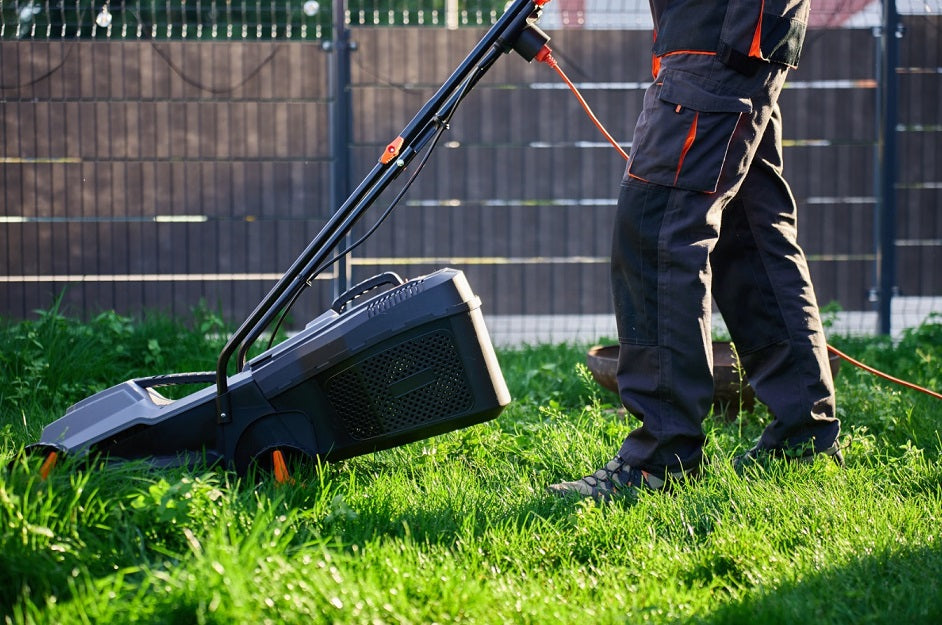
An electric mower is powered by electricity, either through a cord connected to an AC wall outlet or a built-in battery.
The corded electric mowers are better than battery-powered mowers in terms of power. They can work continuously without any drop in performance. On the other hand, battery-powered mowers have a limited battery capacity, and the performance also drops as the battery is about to die.

But there is no denying that gas-powered mowers are the absolute beasts. They have a very powerful engine, which can deliver immense power, usually twice or more than that of the electric mowers. That’s the reason gas mowers can take over thick grass and extremely overgrown lawns without any hassle.
They are built for heavy-duty applications and can offer incredible performance. You can even cut wet grass with them.

On the other hand, electric mowers are suitable for normal overgrowth. The latest electric mowers have a high torque, so they can do a better job. But still, they are not as good as a gas mower.
Secondly, the lawn must be completely dry while using an electric lawnmower. There is a risk of shock and also a tripping hazard because of the cord. Here’s how to tell if the grass is dry enough to cut.
If you want to do domestic mowing and cut the lawn with grass about 5-6 inches, an electric mower would do the job. However, it will struggle if there is thick weed. With gas mowers, no matter how messy your lawn is, it will do the job.
Area Coverage and Run Time
Gas lawn mowers are known for covering a massive area. They are even suitable for large commercial lawns. The reason is their immense power and no limit on the run time. You can use them as long as you have gas.
For medium lawns, you can pick small gas lawn mowers. You can find different sizes and options for different areas. They are not recommended for small lawns, but you can still use them.

Corded lawn mowers are also suitable for medium lawns. They can mow your lawn without any breaks. However, the only limitation is the cord or extension. You can take it wherever you have access to the power. For some people, using a corded electric mower is a bit difficult as they have to take care of the cord while mowing.
Battery-powered mowers are extremely convenient. They are the best for small lawns. However, they have a limited run time because of the rechargeable battery. If the battery dies in the middle, you have to wait and recharge it again. That’s the reason they are not suitable for large lawns.

Maintenance
We have discussed the mightiness of gas mowers. But you’ll often see lawn owners struggling to start their mower. It’s because gas mowers require frequent maintenance, and there is a lot to take care of.
For instance, you can’t keep the fuel for more than 30 days, as it will build up a sticky residue that will block the jets. Similarly, you must know how to clean lawn mower carburetor, how to change the air filter, etc. You need to ensure that the mower has access to air, gas, and oil to work properly. For that, you need to change the air filter, change the oil, replace the spark plug, etc.
If your gas lawnmower is smoking, you need to diagnose why it’s doing that. Similarly, if the lawnmower is not starting, you should be able to fix common issues on your own. Otherwise, you’ll have to call the mechanic every now and then.

Thus, gas mowers require heavy maintenance, and this is what many lawn owners hate.
In contrast, electric lawnmowers require minimal maintenance. The reason is that they do not have an engine. The motor is directly powered with electricity from an outlet or battery.
You only need to keep the mower clean and sharpen the blade when needed. And after some time, you need to replace the battery, and you can do that on your own.

People who do not like maintaining a lawnmower on their own should get an electric lawnmower.
Storage and Portability
Gas lawnmowers are bulky. The immense horsepower they offer comes along with heavy weight. That’s why storage becomes a problem.
They are not portable enough. It’s difficult to load them on a pickup truck and move to another place.

On the other hand, electric lawnmowers are lightweight. Corded mowers weigh around 20 to 50 lbs only. Battery-powered mowers weigh around 40 to 70 lbs due to the battery, and you can also take the battery out and make the mower lightweight for storage.
Simple gas-powered mowers start from 60 to 90 lbs. The weight of riding gas mowers is quite a lot, over 300 lbs. For more details, check out how much does a lawn mower weigh?
The weight plays an important role in portability and storage. But for storage, you need to do other things as well, which is commonly called winterization. You must know how to winterize a lawnmower.
Wintering an electric mower is pretty easy. You only need to clean it, sharpen the blade, and you're good. But winterizing a gas lawnmower isn’t easy. It requires multiple steps and time to get everything done properly. And if you do anything wrong or ignore winterization, your lawnmower won’t start after winter.

Noise
Gas mowers are too noisy. If you have a neighbor who’s always complaining, you should avoid going with this. The sound of the engine is loud, which can disturb your family and people nearby.
The noise level of a gas lawnmower is usually 90-100dB. The reason is the noise of the engine and the mowing of the grass. Thus, if you are operating one, hearing protection is a must-have. People often ignore it, but it’s bad for your ears.
However, electric lawnmowers are quieter. The noise level ranges from 60dB to 75dB, depending on the size, motor, etc. You can easily talk in this noise, and no hearing protection is needed.
You won’t disturb your neighbors while using an electric mower. It is neighbor-friendly, and your children and other family members will also feel comfortable when the mower is running.
Further reading: How Loud is a Lawn Mower?
Operating Cost
The operating cost of gas lawnmowers is high. It’s because of the gasoline consumption and frequent maintenance.
You need to change the engine oil after every 50 hours of use. Along with that, you need to spend on the air filter, spark plug, blade replacement, etc.

Moreover, while winterizing a gas lawnmower, you need a stabilizer and fogging oil. Both these increase the operational cost.
If we look at electric mowers, the daily operational cost is quite low. The electricity used to charge batteries is cheaper than gasoline. It won’t affect anyone. Secondly, there is minimal maintenance required.
However, people often forget about battery replacement. The lithium-ion batteries are quite expensive, and you need to replace them after a certain time. It’s a long-term investment as the battery lasts several years, depending on its quality.

Cost
The entry-level gas mowers are affordable. They start from $200. You can spend more and get better mowers for $400 to $650. For premium models, you need $800 or more.
These are common residential mowers. And if you want to go with the bulky riding ones, you need to spend several thousand dollars.
Electric or battery-powered mowers are a bit expensive compared to gas mowers. They usually start from $350 to $500. The reason behind a slightly elevated price is the battery. You can go with better options at $800 or more.
The cost is almost similar whether you buy an electric or a gas lawnmower. This is just a one-time investment. Pay close attention to other details, and also the expected life of the mower or battery.
Environmental Impact
We have already talked about the noise pollution created by both types of mowers. However, there is more.
Gas mowers have a combustion engine that ignites fuel to run the mower. It emits harmful gases, including carbon monoxide, nitrogen oxides, carbon dioxide, and unburned hydrocarbons. All these gases pollute the air.
If you mow your lawn using a gas mower for one hour, it is almost equivalent to driving a modern car for hundreds of miles. Both produce the same quantity of harmful emissions. They are responsible for creating smog and harming the respiratory systems of living beings.
And if the engine is in bad condition, it emits more harmful fumes, sometimes white and sometimes black. You need to know why your lawn mower is smoking and solve the issue as early as possible.

That’s not it. Gas lawnmowers also produce waste, such as engine oil, stale gas, spark plugs, air filters, etc. All these things pollute the environment.
If you want to mow your lawn without any guilt of harming the environment, you need an electric lawnmower. It has zero emissions as there is no burning of the fuel.
You don’t see anything wrong with it, but it also has a carbon footprint. It is powered by electricity, which is generated through fossil fuels and by other means. It does have an indirect emission, which people often forget. Thus, it’s a better option but not 100% emission-free.
Gas vs Electric Lawnmower: A Quick Overview
|
|
Gas Mower |
Electric Mower |
|
Power Source |
Gasoline |
Direct AC supply or battery |
|
Power Delivery |
High (powerful engine) |
Medium (lower torque) |
|
Run Time |
Unlimited |
30-75 minutes because of battery |
|
Maintenance |
High (carburetor, air filter, spark plug, etc.) |
Minimal |
|
Carbon Emission |
High (harmful emissions due to combustion) |
None |
|
Noise |
90-100dB (hearing protection needed) |
60-75dB |
|
Storage |
Difficult (Needs replacement and cleaning of components) |
Easy |
|
Initial Cost |
Lower |
Higher |
|
Total Cost of Ownership |
Higher due to frequent maintenance cost |
Lower |
Gas vs Electric Lawnmower: Which One Should You Pick
For selecting the right option, you must consider the use case. Both gas and electric mowers offer incredible results if used for the right application.
Small Yards (Under 0.25 Acres)
For small yards, an electric mower is the right option. It’s easy to use and convenient, and it can perfectly mow your lawn.
You can go with either battery-powered or corded electric mowers. Even battery-powered mowers can mow the lawn in one go. There is no need to worry about the run time.
Average Suburban Yards (0.3 to 0.6 acres)
For average suburban yards, you can pick an electric mower. It is not recommended to use a corded mower, as you will need a long cord for that.
A better option is to go with a battery-powered mower that has a high battery capacity. It will help you mow the lawn in 1-2 attempts.
Large Yards (Over 0.75 acres)
Electric mowers are not recommended for large yards. They can’t complete the job in one go, and you have to charge the battery frequently, which makes the lawn owner frustrated. Otherwise, you have to buy multiple expensive batteries.
The right option among the two is a gas mower. You can run it as long as you want and complete the whole yard in one go. Because of its immense speed, it can mow the lawn faster. Its power and torque are consistent, unlike battery-powered mowers.
Difficult Terrain
If your lawn has difficult terrains, such as hilly and slippery areas, gas lawnmowers are better. They produce higher power and torque, so they can easily climb the hill and mow the area.
For better traction, you can opt for AWD (All-Wheel Drive) gas mowers. They are excellent for steep slopes and performing in large areas, even if the soil is wet.
Sensitive Neighbors
If you’ve got sensitive neighbors that complain about the loud lawnmower noise, a gas mower is a big NO. It’s too loud.
An electric mower is the way to go. Its noise level is usually lower than 75dB, so you will not have any complaints. You can mow your lawn without any worries.
Low Maintenance Priority
Most lawn owners prefer low-maintenance lawn mowers. For them, electric mowers are suitable. They do not need to do any extensive maintenance regularly.
Just regular cleaning will do the job. They do not need any expertise to maintain the mower. It’s pretty simple, and they can even winterize it on their own.
Low Budget Priority
If your budget is too tight, you should probably look at small gas mowers. They are cheaper than the battery mowers in terms of the upfront cost.
You can get a gas lawnmower under $200 for your small yard.
The Future of Mowing isn’t Gas or Electric, It’s Robotic Lawnmower
Neither one is a perfect lawnmower. Both have their shortcomings.
A gas lawnmower is loud and bulky. It requires excessive maintenance and emits harmful smoke. On the other hand, an electric lawnmower falls short in terms of power, and it can only cover a small area.
If you pick any one of them, you have to compromise. So, is there a perfect option? A robotic lawnmower is what you need. It resolves the problems that you face with gas and electric mowers and makes lawnmowing hassle-free.
Robotic lawnmowers are a special kind of electric mower. They have a built-in battery and are automated. They automatically mow your lawn according to the schedule, so they don’t need human involvement.
All you need to do is set the schedule. And the mower will cut the grass, while keeping the real-time weather forecast into consideration. It understands your lawn terrain and goes back and forth to mow every corner with perfection. And when it needs recharging, it returns to its dock.
They are extremely portable and lightweight. You can take them anywhere. Their operational cost is low as they run on electricity. They do not require frequent maintenance. You just need to clean the mower and replace its blades when needed. Lastly, you don’t have to worry about environmental pollution.
Navimow Robotic Lawn Mowers are available for different-sized lawns. From small to large lawns up to 2.5 acres, you can find high-tech models.
For Large Lawns—The Navimow X4 Series
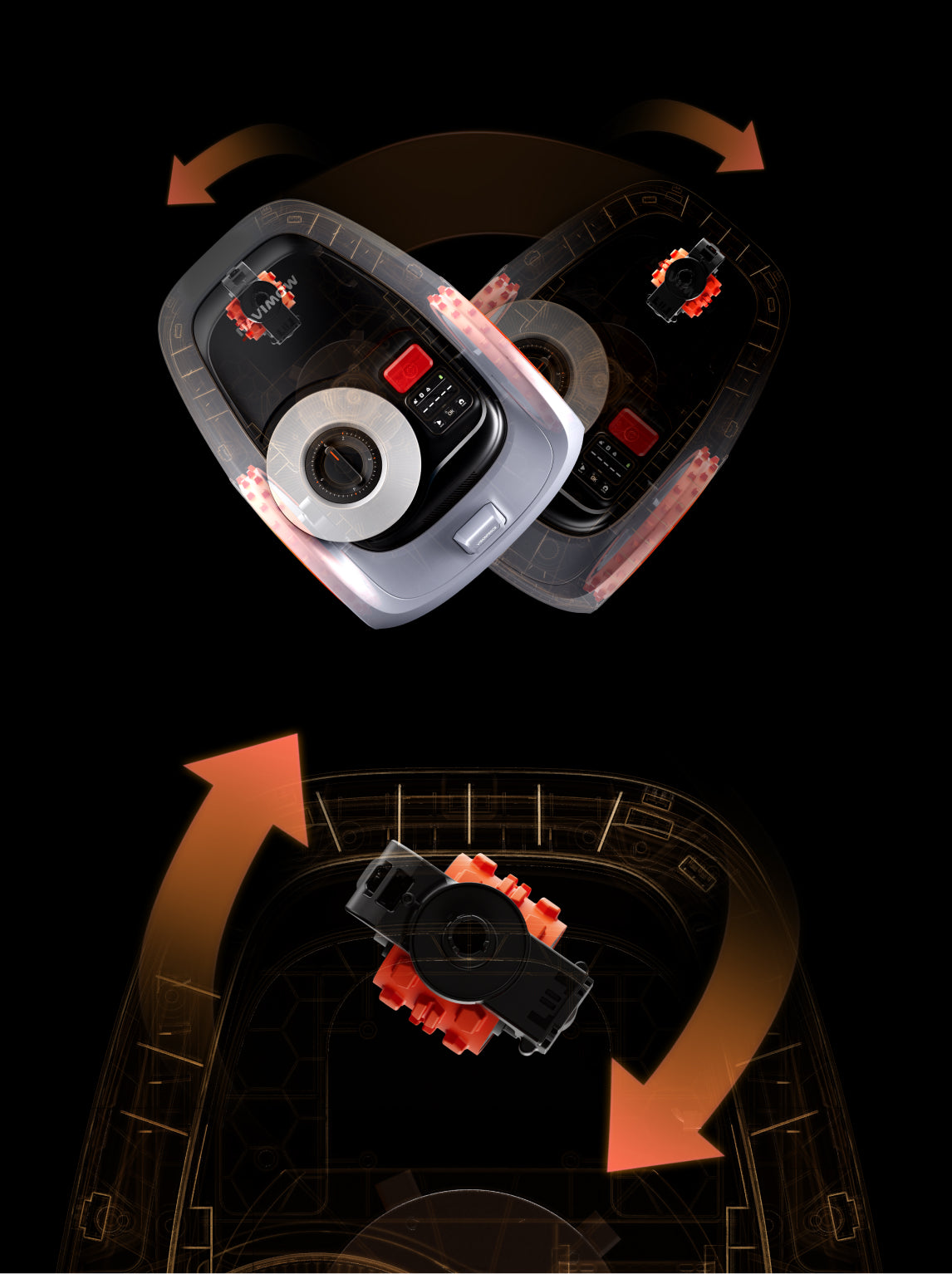
The latest Navimow X4 series is suitable for 1 to 1.5 acres with up to 120 zones. They even perform better than the traditional zero-turn mowers. They are equipped with the Xero-Turn™ AWD, which allows them to take a 180⁰ turn without damaging the turf.

They can work in any kind of terrain because of the All-Wheel Drive (AWD). Whether it’s a gravel path, pothole, border curb, or uneven surface, the mower works everywhere. The best is that these mowers can handle steep slopes up to 84% (40⁰).
With powerful cutting motors and dual-disc blades, they can cut thick, long, and dense grass. It has a smart cutting algorithm, which detects long grass and lifts blades when handling tall and rough grass. Plug, Edgesense™ offers perfect edge cutting and mows within 2 inches of walls and fences.

The mowers navigate through EFLS™ Network RTK, which provides exact position in the lawn with centimeter-level precision. There is no need for antennas or wires. It automatically maps your lawns and mows every corner and tight areas. Most importantly, its VisionFence™ detects 200+ obstacles, including pets and children, and ensures safe mowing.
The best part is that the noise of the mowers is extremely low, only 68 dB(A), so it does not disturb a sleeping person. You can even use them at night. They are compact and lightweight, which translates to easy storage. Plus, they require minimal maintenance.
For Small-to-Medium Yards—The Navimow i2 AWD Series
The Navimow i2 AWD series offers All-Wheel Drive for the first time in mowers for small-to-medium lawns. They can handle lawns up to 0.25 acres. Be it stone paths, vertical steps, or slopes up to 45% (24⁰), they conquer any kind of terrain. They climb lateral and diagonal hills and can even go forward and backward, and make a turn on the hill.

The mower has the Xero-Turn™ technology, which allows it to take a smooth 180⁰ turn. It does not rip the turf and maintains excellent traction with the patented traction control system and off-road wheels.
With Network RTK and visual technology, it precisely navigates through the lawn, even along narrow pathways, hidden corners, and tall trees. It can detect and avoid 150+ obstacles. It automatically calculates its path and reroutes instantly if an obstacle is encountered.

The mowers are super quiet and have only 59 dB(A) noise level, which means they do not disturb family members and neighbors. They are portable, cost-effective, and hassle-free.
Final Words
Choosing between a gas and an electric mower is a bit difficult. But by comparing their capabilities, features, environmental impact, and other factors, it becomes easier to pick one for your lawn.
For residential users, gas mowers are getting obsolete as most lawn owners are opting for electric mowers, especially robotic lawn mowers. They are mostly preferred for commercial operations where immense power and infinite run time are required.
For small to medium and even large lawns, robotic lawnmowers are great. They automate lawnmowing and ensure a perfectly cut lawn without any effort. They are better than gas and traditional electric mowers in every aspect.