


The first time you fertilize your lawn in spring can set up healthy, lush growth for the entire year. However, getting the time right is essential to ensure excellent results.
You might be wondering how to figure out the perfect time to fertilize your lawn in spring. Well, you have to consider the soil temperature, pH levels, and some other factors.
Let's figure out when to fertilize your lawn in spring. We will also share some suggestions to help you get your lawn off to a terrific start with spring lawn care.
How To Know When To Apply Fertilizer In Spring
For the first spring fertilizer application to be truly effective, soil temperature should be around 55 degrees Fahrenheit. Soil temperature reaches 55 degrees when daytime air temperature is consistently between 60 degrees and 70 degrees Fahrenheit.

Buy and use a soil thermometer to ensure your lawn has reached optimum fertilizing temperature. Use a soil testing kit to determine the type of fertilizer your lawn needs.
Fertilizers are available in various compositions that provide the proper nutrients for specific soil conditions.
Lawnmowing and Spring Fertilization
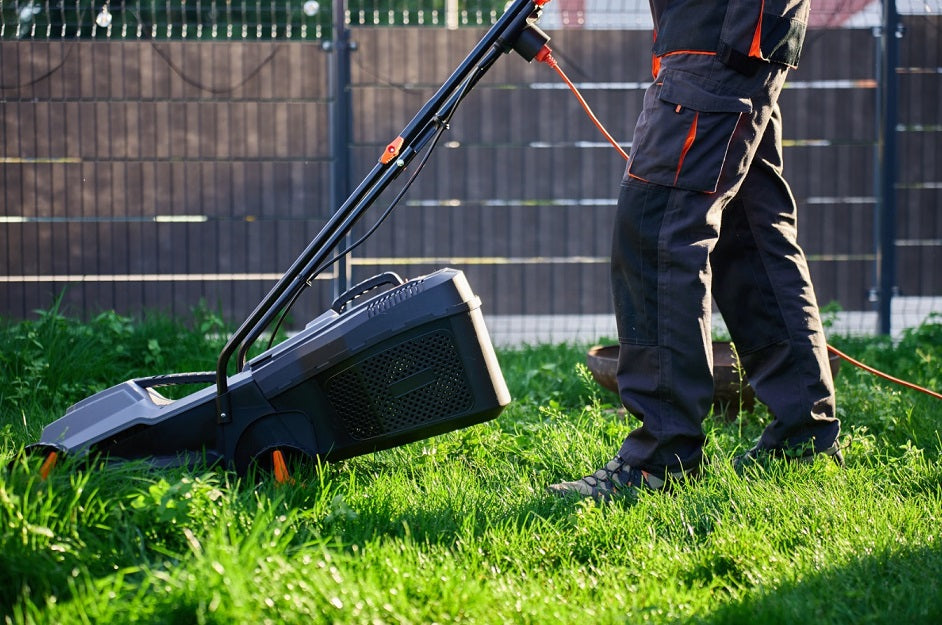
Mowing the lawn two or three times before fertilizing serves two purposes.
- Shorter grass allows fertilizer granules to easily fall through the blades and reach the soil to nourish root systems.
- Mowing the lawn also confirms that the grass is no longer dormant and has started growing. If nothing is being cut off, it is too early to fertilize.
You can use a Navimow robotic lawnmower to mow your lawn without any hassle. Just set a schedule, and it will mow your lawn automatically.

Further reading: Best Time to Cut Grass
pH Levels and Fertilizing
Improper pH levels in lawn soil prevent grass from using the fertilizer you are putting on it. In fact, your lawn may be starving even with plenty of fertilizer.
Test kits also measure soil pH levels. Most types of grass grow best when the pH is between 6.0 and 7.0. Fix your soil pH level before fertilizing to get the best results from your fertilizer.
Raising pH Levels: Add lime to your lawn using a spreader. Then water well to incorporate it into the soil before fertilizing. Adding lime works best in the early spring or late fall.
Lowering pH Levels: Apply sulphur or iron sulphate early in the spring before fertilizing or in the late fall. Spread evenly and water well. Lowering pH is more difficult than raising pH. Monitor your soil to check your progress. Some fertilizers contain ammonium sulphate or urea to lower pH levels.
Note: Test various locations of the lawn, especially if your yard contains multiple types of landscaping. Soil conditions may be different close to hedges, gardens, low spots, or in areas that received more fertilizer.

The Best Month To Start Fertilizing
Lawns in warm southern areas with little or no frost can be fertilized as early as February. Lawns in colder northern climes can't be fertilized until March or April. Sometimes waiting until May if the winter is unusually long or cold is the best option.
Be patient. There is no "best month". Spring fever combined with fertilizer ads and visits to garden centers often leads to wasting time and money fertilizing too early. Follow the suggestions above to choose the optimum time to fertilize your lawn. Most commercial fertilizers have detailed instructions on the packaging, including soil temperature recommendations.
Never Fertilize Frozen Soil
Pouring fertilizer on frozen ground, or worse, on snow-covered lawns, is a waste of time and money. Synthetic granules will not decompose to improve root growing capabilities. In fact, they might float away in the spring melt run-off and contaminate other parts of your yard with inappropriate types of fertilizer. Or local streams and ponds if they flow down rainwater drains. The nutrients in organic fertilizers will also be lost to snow melt.
Note: Fertilizing before the last frost of the winter can lead to premature growth during a few warm days and late frost damage.

What Type Of Fertilizer To Use
There is no perfect fertilizer for all situations. Grass type, location, environmental conditions, and personal preferences influence your choice of fertilizer.
Organic Fertilizers
Popular organic fertilizers include compost, manure, bone meal, and Milorganite. They are all-natural and rich in the nutrients that lawns need to thrive. Organic fertilizers enrich soil, help prevent compaction, and add beneficial microbes.
Organic fertilizers usually cost more, but provide healthier lawns over the long term. Grass roots pick up organic nutrients more easily. They are safer for kids and pets.
Organic fertilizer will rarely hurt a lawn, unless it is spread so thick that it kills the grass. They do not burn the grass and continue to add nutrients throughout the growing season as they become fully incorporated into the soil structure.
Another organic fertilizer is lawn clippings. A mulching mower blade cuts grass into short pieces that fall through the grass blades and add nitrogen to the soil. Leaving short grass clippings on the lawn during every mowing is the equivalent of one fertilizer application.

Synthetic Fertilizers
Synthetic fertilizers are chemical-based. They are designed to provide quick results. They are available in various combinations for nitrogen, phosphorus, and potassium (N, P, K). You can usually buy a combination that matches your lawn's requirements.
It is easy to use different fertilizer compositions on various areas if your soil testing suggests your lawn has different needs in some locations.
Fast-Acting Fertilizers
Liquid fertilizers provide quick absorption and fast results. They are a bit tricky to use. Follow the package instructions to prevent applying too much or too little product. Too much can burn the lawn or accelerate growth too much. Too little is just a waste of time and money.

Time-Release Fertilizers
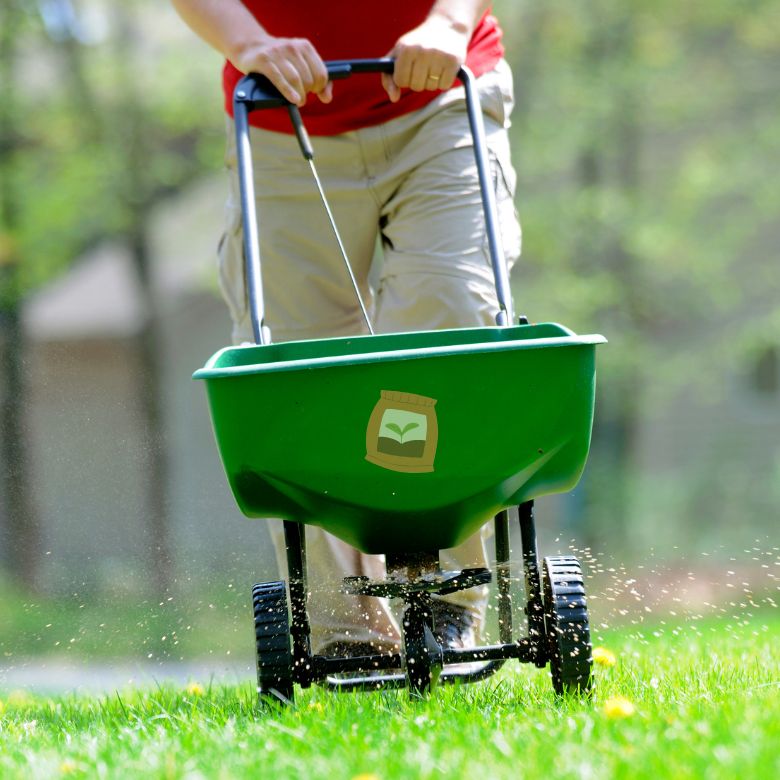
Most chemical fertilizers are small granular pellets that release nutrients slowly over time. They are easy to spread uniformly over the entire lawn using a broadcast spreader. Granular fertilizers provide consistent nutrient release over a longer period of time. Ideal for larger lawns.
For consistent coverage, make two passes with the spreader. The second pass should be perpendicular to the first. Water the lawn well after application to ensure the pellets dissolve and soak into the soil and become available to the grass roots.
Granular fertilizers are easy to store and do not deteriorate over time. They are dangerous if eaten, so make sure the containers are kid-proof and pet-proof.
Watering
All fertilizers benefit from being watered after application. Some won't work at all without moisture. Apply fertilizer the day before or the day of a rain forecast. Or plan to water the lawn after the fertilizer is applied.
Water long, but not often. Soak the newly-fertilized lawn with about 1" - 1.5" of water to ensure that the fertilizer gets down to the roots and has the moisture to be absorbed. Water weekly throughout the growing season if it does not rain. Watering too often for short periods of time can cause shallow root growth, fungus, other diseases, and pest infestations. Learn how long to water grass for calculating an adequate amount.
Note: Don't over-water. If your soil is saturated or puddles are forming, suspend watering until it dries out. Too much water can cause fertilizer to run off the lawn.

Don't Over-Fertilize
More fertilizer is not better. In many cases, over-fertilizing can kill grass and retard its growth. You can see fertilizer burn. This appears as yellow or brown patches and crusty-appearing grass. Thatch builds up quickly, and grass may even stop growing.
Always do it in moderation and according to the manufacturer's instructions. The right amount is necessary to ensure a healthy, lush-green lawn.


Share