


Nobody hates mowing a lawn. It’s an excellent way to release stress, enjoy nature, and feel fresh.
But what people hate is pushing a heavy and bulky lawnmower. It’s laborious, tiring, and time-consuming. And that’s the primary reason people need to look at the mower’s weight before buying it.
We will give you an idea of how much does a lawn mower weigh. We will discuss why it matters and share the weight range of different types of lawn mowers people use.
Why Mower Weight Matters?
Here are some common reasons people worry about the weight of a lawnmower.
Maneuverability: Heavy lawn mowers are difficult to maneuver, and there is no doubt about it. No matter what kind of mower you have, a bulky one will be difficult to maneuver from one location to another.
Ease of Use: It’s easy to use a lightweight mower on the lawn. That’s why people choose the weight they can handle.
Operator Fatigue: Because of the heavy weight, the operator feels fatigued. It’s an extremely laborious job, and it even replaces your morning walk. And if the lawn is large, it’s difficult for a person to mow it.
Stability and Traction: A mower needs a certain weight to stay stable on the lawn. This weight assists in better traction. If the weight is too low, the mower won’t be able to stabilize itself during mowing, especially when there is a slope or wet grass.
Storage and Portability: Storing or winterizing a lawnmower is difficult if it’s too heavy. And if you want to move it to another place, it becomes a headache.
Shipping/Delivery Costs: As the weight of the mower increases, the shipping or delivery cost also increases. A heavy model means higher delivery charges.
Soil Compaction: If the mower is heavy, it compacts soil over time. Due to compaction, the soil is unable to breathe. The pores get blocked, and the grass suffers from nutrient, oxygen, and water deficiency. To relieve the soil, you need to do lawn aeration. That's why lightweight mowers are safer.

Light to Medium Weight Mowers (Less than 100lbs)
Manual Reel Mower
Manual reel mowers are the lightest, but that doesn’t mean they are easy to use. They do not have any engine, battery, or fuel tank. There is a simple and sharp roller blade that rolls when you push the mower.
The weight is usually 15 to 30 lbs. It’s easier to move, store, and ship. But when it comes to mowing with it, it is the real challenge. It requires a lot of effort, and often, new users suffer from fatigue for a long time.
For very small lawns, it could work. But it’s a big NO for medium to large lawns.

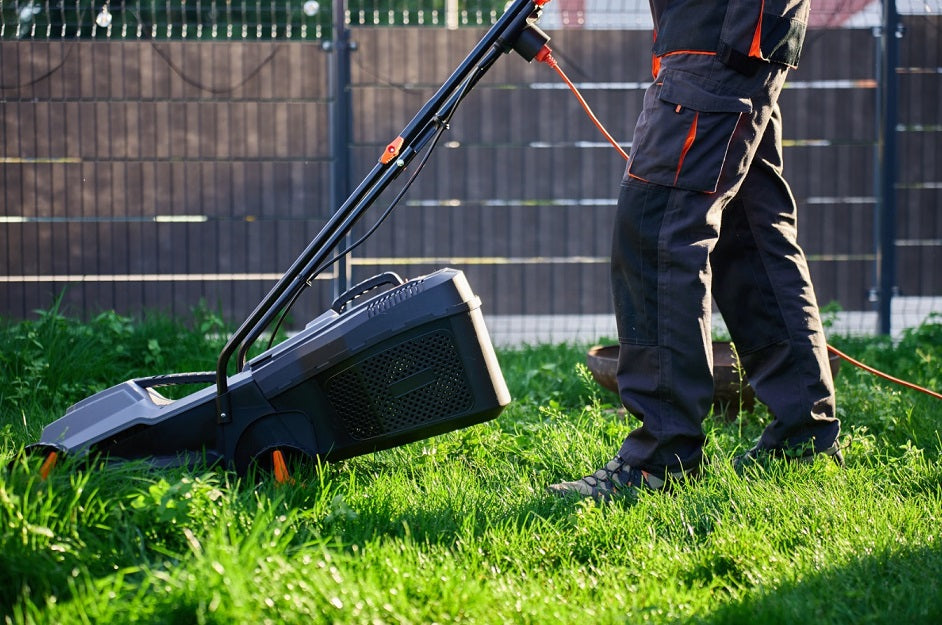
Corded Electric Mower
Corded electric mowers are quite easy to use and maneuver. Their weight is quite manageable and is usually around 25 to 50 lbs.
They have a small electric motor, which is powered directly through your home AC outlet. It does not need a battery, which could increase the weight.
Users can easily use a corded electric mower to mow their lawn. It is almost effortless. However, using a corded mower has a risk of tripping over wires, frayed cords, and electric shocks. It should be avoided when the grass is wet.

Battery-powered Electric Mower
Battery-powered electric mowers are known for their portability. You can use them anywhere, and they do not require any cord or fuel.
Due to the presence of a battery, its weight is a bit more than that of a corded one. It’s usually 40 to 70 lbs, depending on the battery pack.
It works great on your lawn, but you have to bear its little extra weight. But keep in mind that the battery power is limited, so it’s suitable for small lawns only.

Gas-powered Mower
Gas-powered mowers carry a heavy engine, oil, and fuel. All these increase the weight of the mower.
They are usually 60 to 90 lbs. It is a bit difficult to move them and store them. If you need to move it to another place, putting it on a pickup truck is not easy.
However, it’s easy to mow with them. You can even mow a large lawn. Just fill the gas and get it going. Keep in mind that these require frequent maintenance.
Further reading: How to clean lawn mower carburetor?
Self-Propelled Mowers
Self-propelled mowers are an upgraded version of mowers because they propel themselves on the lawn, requiring minimal effort from the user. There is no user fatigue involved, even if you mow a large piece of land. That’s the reason lawn owners love it for their lawn care.
You can find different types of self-propelled mowers, running on gas, corded electricity, or battery. And that’s how their weight differs.
They are usually around 70 to 110 pounds, depending on the size, mowing capacity, type of power, etc. They have some additional gears and mechanisms to transfer the power directly to the wheels, which is the reason for the increased weight.
Using a self-propelled mower is definitely easy. But storing, mowing, and transportation are challenging.

Heavy Weight Mowers
These are extremely heavy mowers. They can make mowing easier as you can ride them. But portability, shipping, and storage become extremely difficult.
Rear-Engine Riding Mowers
These are the lightest and most compact riding mowers. The engine is located at the back side, and because of that, the back wheels are large, while the front wheels are quite small.
They are usually around 300 to 500 lbs, and this weight is because of the engine, the frame of the mower, the seat, the cutting deck, etc.
They are excellent for small to medium lawns. It’s easier to move it around small and tight spaces. If you don’t like pushing a lawnmower, this could be a better option.

Lawn Tractors
Lawn tractors have a similar shape to a tractor but a smaller size. They are not only for mowing, but you can use them for towing carts, spreading seed/fertilizer, rolling, and many other purposes.
There is a powerful engine at the front, which is the primary reason for its heavy weight, and it also has a robust metal frame. Its weight is usually 400 to 700 lbs.
It’s suitable for large lawns. It can mow at an incredible speed because of a wider deck. It offers incredible traction and can work in different terrains, slopes, and even wet grass.

Zero-turn Radius (ZTR) Mowers
Zero-Turn Mowers are extremely heavy-duty mowers for commercial purposes. They are known for their large size, speed, and efficiency.
They have a massive engine, large cutting decks, a strong steel frame, and dual hydrostatic transmissions. They are powerful beasts, and they weigh around 600 to 1,500 lbs.

Worried About Heavy Weight? Get a Robotic Lawnmower
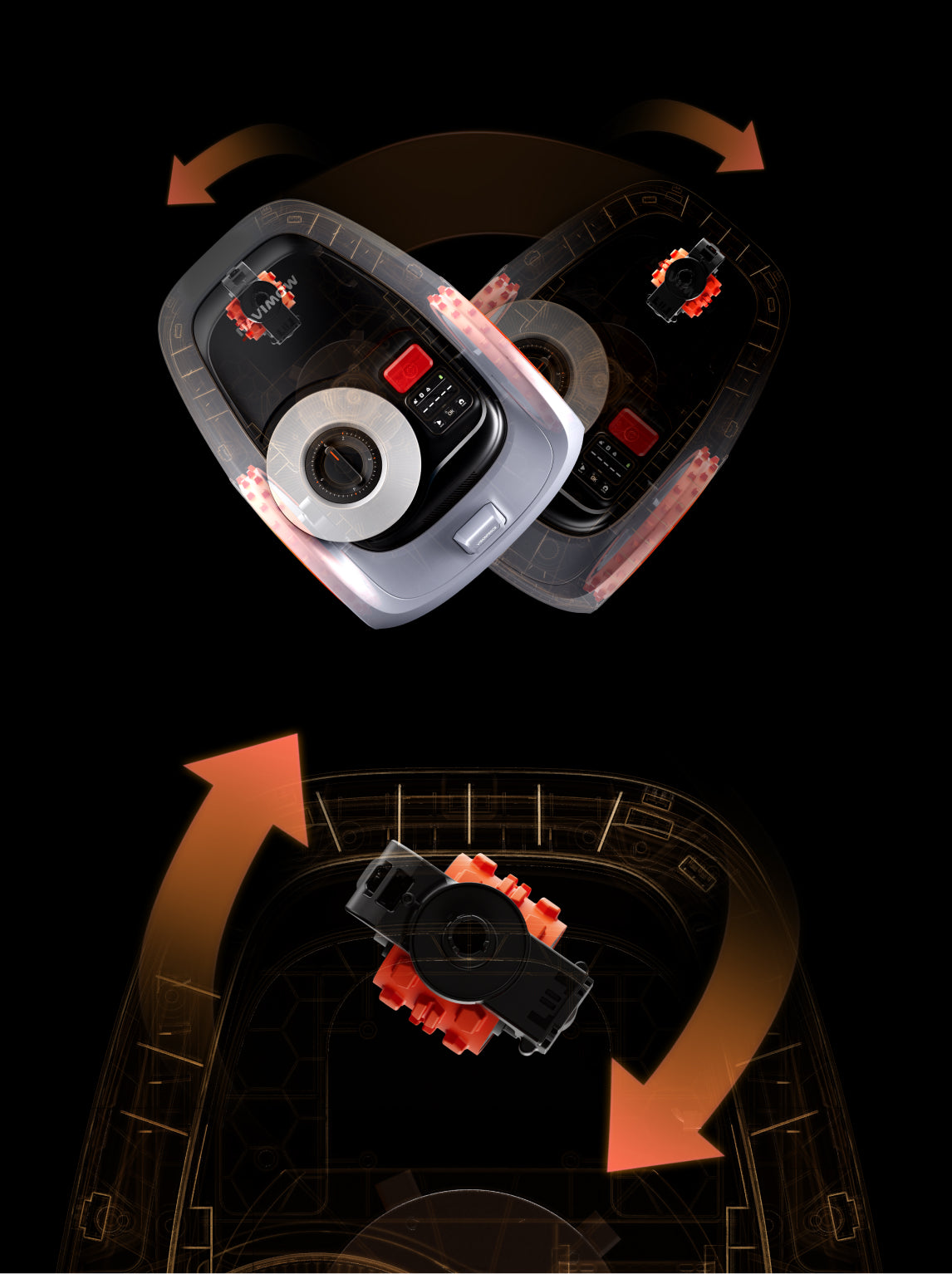
You don't need to worry about a lawnmower's weight again if you get a robotic lawn mower. These mowers are lightweight, so they are portable and easy to carry. You can take them anywhere in your car trunk and start mowing.
For instance, the Navimow i2 AWD is for small lawns up to 0.25 acres, and it weighs only 27 lbs. It's equipped with incredible features, such as All-Wheel Drive (AWD), Xero-Turn™, and Network RTK. But despite all this, it's extremely lightweight.

The Navimow X4 is designed for large lawns up to 1.5 acres. And it weighs around 63 lbs. It mows a massive area and up to 120 zones, but it is still lightweight. It's packed with incredible features like dual-suspension, dual cutting motors, All-Wheel Drive (AWD), Xero-Turn™, AI-powered 360⁰ vision, etc.

That's not it. The Navimow Terranox is a commercial mower meant for lawns up to 6 acres. It weighs only 66 lbs. The top model CM240M1 is powered by a 25 Ah battery, which increases the weight of the mower a bit. But still, it's very lightweight. It weighs a fraction of traditional commercial mowers that have a weight of around 300 to 1500 lbs.

Thus, robot mowers actually solve the issue of weight. They automate lawn mowing, so you don't have to think about maneuverability, ease of use, or operator fatigue. Just set the schedule and the mower will do its job. And they never compact the soil of the lawn.
FAQs
How much does a manual lawn mower weigh?
A manual lawn mower weighs around 15-30 lbs. It’s manual, which means it only has a rotating blade and a frame. There are no motors, batteries, or heavy parts to make the mower heavy.
How much does a 50-inch zero turn mower weigh?
A 50-in zero-turn mower weighs over 600 lbs, and it’s usually under 800 lbs. However, some models can be a bit heavier.
How much does a lawn mower weigh in KG?
Reel mowers weigh 7-14 kg, robot mowers weigh 10-30 kg, corded electric mowers weigh 11-23 kg, battery-powered mowers weigh 18-32 kg, gas-powered mowers weigh 27-41 kg, and self-propelled mowers weigh 31-50 kg. Riding mowers are heavy, and they weigh 136 to 725 kg.




Share