Before the first frost hits the ground, lawn owners need to prepare the grass so it can withstand harsh weather conditions and grow back healthy in the spring. It is a crucial moment that can be make-or-break for your grass.
A winterizer fertilizer is what provides grass the strength and energy it needs to bear cold temperatures and survive. It’s an essential part of the winter preparation and a savior for your grass.
This article is all about winterizer fertilizer for grass. We will explain what it is and how it works. We will discuss how it is different from other fertilizers and on which grasses you should apply it. Most importantly, we will share the step-by-step process of applying a winterizer fertilizer and making your lawn ready for the winter.
What is a Winterizer Fertilizer?
A Winterizer Fertilizer is a special type of fertilizer given to the grass in the late fall or before the start of winter. It helps the grass survive through harsh winters and recover earlier in the spring.
We all know that grass enters a dormant state when the temperature drops in winter. If the grass isn’t strong enough to bear freezing temperatures and snow cover, it might not be able to survive. That’s why a winterizer fertilizer is necessary to prepare the grass.
When you apply winterizer fertilizer to the lawn before winter, it does a few things. Firstly, it provides energy reserves that help the grass survive through the season. The grass blades store sugar and starches in the crown, rhizomes, and stolons. It does not use the energy for growth. This energy reserve is more than enough for the winter season.
Secondly, it strengthens the root system and increases wall thickness, enabling the grass to withstand harsh conditions. It also protects the grass from cold diseases, such as fungus and snow mold.
The most important thing is that the grass is ready to wake up earlier in the spring. It turns green faster without the need for another dose of fertilizer.

Is Winterizer Fertilizer Different from Fall Fertilizer?
Yes, winterizer fertilizer is different from fall fertilizer. And that’s because of the N-P-K ratio and primary function.
A fall fertilizer is applied at the end of the summer season or early fall (September). It is meant to help the grass recover from heat stress. It contains both fast-release and slow-release nitrogen. The fast-release nitrogen instantly provides energy to the grass, while the slow-release feeds the grass for a longer period. Overall, it supports grass growth and repairs summer damage.
The potassium concentration is a bit low in fall fertilizer. This is because potassium is not required in the fall season. The grass needs nitrogen for vertical blade growth and root recovery.
In contrast, winterizer fertilizer is meant to provide energy reserves and keep the roots active. Therefore, it has a higher proportion of quick-release nitrogen. As soon as nitrogen is applied, it is absorbed by the grass and stored for the winter.
Secondly, the potassium content in winterizer fertilizers is high. That’s because it strengthens the cell wall and enhances cold tolerance. It prevents freeze damage and resists snow mold.

Can You Apply Winterizer Fertilizer to All Grasses?
No, you cannot apply winterizer fertilizer to all types of grasses. Let’s see why.
Warm-season Grasses
Warm-season grasses aggressively grow in the summer season. And then, their growth slows down. They enter winter dormancy quite early. If you apply winterizer fertilizer to the grass in the late fall, it will damage or kill the grass.
Let’s understand the reasons. The nitrogen in the fertilizer forces the grass to grow rapidly. The new grass blade growth is very delicate and can’t bear winter frost. The low temperature and hard frost cause the plant cells to freeze and rupture, which results in total lawn damage.
When the grass grows in the late season, the top growth consumes the energy reserves. Thus, the grass does not have enough energy to survive through the winters.
Another issue is the risk of fungal diseases. The new growth has soft tissues and cannot resist such diseases, which affects the whole grass blade.
In the case of warm-season grasses, it’s better to cut off nitrogen 6 to 8 weeks before the first frost. If you want to apply fertilizer, you can opt for high-potassium fertilizers with low-to-no nitrogen. It thickens plant cell walls, strengthens root systems, and improves cold tolerance without triggering top growth. You can apply it from late August to late September.

Cool-season Grasses
You can apply a winterizer fertilizer to cool-season grasses. Whether you have Kentucky Bluegrass, Fine Fescues, Tall Fescues, or any other cool-season grass, you can apply a winterizer fertilizer without any worries.
Cool-season grasses grow actively in the fall. They can handle low temperatures, so they remain active for a longer period before going into dormancy.
When the temperature goes below 50°F, the top growth stops, but the soil is still warm, and the roots are active. Thus, even in this state, the grass can absorb fertilizer.
The grass absorbs nitrogen from the winterizer fertilizer and stores it in its crown and rhizomes. The potassium thickens the plant cell membranes and makes the grass capable of handling winter.
In spring, the cool-season grass that has absorbed winterizer fertilizer is ready to be active. It turns green 2 to 3 weeks earlier.

When to Apply Winterizer Fertilizer for Grass
The best window to apply winterizer fertilizer is late October or mid-November. There is no fixed time because what matters is the soil temperature.
Ideally, the soil temperature should be around 45°F to 50°F at a 2-inch depth of the soil. When the temperature stays consistent, you are ready to apply a winterizer fertilizer.
Usually, this temperature is witnessed 1 to 2 weeks before the final mowing season. At this stage, the grass stops its vertical growth. However, it’s still green and generating food through photosynthesis.

You have to apply the winterizer fertilizer before the ground freezes. And if you miss the period and the top layer of the soil freezes, the roots cannot absorb the fertilizer. It will be washed away into storm drains. Thus, the timing is critical.
Also, check the weather forecast. There should be no heavy downpour in the next 48 hours after the application. Because it will wash granules and fertilizer into storm drains.
How to Apply Winterizer Fertilizer for Grass?
Clear Lawn Debris
For the final lawn treatment of the year, you have to clear the lawn first. Get rid of the fallen leaves, branches, twigs, and every mess in the lawn. Use a rake and gather everything in one place.
There could be toys and unwanted objects in the lawn. Clean the area thoroughly. This step is often overlooked, but it is necessary so that the fertilizer granules can make direct contact with the soil. It improves absorption and offers great results.
Mow the Area
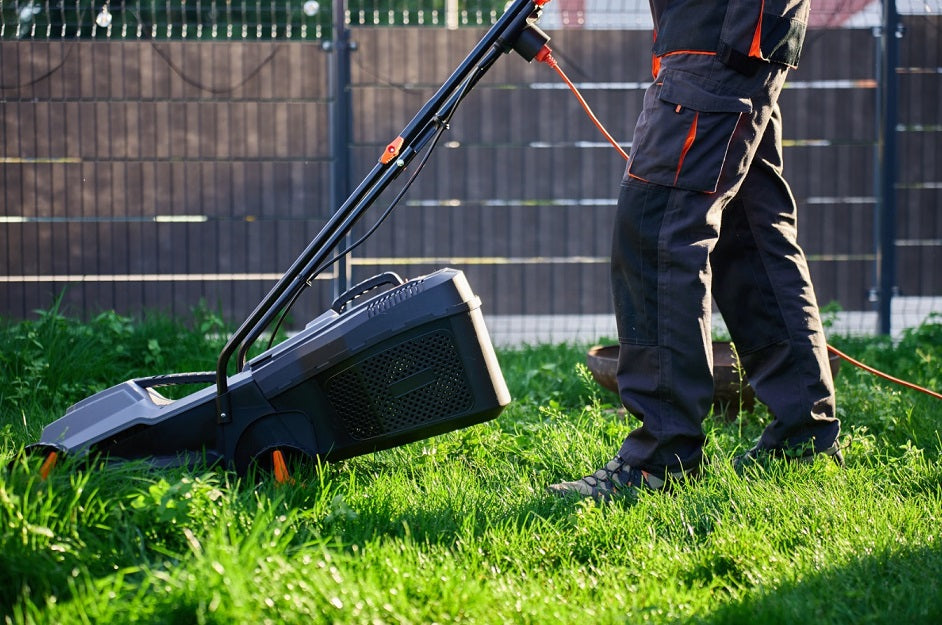
Before applying the winterizer fertilizer, you have to mow the lawn. This is actually the last mow of the year, and it’s done before the first winter frost.
Mow the grass to a slightly lower height than usual. It prevents matting under winter snow and enhances absorption of the fertilizer.
Set your Navimow mower’s height. Keep it at 2 to 2.5 inches for cool-season grasses. Schedule mowing so that the mower can precisely cut the grass.
You have to do it 1-2 days prior to the fertilizer application.

Check Soil Condition
Lawn care isn’t about guessing. To be sure, you should conduct a soil test and check the soil condition. It gives you a complete idea of the soil nutrients and what it actually needs.
The best way is to collect a soil sample and submit it to a local lab. It takes 1-2 weeks, but you get a detailed report. It tells you about the macronutrient and micronutrient levels. Not only that, but also some recommended fertilizers and things to improve soil condition. Here is a detailed guide on lawn soil testing.

You can also do a test at home with a DIY test kit. Measure the pH levels and nutrients. It will let you know if your lawn has any nutrient deficiency.
Other than the nutrients, you also need to check soil moisture and temperature. Before applying the winterizer fertilizer, the soil should be a little moist. You can use a soil moisture meter for instant results. If it is completely dry, water it 24 hours prior to application.
Secondly, check the soil temperature. For winterizer fertilizer, the ideal temperature range is 45°F to 50°F at a 2-inch depth of the soil. The temperature should stay consistently in the recommended range.
Keep in mind that the grass stops its top growth at this temperature, but it is still photosynthetically active. It is still green, and it can absorb fertilizer as well.
Note: Before application, there should be no water droplets on the grass blades. Otherwise, fertilizer granules will stick to the blades instead of landing on the ground.
Use a Spreader
After preparing the lawn and checking the soil condition, you are ready to apply fertilizer to the lawn.
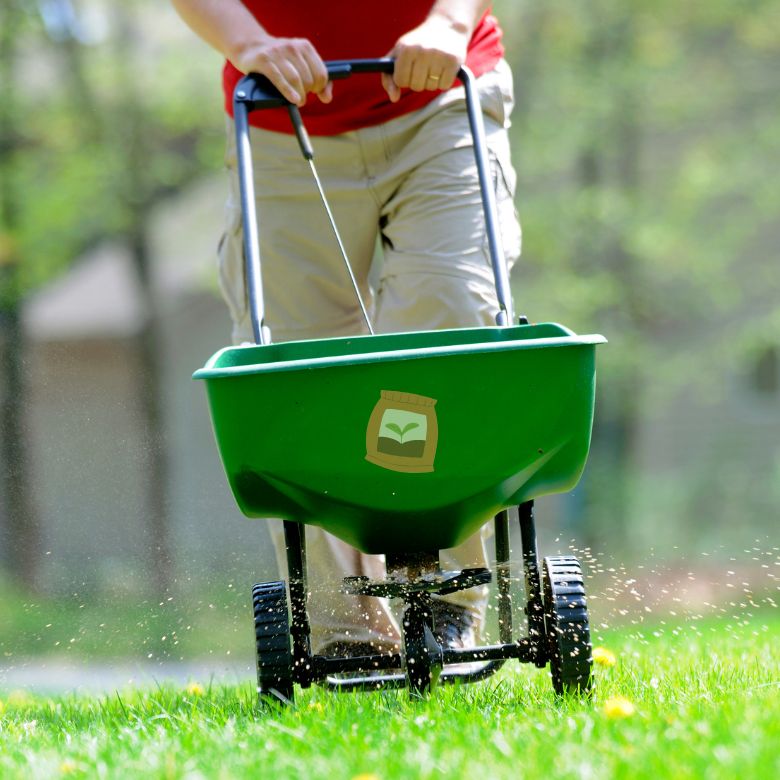
If you have a small lawn, you can use a hand spreader. Otherwise, a broadcast spreader is needed.
Measure the area of the lawn and get the required amount of fertilizer. Always check the recommended winter fertilizer application rate on the bag.
Typically, the recommended rate is 0.5 to 0.75 lbs. of Nitrogen per 1,000 square feet. You can calculate the exact weight through this formula.
Pounds of Fertilizer per 1,000 sq. ft. = (Target Nitrogen Rate / Nitrogen Percentage)
Suppose you have a 30-0-10 fertilizer and you want to apply 0.5 lbs of Nitrogen per 1,000 sq. ft.
Pounds of Fertilizer per 1,000 sq. ft. = (0.5/0.3)
Pounds of Fertilizer per 1,000 sq. ft. = 1.66 lbs
For excellent results, you should apply fertilizer in a criss-cross pattern. Set the spreader dial to half of the recommended rate and cover the lawn vertically. Walk in a straight line and overlap the wheel track slightly. After that, spread the fertilizer horizontally.

Water Lightly
Winterizer fertilizers have quick-release nitrogen. It’s actually water-soluble nitrogen. Thus, to activate the fertilizer after application, lightly water the lawn.
Apply 0.25 to 0.5 inches of water through your sprinkler system. Once you water the lawn, the nitrogen dissolves and potassium reaches the roots. Do not water too much because it could cause pooling and runoff of the winterizer fertilizer.
FAQs
When should I apply winterizer fertilizer?
You should apply winterizer fertilizer in late October or mid-November. The soil temperature should be around 45°F to 50°F at a 2-inch depth of the soil. At this stage, the grass stops its top growth. However, it’s still green and photosynthetically active.
Which fertilizer is best for grass in winter?
The best fertilizer for winter is one that contains quick-release nitrogen in higher proportion. It boosts the energy reserves of the grass so that it can survive winter. Secondly, it should have high potassium content. It is necessary to strengthen the cell wall and enhance cold tolerance.
How to winterize a lawn?
Clean your lawn. Get rid of the fall leaves, twigs, branches, and every mess. Give it a final cut and keep the mower at a lower height than usual. Finally, apply a winterizer fertilizer and water it lightly. Your lawn is ready to fight the winter and wake up early in the spring.
Should I water after fertilizing?
After applying winterizer fertilizer, you need to apply water. It contains water-soluble nitrogen, so a light watering session is required. The water dissolves the fertilizer granules, and the nutrients reach the soil.
Final Words
A winterizer fertilizer is not a choice for cool-season lawns, but it’s a necessity. It provides the grass enough energy reserves and strengthens the cell wall to bear cold temperatures. That’s why the grass survives the winter easily and grows back again early in the spring. However, you have to apply it at the right time. We have explained the step-by-step process that you can easily follow and save your grass.