Wondering how mushrooms grew in your yard overnight? Well, it didn’t happen all of a sudden. The mushroom you are seeing is just a fruiting body. There’s a massive hidden fungal network beneath the soil.
Nobody likes to see mushrooms in their pristine lawn. But when they appear, it indicates something is wrong. Let’s understand how mushrooms grow in your lawn, the factors that contribute to their sudden appearance, and whether they are harmful.
We will help you understand the root cause of the issue. It will give you the right direction for a permanent fix. We will share different ways to get rid of mushrooms in your yard and ensure they never come back to destroy your curb appeal.
What are Mushrooms and How Do They Grow?
For the effective treatment of mushrooms, lawn owners must be aware of what they are and how they grow.
Mushrooms are actually the fruiting body, or reproductive structure, of a fungus that is thriving underground. This means mushrooms are just a small part. There is a massive network of fungi beneath the soil, which is also called a mycelial network.
The network is present in almost all healthy soil. But it stays dormant or only expands underground. However, when the environmental conditions are favorable, such as excess moisture, low light, and an abundant food source, it spends its energy and pushes mushrooms out of the soil.

Once the mushroom grows in your lawn, it releases microscopic spores in a massive quantity. The spores are present beneath the mushroom cap (gills). They can be carried by the wind, water, animals, etc. When they settle in the soil, they start to germinate in favorable environmental conditions.
Due to spore germination, there is a tiny thread-like filament called a hypha. It grows repeatedly and fuses with compatible hyphae from other spores. This creates an interconnected network, mycelium. The cycle continues; mushrooms grow from mycelium in favorable conditions.
Simply put, if you have mushrooms in your lawn, it means more mushrooms will grow soon. It’s because they spread spores in your lawn and can cause an invasion.
Why Mushrooms Grow in Your Yard?
To get rid of mushrooms, you need to find the root cause. Without knowing why mushrooms are growing in your lawn, you can’t take preventive measures. You can only spot-treat them, which isn’t a long-term solution.
Here are some common reasons why mushrooms grow in your yard.
Decaying Organic Matter
We already know that mushrooms do not grow in your lawn all of a sudden. There is a massive network present under the soil. The reason for this network’s presence is the availability of food.
Mushrooms are fungi, which means they cannot produce their own food like normal plants. They do not have chlorophyll in them. That’s why they rely on decaying organic matter. They can decompose the complex carbon bonds of organic matter through enzymes and turn them into simple sugars for absorption.
There could be buried tree stumps or construction lumber under the soil fueling mushrooms and the network. If you have removed a mature tree, its root system can remain active underground. These food sources can provide mushrooms with enough food for several years.
Often, lawns have a thick thatch, which is a layer of dead organic matter just above the soil. If it is over 0.5 inches, it traps moisture and provides food for mycelium. It also holds moisture and creates favorable conditions for mushrooms to grow.
Pet waste and other organic debris, such as grass clippings, feed the fungi network underground. Even if you have overapplied compost, it could provide food and be a reason for the mushroom’s presence in your lawn.

Excess Moisture
Mushrooms are fungi that need a specific environment to thrive. They grow in places where there is excess moisture.
When the soil stays damp for a long time, the mycelium gets a signal that conditions are perfect for fruiting. And then, it triggers mushrooms.
Now, you have to look at the reasons for excess moisture. Check your watering habits. If you are watering the lawn more than it needs, the excess water will keep the soil damp for too long.
Secondly, you need to water at the right time. If you water at night, the lawn will stay damp for longer.
You should also consider the weather. If there was a heavy downpour, you don’t need to water the lawn. But if there was a slight drizzle, you can reduce watering time a bit. Thus, you need to adjust your watering according to the weather.
Shade and Poor Airflow
A common reason for excess moisture in lawns is shade and poor airflow. Whether the shade is because of a dense tree, wall, or building, the sunlight won’t be able to reach the soil. It keeps the soil moist for longer. For such areas, you can improve lighting by trimming tree branches and removing shade. If you can't do that, you should water less.
Similarly, good airflow also resists mushroom growth. If the air circulation is poor in your lawn, the humidity will be high, and the soil will be too moist. Water these areas accordingly.
Compacted Soil
Over time, the soil in your lawn gets compacted because of foot traffic, the mower’s weight, and various other reasons. In severe compaction, the pores between soil particles are eliminated. As a result, there is no space left for water to drain easily.
That’s why the water in the lawn stays above the soil. Stagnant water around the root zone suffocates the roots. It creates a perfect environment for fungi to grow.
Poor drainage is a sign of compacted soil, but you can do a simple screwdriver test. Take a screwdriver and push it into the soil. If it slides easily, it means the soil is fine. But if you need to apply too much force after 1-2 inches, it means the soil is compacted.
Soil content also plays an important role. If the soil contains too much clay, it will compact more frequently. It will affect the drainage and keep the water stagnant for a long time.

Are Mushrooms Bad for Your Grass?
Mushrooms are not like weeds. They do not feed on the nutrients your grass needs. Therefore, they steal nothing from your grass.
Whether the mushroom or the mycelial network underground, they feed on dead organic matter. They release special enzymes that break down complex carbon bonds and turn them into simple sugars.
Thus, mushrooms do not harm your grass. In fact, when they decompose organic matter, some nutrients are released into the soil, which is beneficial for the grass. Moreover, the fine threads of the mycelium improve soil porosity, so the roots get better access to air, water, and nutrients.
If you have mushrooms in your lawn, it does not mean that your lawn is dying or diseased. It simply indicates the favorable conditions that signal mycelium to push mushrooms.
Despite these benefits, mushrooms can be a serious issue in your lawn. Here’s how:
Toxic Hazard
The first issue with mushrooms is toxicity. Several common residential lawn mushrooms contain toxins. They are harmful, especially for pets and children.
For instance, Green-Spored Parasol (Chlorophyllum molybdites) is a common species of mushroom found in North American lawns. It contains toxic protein that triggers severe gastrointestinal upset. Ingestion can lead to persistent vomiting, severe watery or bloody diarrhea, and severe dehydration within a few hours. It looks like a harmless mushroom, but it isn’t.
Similarly, Little Brown Mushrooms are another common variety in residential turf. Some of the species are harmless, but some contain muscarine, which can cause profuse salivation, lacrimation, urination, diarrhea, and bradycardia in pets.
For common lawn owners, it’s difficult to identify the mushroom. Most toxic and non-toxic species look the same. Only experts can differentiate, and sometimes, a microscopic spore analysis is needed. Therefore, it’s better to get rid of mushrooms no matter whether they are toxic or non-toxic.

Fairy Rings
Typically, mushrooms do not harm your lawn. However, a few varieties can.
Some varieties of the mycelial network hidden under the soil create a circular or arc pattern on the lawn. As long as there is only dark green grass, there is nothing to worry about. But in some cases, these can also kill the grass. This phenomenon is known as Fairy Rings.
In the Type I Fairy Ring, the fungal mycelium grows in the upper 2 to 8 inches of the soil. It coats the soil particles with a waxy compound, which is why the soil becomes hydrophobic. It repels water even during heavy rains. Thus, water does not reach the roots, and the grass above the fairy ring dies. You witness dead grass in an arc or circular pattern.
In the Type II Fairy Rings, the mycelium breaks down the organic matter, which leads to the release of excess nitrogen. It turns the grass dark green and boosts growth. Secondly, the fungus also releases a high concentration of ammonia as waste (a form of nitrogen). A small amount of nitrogen is beneficial for grass, but a high concentration can burn it.

Aesthetic Disruption
No one likes to see mushrooms growing in the lawn. It affects the lawn aesthetics.
The caps of mushrooms are visible over the turf, which catches attention. It breaks the grass's uniform texture or pattern.
When the cap rots, it produces a foul smell, which attracts gnats, flies, and beetles. Secondly, they block the sunlight reaching the grass. This leads to yellowing of that grass portion.
If you don’t get rid of mushrooms at the right time, they will spread in your lawn. These are fruiting bodies that can spread spores everywhere.
How to Remove Mushrooms in Your Yard?
If mushrooms have already grown in your yard, you can try these effective solutions to get rid of them.
Physical Removal
It’s a quick method to remove existing mushrooms from your yard. But it is only suitable if you have a few.
Hand-pulling is often recommended as the first and easiest method in the early stages. You have to pull the mushroom from the base. But make sure to wear gloves while doing so.
Reach all the way to the soil line. Grab the mushroom stem firmly from the base. Gently twist and pull upward. This way, you can remove the cap and base together.
After pulling the mushroom, put it in a bag immediately. It’s a fruiting body, so make sure the spores don't spread. Tie the bag and dispose of it in the municipal trash. Do not leave anything on the grass, and do not put the mushroom in the compost bin.
For better results, use two tablespoons of mild dishwashing soap and mix it into one gallon of water. Then, lightly pour the solution on the exact spot. It breaks down the fungal cell membrane, helping the solution to penetrate and dry it out.

Remove Underground Food Resources
The primary reason for having mushrooms in your yard is the underground food resources. Unless you get rid of them, you will have mushrooms again and again.
If mushrooms appear in a cluster or at specific places, it’s an indication that there is something beneath the soil.
Dig down a few inches to see what's there. There could be old tree stumps, lumber, roots, etc. Try to find the food source in that area and remove it from the lawn.
After that, you can level the soil and reseed the area for new grass.
Improve the Environment
Mushrooms do not grow in your lawn unless the environmental conditions are favorable. Firstly, you should check your watering schedule and habits. If there is something wrong with it, improve it. Switch to deep, infrequent watering sessions to prevent excess water and moisture.
Make sure the water drains easily. If it stays on the lawn or any specific area for too long, check whether it’s compacted or not. To relieve compaction, you should opt for core aeration. It ensures better drainage and allows the roots to breathe.
Some lawns have low-lying spots. This is where the water collects and stays for too long. Fill those low spots and try to level the surface. It will improve drainage.
You should also improve the sunlight and airflow. Get rid of long tree branches. Remove shade from that area if there is any.
Use a Fungicide
It’s not recommended to use a fungicide to get rid of mushrooms. Because it does not address the root cause. Instead of using a fungicide, you should first try the above solutions we have shared.
Common fungicides available in stores only coat the grass to prevent mushrooms. They do not penetrate the soil to affect the mycelial network. Broad-spectrum fungicides can kill fungi, but they also harm the turf.
However, fungicides can help in some cases. You can use them to deal with fairy rings. If they have made the soil hydrophobic, fungicides can break down the bond and restore normal soil conditions. They can also be used as a temporary measure when you need a quick solution, such as for an event.
Also, consider pet and child safety. Read the instructions and apply the chemical appropriately.

How to Prevent Mushrooms?
After getting rid of mushrooms, you have to take care of your lawn so that they don’t come back.
Optimize Watering
Your lawn needs the perfect amount of water to thrive. Whether you are watering less or more, both will affect the grass's health.
Most lawns need 1 to 1.5 inches of water per week. You can split this into 2 to 3 sessions. Deep and infrequent watering is recommended, and you can adjust the duration according to the weather, sand type, and other factors.
The most important things are adjusting the sprinkler and turning it on for the right amount of time. You should calculate the sprinkler rate first, and then water your lawn accordingly. This way, your lawn will get the right amount of water.
Secondly, water your lawn in the early morning from 6 am to 10 am. If you miss this window, you can water between 4 pm and 6 pm. For more details, check out how long to water grass.
Dethatch and Aerate
Dethatching and aeration are essential to maintain a lawn. They should be in your seasonal lawn care routine.
Keep an eye on the lawn thatch. If it is below 0.5 inches, there is nothing to worry about. But if it is thicker than that, you need to do dethatching.
Thick thatch absorbs moisture and keeps the soil damp for a longer period. It also blocks nutrients, water, and air from reaching the roots. Over time, the grass turns faded and struggles to survive. Check out our detailed guide on lawn dethatching and get rid of thick thatch in your lawn.
Aerate your lawn before it's too late. If the soil is too compact, it won’t allow water, air, and nutrients to reach the roots. Which is why the growth of the grass is affected.
Before it severely harms your lawn, you can do core aeration. Once you remove soil plugs from the lawn, soil compaction is reversed. It gives water, air, and nutrients better access to the roots.
For a small lawn or area, manual core aeration can do the job. But for large lawns, you can rent a power aerator. Here is a detailed guide on lawn aeration.

Get Rid of Organic Material
Do not leave organic materials in your lawn. This includes fallen twigs, tree branches, leftover wood, autumn leaves, and pet waste. Try to get rid of them as soon as possible.
If you have recently removed a tree, make sure to remove its roots as well. If you leave them in the soil, they feed the underground mycelial network for years. Go at least 12 inches below the soil and remove the roots. Secondly, do not fill the hole with wood shavings and leftovers.
Fallen leaves on the lawn block sunlight from reaching the grass and soil. Because of the rain, morning dew, and watering, they create a matted blanket over the turf. It’s better to clean the area frequently.
Small twigs and branches sink into the turf because of foot traffic and mowing. Often, mowers cut these small wood pieces into small chunks that get buried and feed mycelium.
Also, if you have a pet, pick up the pet waste in the lawn every day. Otherwise, it will feed the fungi and harm your grass. For more details, check out Can you mow over dog poop?
Adjust Mowing Habits
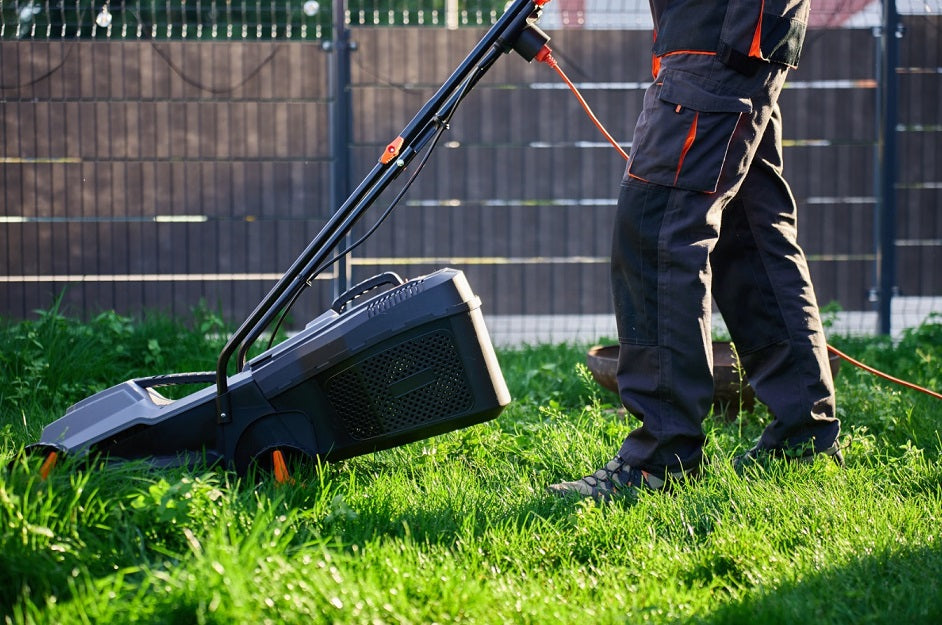
Mow your lawn regularly to keep the optimal grass height. If you let it overgrow, the soil will stay damp for a longer period and create a favorable environment for mushrooms. And if you cut it too short, it will put stress on the grass. Therefore, it’s important to maintain the best grass cutting height.
Follow the one-third rule. Never mow more than one-third of the grass at a time. It will keep your grass healthy and green. During a mushroom outbreak, you should bag clippings and dispose of them properly.
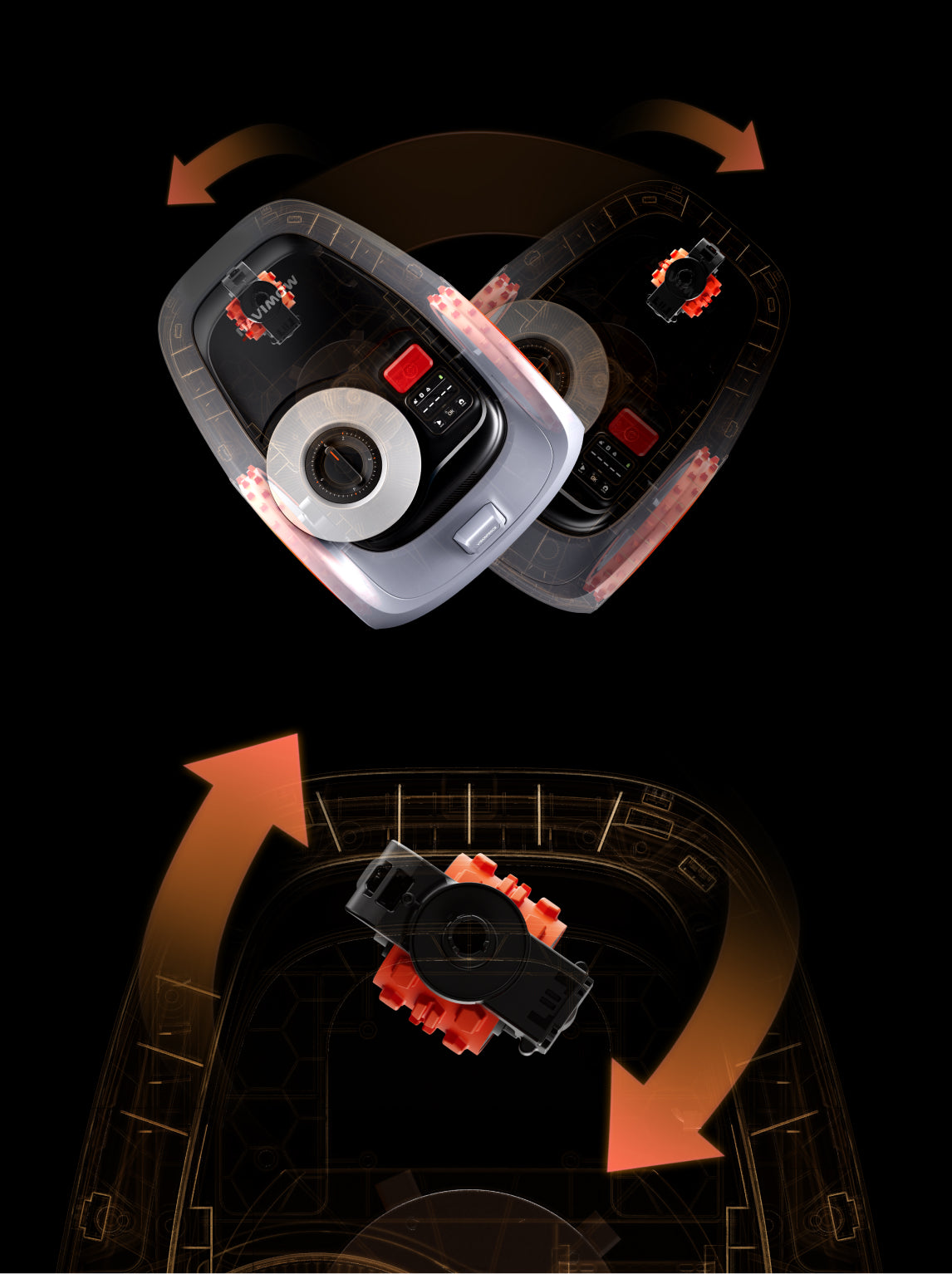
People often struggle to maintain a mowing schedule for their grass. And this is where things go wrong. The best way to keep grass at the recommended height is to get a robot lawn mower. It will automatically mow the lawn according to the schedule and save you a lot of time. You will have a perfectly mowed lawn every day.

FAQs
Will vinegar kill mushrooms in the yard?
Yes, vinegar can kill visible mushrooms. However, it won’t affect the underground mycelial network. It’s a temporary solution to get rid of mushrooms.
What triggers mushroom growth?
High moisture and humidity trigger mushroom growth. The mycelial network that’s already present underground gets a signal when the moisture is high and pushes mushrooms above the soil.
Will dish soap kill mushrooms?
Yes, dish soap will dry out the mushroom caps and kill them temporarily. The fungal network underground stays intact, so mushrooms can grow again.
What gets rid of mushrooms growing in your yard?
Get rid of the food sources or decaying organic matter under the soil. It feeds the mycelial network and mushrooms. Secondly, water deeply but infrequently, improve drainage, and dethatch and aerate the soil (if needed).