This is the most frequently asked question of every lawn owner who is a dog parent.
Dogs prefer to poop in quiet and grassy areas, and your lawn is a perfect place. Even if your dog is potty-trained, there are still chances that it might be pooping in the lawn, not regularly, but once in a while.
What should you do then? Should you leave the poop on the lawn and let the mower break it into pieces?
Some people think that dog poop is just like cow dung and can fertilize the lawn. But is that really true? That's what we are going to find out in this article.
We will explain whether dog poop is safe or dangerous for your lawn and how. This guide will tell you what to do with dog poop and how to ensure your lawn stays healthy.
Is It Safe to Mow Over Dog Poop?
Absolutely not. It's dangerous to mow over dog poop. It harms your health, lawn, and the lawnmower.
You might think that the mower blades could turn dog poop into small particles, spread the organic waste in your lawn, and turn it into fertilizer. But it does harm your lawn rather than doing any good.
Not only does it create a mess in your lawn and badly affect the aesthetic appeal, but it also ruins the grass and lawn atmosphere. It invites disease and may lead to health issues.
For your own safety, you should not mow over dog poop. Let's see why.

Why You Shouldn't Mow Over Dog Poop?
Doesn't Break Down
Dog poop does not break down. When you mow over it, it just spreads and makes your lawn messier.
People often think that dog poop is an organic fertilizer and will benefit the lawn. But it's nothing but a myth.
It is definitely organic matter, but it isn't like the cow dunk. The reason is that a dog is a carnivorous animal and gets a high-protein diet, which does not break down and turn into fertilizer. In contrast, cows and horses are herbivorous animals that eat grass, hay, and grains. Their waste breaks down easily and safely becomes a part of the soil. Thus, a dog's diet changes everything.
Dog poop isn't good for your lawn. It has a highly acidic nature because of its high protein content. It does not contain the nutrients that could turn dog poop into compost or fertilizer.
The high acidity will not flourish the grass; it will kill it. It will alter soil pH and prevent grass and plants from absorbing nutrients. Which means you cannot leave dog poop on the lawn. It's better to get rid of it as soon as possible.

If you run a lawnmower over it, you will spread dog poop on the lawn. After that, you won't be able to scoop it.
And if you are thinking you can easily wash it away with water, you're wrong. Water will just break it down slightly and contaminate the local waterways.
Transmits Parasites and Bacteria
Dog waste is home to certain parasites, such as roundworms, hookworms, and whipworms. If you leave dog poop on the lawn, these parasites are transmitted to the soil, and the worst part is that they survive for months and even years.
Similarly, dog waste is also packed with harmful bacteria, including Salmonella, E. coli, and Campylobacter. They are extremely harmful to humans and pets.
When you mow over dog poop, you actually spread these parasites and bacteria around. They can spread throughout your garden and even into your home.
Thus, you can neither leave dog poop on your lawn nor mow over it.

Health Issues
We have already discussed that dog poop contains parasites and bacteria. Not only are these harmful for your lawn, but also for all living things, including you, your children, and other pets.
When you run a mower over the dog poop, it spreads everywhere. The mower's high-speed blade spread the dog poop particles into the air and over a wide area. It actually pollutes the air with microscopic particles.
Once the mower has spread the dog poop all around, the risk of cross-contamination increases. At first, it was confined to a specific area, but after mowing, it has spread to a wider area. Children play in the lawn, and pets walk around. Thus, there is a risk of disease transmission.
Moreover, the mower's deck also contains particles of dog poop. It's like a breeding ground for bacteria. When you bring it inside after mowing, you introduce these bacteria into your home.
Dog poop also attracts flies, rodents, and pests. Even if you have not mowed over it, these pests can spread diseases. You might get infected while enjoying the lawn with your kids.

Lawn Damage
Dog poop turns your lush green lawn into yellow and brown patches. It contains protein-derived nitrogen, which can actually burn your lawn.
But nitrogen is an excellent nutrient for a lawn's health, isn't it? Yes, it is. But a dog's poop contains a very high concentration of nitrogen and minerals. They pull moisture away from the grass roots and let your lawn suffer from dehydration. Eventually, the grass in the area turns brown.
The pathogens in dog poop compete with the beneficial microbes in the soil, which are necessary for breaking down organic matter and providing nutrients to the roots. This is quite harmful for your lawn because it halts the recovery process and prevents new grass seeds from germinating.
If you leave dog poop on the lawn for a long time, it will block the sunlight and oxygen from reaching the soil under it. It will hold moisture and create a favorable environment for mold, fungi, and bacterial growth. It also weakens the turf, making it vulnerable to lawn diseases.

Ruins Lawnmower
If you want to use your lawnmower for a long time, keep it away from dog poop. Firstly, it's acidic, so it can remove the protective coating under the deck over time. Thus, the metal is exposed to the atmosphere, which leads to corrosion.
When you keep mowing over dog poop regularly, it builds up under the deck. It acts as a sticky residue that collects grass clippings, dirt, and debris. It clogs the mower blades or creates resistance in the spinning.

Over time, as debris builds up on the deck, it unbalances the blade and puts stress on the engine. It reduces the lifespan of the blade as well as the mower. There is a certain frequency of replacing the mower blade, but when you mow over dog poop, you have to do it more often.
Further Reading: How often to change lawn mower blades?
Unpleasant Odor
There is no doubt that mowing over dog poops makes your lawn stink. Yes, it spreads the tiny particles everywhere, even in the air. Thus, you will feel the smell when you try to relax in your lawn along with your family and friends. There's nothing more embarrassing for a lawn owner.
And when you take your mower inside the garage, it still has dog poop under it. It spreads the odor in your garage as well.
If you are thinking of cleaning the mower after every mow, it makes lawnmowing more difficult. It's not easy to clean the deck of the mower, dried dog waste, etc. Plus, it's a health hazard because you are touching something full of bacteria and parasites.
What to Do with the Dog Poop in the Lawn?
If you have dog poop in the lawn, the only solution is to scoop it before you mow. It is the best way to prevent it from spreading.
Pick it up and dispose of it safely. Keep in mind that dog poop is an environmental pollutant, so you have to be extra careful. You can't throw it anywhere. Proper disposal is essential for the environment.
It's better to scoop the poop as soon as possible. Because bacteria, parasites, and worms thrive in the poop. When you scoop it early, you minimize the contact of these harmful organisms with the soil. Thus, there is minimal or no damage.
How to Scoop Dog Poop?
Use a long-handled scooper. Rake the poop and collect it into a bag. Make sure to seal it tightly to prevent odor and bacteria from spreading. After that, you can dispose of it in the regular outdoor trash bin. For large lawns, it's better to have a separate poop bin in the lawn.

You can also flush the poop directly into the toilet. It is actually a safe method to prevent dog poop from ending up in bins. Municipal water treatment plants treat dog waste the same way they treat human waste, neutralizing pathogens. Just make sure to flush it without a bag or use a flushable bag.
Can a Robot Lawnmower Detect Dog Poop?
That's a tricky question. Usually, common robot lawn mowers cannot detect dog poop in the lawn. The poop is like a small obstacle that they neglect.
But the Navimow robot lawn mowers are different. They can detect small obstacles in your lawn. If the dog poop is about 1 cm in diameter, which is usually the case, and 3 cm above the grass surface, the mower will detect it. It will consider it as an obstacle and reroute.
Thus, it all depends on the size of the poop. It might not detect the poop of small breeds, but it could work for medium, large, and giant breeds.
It's always better to scoop the dog poop before mowing the lawn. You shouldn't leave it on the soil even if you don't want to mow. Get rid of it as soon as possible. The best thing about the Navimow mowers is that they are waterproof. You can easily rinse clean after mowing.
You can automate lawn mowing with these incredible robot lawnmowers.
The Navimow X4
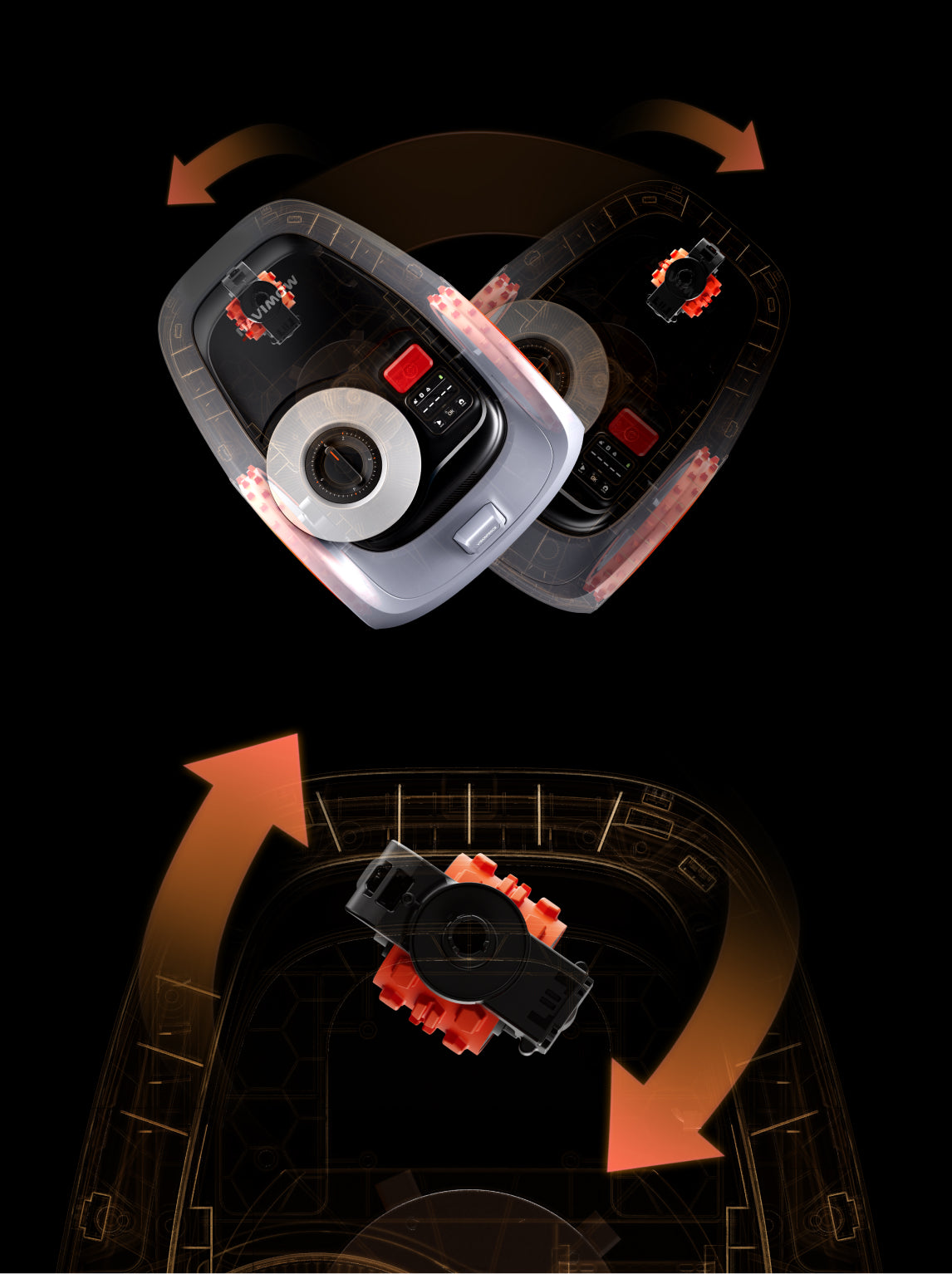
The Navimox X4 is packed with incredible features. It mows lawns up to 1.5 acres and conquers any kind of terrain. The All-Wheel Drive (AWD) allows it to work on pitted surfaces, waterlogged lawns, gravel paths, and steep slopes up to 84% (40⁰). Plus, the Xero-Turn™ allows the mower to take 180⁰ turns without harming the lawn. That's why it can work even in tight and narrow spaces.
It's equipped with AI-powered 360⁰ VisionFence™. Which means it is capable of detecting obstacles in all directions. If there is a dog poop of the size that the mower can detect, it will detect instantly and reroute for safe mowing. It detects persons, animals, everyday obstacles, and lawn objects with perfection and maintains a safe distance.

The mower uses NRTK and vision technology to navigate your lawn. It offers centimeter-level accuracy and mows every corner and edge of your lawn. Its dual-motor works on any kind of grass and even handles thick, long, and dense grass without any hassle.
The Navimow i2 AWD
The Navimow i2 AWD is a compact mower for small lawns up to 0.25 acres. It's affordable yet equipped with exceptional features. It also has the All-Wheel Drive (AWD) to work on any surface. It mows on root-covered terrains, uneven stone paths, and steep slopes up to 45% (24⁰). And like the X4, it also features Xero-Turn™ technology for quick pivots on the lawn.
The 140⁰ RGB camera detects obstacles within its field of view. It can also detect dog poop with a diameter of around 1 cm and a height of 3 cm. Whether it's a pet, person, or lawn object, it locates every obstacle with precision. It can recognize 150+ obstacles and reroute in 0.1 seconds, while maintaining a 1-meter buffer.

It's known for its precise cutting and quiet performance. Its noise level is only 59 dB(A), which does not disturb your family members and neighbors. It automatically maps your lawn and navigates using NRTK. All it needs is a voice command or a tap on the Navimow app, and it's ready to mow.
FAQs
Do I have to pick up dog poop before mowing?
Yes, you must pick up dog poop before mowing. Otherwise, the mower will spread it over a wider area, making it more harmful and messier.
Is dog poop harmful to grass?
Yes, dog poop is harmful to grass. It is highly acidic and has a high concentration of nitrogen, which can burn grass. Moreover, it contains pathogens and bacteria that not only harm the lawn, but also the lawn owner and lawnmower.
What happens if I don't pick up dog poop in my yard?
If you don't pick up dog poop in your yard, you allow the bacteria and parasites to mix with the soil. Secondly, it blocks sunlight and oxygen from the area under it and creates a favorable environment for mold.
How long does dog poop fertilize grass?
Dog poop isn't a fertilizer. In fact, it damages your lawn. It does not break down like cow manure because of the high-protein diet. It won't change into compost or fertilizer, no matter how long you leave it on the grass.
How to sanitize a lawn after dog poop?
Use a poop scooper and rake it. Try to remove all the visible traces. If the area gets enough sunlight, UV rays will sanitize it. You can also use enzyme-based dissolvers. They break down complex proteins and compounds into simpler molecules that do not harm the lawn or the environment.