Lawn owners put a lot of effort into keeping their lawn healthy. But many complain that they don't witness good results despite the hard work. It usually happens when they try to do gardening based on their guesses and without knowing what their lawn actually needs.
Your lawn could be suffering from nutrient deficiency, pH imbalance, soil compaction, and other issues. Without knowing them, your efforts go in vain. But how do you know the issues of your lawn and what it needs?
That's where lawn soil testing comes into play. It helps you know the exact issue with the lawn soil or grass so that you can fix it and make your lawn a showpiece in the neighborhood.
This article is all about lawn soil testing. We will take you through different types of soil tests, what they indicate, and how they are carried out. If you are a beginner, this comprehensive guide will help you put your effort in the right direction to ensure exceptional results.
What is Lawn Soil Testing?
Lawn soil testing is the backbone of having a healthy lawn. It's like a diagnostic scan that finds hidden issues.
Suppose your lawn's pH is disturbed. In this case, no matter how much fertilizer you apply, the grass won't grow. The reason is that acidic pH leads to nutrient lockout. Despite the presence of essential nutrients in the soil, the grass can't absorb them. Thus, you need to fix the pH first. But without a soil test, you won't be able to know about this issue.
If you do lawn testing on a regular basis, you know about pH, nutrient deficiency, and everything about the soil. Therefore, you know what to do and when.

Types of Soil Testing
Soil testing is mainly divided into two categories: Chemical Tests and Physical Tests.
Chemical Tests
Chemical tests involve a chemical analysis of the soil sample. They are either done in labs or using DIY test kits.
The goal of chemical tests is to reveal the soil's invisible chemistry and understand its issues. It is usually done to find the pH levels and nutrient profile. You can know the quantity or deficiency/abundance of macronutrients (Nitrogen, Phosphorus, & Potassium) and micronutrients (Iron, Magnesium, and Calcium).
If your lawn is experiencing issues with no visible clues, a soil test is mandatory. Whether the grass is turning yellow, there are patches in the lawn, or the lawn is thinning over time, a chemical test could help in finding the root cause.
Physical Tests
Physical tests are meant for judging the makeup and behavior of the soil. These are extremely simple and can be done at home without any testing kits.
They are used to determine the ratio of sand, silt, and clay. Plus, you can find out how compact the soil is and how well it drains water.
How to Take a Soil Sample
In lawn soil testing, collecting a soil sample properly is extremely important. Beginners often make mistakes when collecting samples and end up getting inaccurate results.
When you want to take soil sample testing, you can't dig a single hole and submit the soil as a sample. It does not define the characteristics of your whole lawn.
For accurate results, you need a Composite Sample. It is a special sample that represents your entire yard. Let's see how to take a composite sample from your lawn.
Things you need:
- A stainless-steel soil probe or trowel
- A plastic bucket
- A shovel
- Sample bags

Step 1: Walk in a zigzag pattern across your lawn and mark 10-15 spots to collect samples. Avoid the edge of the driveway and areas under the eaves of the house or buildings.
Step 2: Before taking a sample, push aside long grass and remove thatch or mulch. Dig a 3-4 inch deep hole to collect the sample. If you are using a soil probe, pull the core out from the recommended depth.
Step 3: Put the sample in a clean plastic bucket. Use a clean stick or your hands (with gloves) to break up all the large clumps. Remove any roots, rocks, and grass blades.
Step 4: Collect samples from all spots in the same bucket. Mix the soil well to get a composite soil. If the soil is wet, spread it on a clean paper for 24 hours and let it dry out at room temperature.
Step 5: Take two cups of the soil and pack it in the sample bag. We have successfully collected the composite sample of the lawn. You can use it for DIY kits or send it to a lab.
Note: Do not use rusty or galvanized metal tools while collecting the sample.

How to Test Soil pH?
Often, lawn owners don't have a clue why their grass isn't growing well. The reason lies in the high or low pH levels. Ideally, the lawn's pH should be between 6.0 and 7.0, which is slightly acidic to neutral. If the soil becomes too acidic or basic, the grass can't absorb essential nutrients.
As a lawn owner, you should regularly test soil pH to address the issue promptly. Here are a few methods to test it.
a) Using Digital Probe
This is the easiest and quickest method. All you need is a digital pH testing probe.
Step 1: Dig a small hole about 4 inches deep. Remove rocks, sticks, and grass roots.
Step 2: Pour distilled water and make the soil muddy.
Step 3: Insert the probe and wait for 60 seconds. After that, check the reading of the probe.
You can test pH levels at multiple locations to get an idea of the overall lawn's pH.
Note: Do not use tap water.

b) Lab Test
A lab test is a more accurate option for measuring pH.
We have already explained how to take a soil sample. You can send a sample to a private lab or a local university extension. It will help you know the pH levels with certainty.
Secondly, the report helps you fix the issue. Whether the pH is high or low, they could propose a solution.
c) Soil pH Test Strips
Soil pH can also be tested with pH test strips. You can easily find DIY pH testing kits online and perform a test at home.
In these test kits, you need to use a small soil sample of around 10g. Then, mix it with pure water as recommended.
After that, you need to shake the tube or container. Then wait 20-30 minutes until the soil has completely settled. The soil will be at the bottom, and water will be clearly visible at the top.
Immerse the given test strip in the upper layer of liquid for a few seconds. Then, wait for one minute. Finally, compare the test strip to the color scale of the kit. You will get an idea whether the soil is acidic, alkaline, or in optimal condition.
Note: Do not use tap water.

d) Using Kitchen Items
Suppose you don't have a digital pH measuring probe and you don't want to send a sample to the lab. In this case, you can use kitchen items to get an idea of the pH levels.
Put a scoop of soil in a plastic bowl. Add half a cup of baking soda to it. If you see any fizzes, it indicates the soil is acidic.
If the previous test was fine, you can test for alkalinity. Take a sample in a plastic bowl and add half a cup of white vinegar. If you see bubbles, it means the soil is alkaline.
If you don't see fizz in any of the attempts, it means the soil pH is perfect.
Keep in mind that these home tests aren't accurate. They are to get a quick idea when you don't have a digital probe.
How to Test Soil Nutrients?
The soil nutrient test helps you determine which nutrients your soil needs. If there is anything in excess or short, you will know about it after testing. It makes treating the lawn a lot easier.
Here are some methods to test soil nutrients.
a) Lab Test
The preferred method for nutrient testing is a lab test. It provides a detailed report on all nutrients present in the soil.
We have already explained how you can collect samples. Submit a sample to a private lab or local university.
It takes time to get the report, but it is worth it. The exact nutrient values help you treat the soil correctly and much more quickly.
Usually, the report also recommends the best way to fix the issue. For instance, if there is a nitrogen deficiency, the report could recommend "1lb per 1,000 sq ft Nitrogen." Thus, it provides a comprehensive plan for addressing soil issues.
The best part is that lab tests aren't limited to macronutrients like Nitrogen, Phosphorus, and Potassium. You can also get details on micronutrients such as iron, manganese, zinc, copper, and chlorine.

b) Using DIY Kits
DIY nutrient-testing kits are readily available online. You can get one of them to get an idea of the macronutrients.
These DIY kits usually have test capsules or solutions for each nutrient test. There are test capsules/solutions for Phosphorus, Nitrogen, and Potassium.
You need to take the soil sample and add distilled water to it. After mixing, let the soil particles settle down. Now, it's time to add capsules or solutions. You have to follow the process recommended in the test kit.
Once you are done, match the strip's color to the color charts.
These DIY kits don't provide the exact nutrient levels in the soil. They give you an idea or range. For instance, they indicate, by color, whether the nutrient is deficient, adequate, sufficient, or surplus.
How to Test Cation Exchange Capacity (CEC)?
Cation Exchange Capacity is the measure of how many nutrients your soil can hold.
Basically, the soil particles have a negative electrical charge, and the nutrients like Magnesium, Potassium, and Calcium have positive electrical charges. That said, they both attract each other.
If the soil has enough negative electrical charge, it can hold nutrients well. But if the CEC is low, it means the soil can't hold nutrients, and they usually wash away when you water the lawn or when it starts raining.
Knowing the CEC value is quite helpful, as it can help you improve the soil's ability to hold nutrients if needed. Secondly, you know when and how to fertilize your lawn properly.

If the CEC is low, you should apply less fertilizer but more frequently. Do not add too much fertilizer, as it will wash away. In the case of high CEC, you can apply a higher amount of fertilizer, but make sure the soil is not compacted. It often requires more lawn aeration.
It's not possible to test CEC at home. You should send a sample to a lab to determine the CEC value with accuracy. However, you can get an idea of the CEC by performing the Jar test at home, which will be discussed later in this article.
The CEC range 1-5 means low nutrient retention because of too much sand, 5-15 is moderate because of loam and silts, and 15-30 is high due to the presence of too much clay. Values higher than 30 mean very high nutrient retention because of organic matter/peat.
Physical Soil Tests
It's not always about pH and nutrient levels. Sometimes, there could be a physical issue with the soil. It could be compact, covered with thick thatch, etc.
Here are some physical soil tests that could help understand the behavior and makeup of the soil.
a) The Jar Test
The jar test is used for soil texture analysis. It separates the components of your soil: Sand, Silt, and Clay.
But the question is, why do you need to do this test? Because your soil needs the right ratio of sand, silt, and clay to perform.
Suppose the soil contains too much clay. It will suffocate the grass roots, causing them to die. But you can't neglect clay, as it holds nutrients and water very well. If your soil is made entirely of sand, it will offer excellent drainage but won't hold nutrients.

The jar test gives you a complete profile of the soil, so you know whether it is in the perfect shape or if you need to do something. Ideally, your lawn soil should be 40% sand, 40% silt, and 20% clay.
Step 1: Fill a glass jar with 1/3 soil and 2/3 water.
Step 2: Add a few drops of any dish soap. It's just to break the surface tension.
Step 3: Shake the jar well and let it sit for 24 hours.
After that, you will see separate layers of sand, silt, and clay. The sand will sit at the bottom because of the large particles. Silt will be in the middle layer. And the top layer will be clay.
The jar test also gives you an idea of the Cation Exchange Capacity (CEC). If the sand settles within minutes, it means the CEC could be low. And if the mixture stays cloudy for a long time, it means the CEC is likely above 15.
b) The Percolation Test
The lawn soil must be able to drain water properly. During heavy rain, your lawn can become waterlogged, leading to issues like soil compaction, moss, root suffocation, nutrient deficiency, and weeds.
To know whether your soil is capable of handling water during a storm, you do a percolation test.
Step 1: Dig a hole around 12 inches deep.
Step 2: Fill it with water. Let the water drain to saturate the soil.
Step 3: Refill the hole with water, then measure how much water drains each hour. If it drains 1 to 2 inches per hour, it's perfect.
If it is less than 0.5 inches, the soil is not draining well. It is too compact or has a higher clay content. And if it is more than 2 inches, the soil has too much sand.

c) The Screwdriver Test
Do this simple test in your lawn to assess soil compaction at the right time. When your soil is compact, the pores are eliminated. There is no space left for water, air, and nutrient exchange.
Take a 6-inch flathead screwdriver and push it into your lawn. If it slides without any hassle, it means the soil has pores and isn't compacted yet.
But if you need to apply too much pressure or body weight to insert the screwdriver 2 to 3 inches, it is an indication that the soil is too compact, and you need to aerate the lawn.
DIY Kits vs. Lab Lawn Soil Testing
DIY test kits are meant for getting a rough idea of the soil. You can use them once in a while to ensure your lawn is doing well. Do not go with them if you are facing serious lawn issues.
These test kits only give you a rough idea. There is no exact value. You can get the result within a few minutes or up to a day. But there are also chances of false results.
In contrast, lab lawn soil testing is exceptionally accurate. You get extremely precise values for each nutrient and pH level. You can take measures with 100% certainty, and these reports also recommend the best way to solve the issue.

DIY kits can only give you an idea of macronutrients. But a lab test report is detailed and can also provide values for micronutrients, CEC, organic matter, and pH with incredible accuracy.
The only problem with lab reports is the delay in reporting. You need to ship the sample and wait to get the results. It could also cost more than DIY kits. But all of this is worth it.
For regular testing, you can use DIY test kits. It's feasible for checking if the soil is too acidic/alkaline or has extremely high/low levels of macronutrients.
You should have lab tests once a year, or at least every two years. And if you get unexpected results from the DIY test, make sure to get a lab sample test before making major changes to your lawn. Moreover, if you are dealing with specific growth issues, yellowing, or other lawn problems, a lab test is mandatory.
The Soil is Perfect, But Your Lawn is Still Struggling? Review Your Mowing Habits
Lawn soil isn't always the culprit. Bad mowing habits also affect your lawn's health and lead to various issues.
Here are a few best practices:
- If your lawn is dealing with soil compaction, do not use a heavy mower. Often, people struggle with frequent soil compaction because of the riding mowers they use. Their extreme weight presses the soil and eliminates pores.
- Mow your lawn on a regular basis. Do not let it overgrow, as it leads to thatch build-up, fungal diseases, weed invasions, increased pests, etc. Similarly, do not do scalping as it exposes the lawn to diseases, weed invasion, moisture loss, etc. Maintain the best grass cutting height according to the grass type.
- Always follow the one-third rule for mowing. Never mow more than one-third of the grass at once if you don't want to put the grass under stress.
- Make sure the mower's blade is sharp enough. Learn how to sharpen lawn mower blades. Dull blades rip the grass tips and make the grass vulnerable to lawn diseases.
- Never mow when the grass is wet. It leads to mower clogging, soil compaction, uneven cuts, disease spread, etc. Always ensure the grass is dry enough to cut.
- Both bagging and mulching are useful for your lawn. Mulching provides your lawn with fertilizer, while bagging prevents weed spread and manages thatch and weeds. If you don't know which one to choose when, check out Mulching vs Bagging.
Following the above best practices is beneficial for your lawn, but it's not easy for every lawn owner. Often, they don't have enough time to mow the grass. They hardly do it once a week during the weekends.
A robot lawn mower can address mowing issues and automate lawn mowing. You only need to set the schedule and mowing height, and the mower will do everything on its own. It keeps your grass at the optimal height.
The weight of robot mowers is negligible, so they do not contribute to soil compaction. You don't need to sharpen their blade. They can be replaced after running for certain hours, and the cost is minimal. Most importantly, they do micro-clippings, which is much better than bagging and mulching. It reduces the fertilizer needs and makes your lawn healthier.
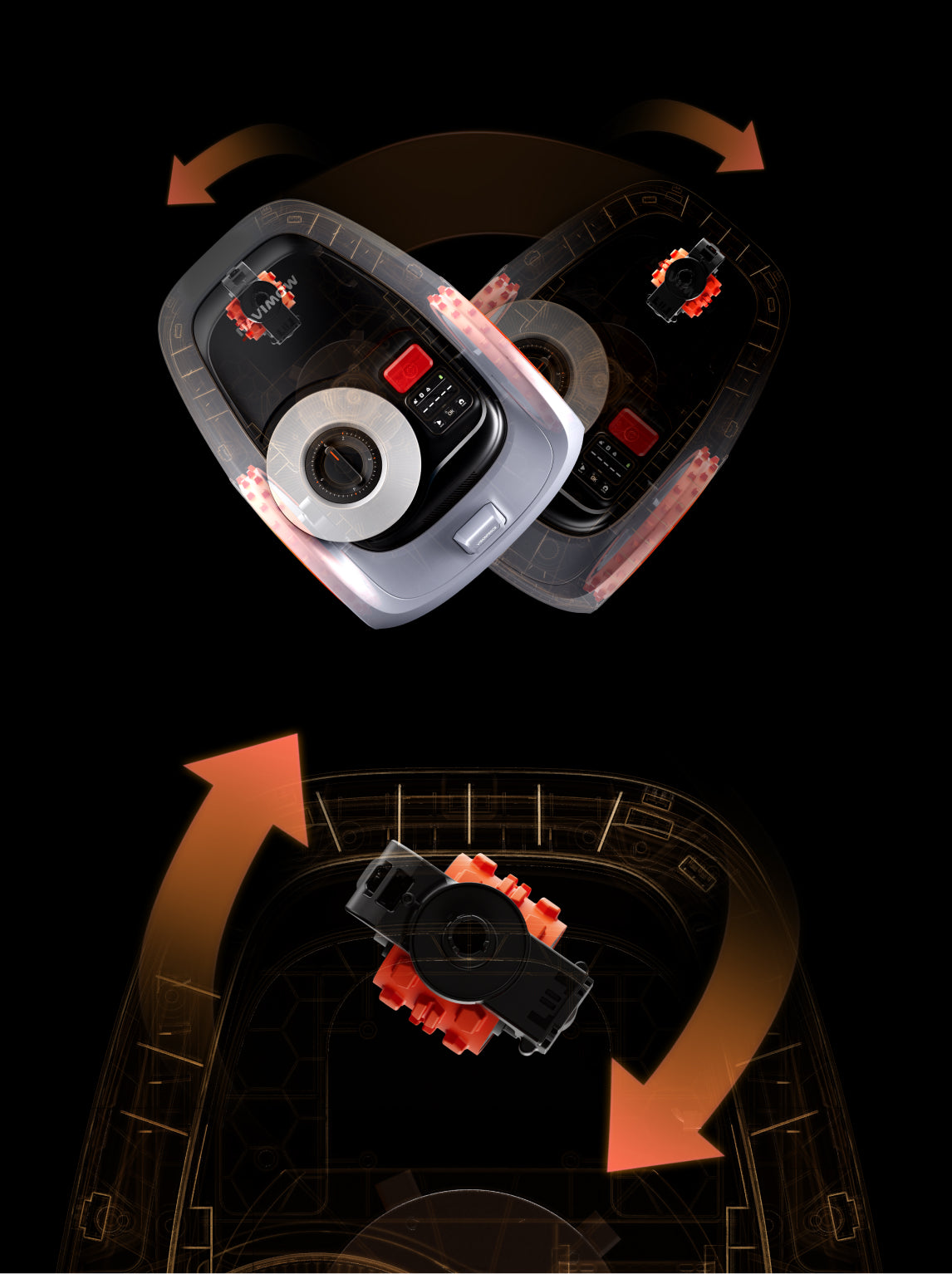
For small lawns, you can go with the Navimow i2 AWD series. They can mow lawns up to 0.25 acres. They are equipped with Xero-Turn™ AWD, which is why they work on difficult terrains, handle slopes up to 45% (24⁰), and make 180⁰ turns without harming the lawn. With Network RTK, they precisely navigate your lawn, and VisionFence™ detects 150+ obstacles to ensure safe mowing.

For large lawns, the Navimow X4 series is perfect. It's made for lawns up to 1.5 acres. It conquers any terrain because of Xero-Turn™ AWD, dual-suspensions, and patented Traction Control System (TCS). Whether it is a waterlogged lawn, pitted surface, or steep slope up to 84% (40⁰), it mows every area with perfection.
Its dual cutting motors handle long, thick, and dense grass of any type. With the EdgeSense™, it neatly cuts edges within 2 inches of walls and fences and edge-to-edge along boundaries and transitions. It uses NRTK, 360° Vision, and VIO (Visual Inertial Odometry) to navigate your lawn with greater precision. It automatically maps your lawn and avoids 200+ obstacles with AI-Powered 360° VisionFence™.

Final Words
Lawn soil testing is the only way to identify hidden issues in the lawn and soil. It helps lawn owners understand what their lawn is going through and what they need to do to fix the issue and improve the lawn's health. We have explained different types of lawn soil tests and why they are conducted. And now, you might have a clear idea of when to go with DIY test kits or lab tests.
Depending on the condition of your lawn and symptoms, you can do tests using DIY kits or send a sample to a nearby lab. With the results, you can identify the exact issue with your lawn or grass and direct your efforts accordingly. Once your lawn soil is healthy, you'll have a lush, green lawn that catches everyone's attention in the neighborhood.