No one likes to see a yellow lawn patch in their lawn. But it comes uninvited and compels the lawn owner to think about why it happened.
Your grass could turn yellow if it is suffering from nutrient deficiency, overwatering, overfertilization, or anything else. There could be any reason that's putting the grass under stress and disturbing its health.
For the lawn owner, it is necessary to find the exact reason. And that's what we will be discussing in this post. Once you know the reason why your grass is turning yellow, you can easily do the right fix.
1) Nutrient Deficiencies
Yellow grass is an indication of nutrient deficiency. In most cases, your green lawn turns into yellow patches just because it lacks some essential nutrients that bring the green color you strive for.
The most important nutrient is nitrogen. It's mandatory to have a green lawn, and if it's short, the grass slowly turns pale or yellow. It usually happens after a heavy rain, as it washes away the nitrogen in the soil and leaves nothing for the grass.
Another important nutrient for your green lawn is Iron. In iron deficiency, the grass blade appears yellow. If you look closely at it, you'll see the grass veins are still green, but the area around them has become yellow. This condition is called Chlorosis, and it mainly affects the recent growth.
If the grass is suffering from Chlorosis, it doesn't mean there is no iron left in the soil. It is possible, but in some cases, the iron is present, but the grass can't absorb it due to high pH levels.

The easiest way to figure out the nutrient deficiency is to do a soil test. You can grab a home test kit and find the root cause on your own. If it lacks nitrogen, add fertilizer to the area, and it will automatically turn green. And if the culprit is iron, spray an iron supplement in the area.
2) Watering Mistakes
Both under- and over-watering are dangerous for your lawn. If the lawn is not getting enough water, the grass will strive to stay alive. It will slowly turn yellow, and the blades will curl. It loses all its moisture and becomes crisp. Tear a grass blade and check its moisture content by breaking it. You'll easily get an idea if it is deprived of water. It's more common in hot summers.
Over-watering is also a cause of yellow patches. When you water too much, it creates puddles on the lawn. The pores of the soil from where the water enters get blocked. They are not only for water but also for air and nutrient exchange. Due to excess water, the roots cannot breathe. Over time, the grass becomes yellow due to oxygen deficiency. If this is the case, closely look at the soil; it should look and feel spongy.
In both cases, you need to figure out how long to water grass. But by reading our detailed guide, you can calculate the adequate amount. Once everything comes back to normal, your grass will automatically turn green.

3) Mowing Stress
Mowing is good for your lawn, but if you end up cutting grass too short, it can actually put your lawn under stress.
The top portion of the blade is responsible for photosynthesis, and it's also the area where the grass stores its energy. If you end up cutting everything, the bottom portion will be deprived of the energy it needs. Eventually, it will turn yellow.
Always follow the one-third rule for mowing. Never mow more than one-third of the grass to keep it away from stress. If you can't reach the desired height of the grass in one mow, you can do multiple sessions on separate days. But never mow too much at once. Otherwise, the grass won't be able to recover.
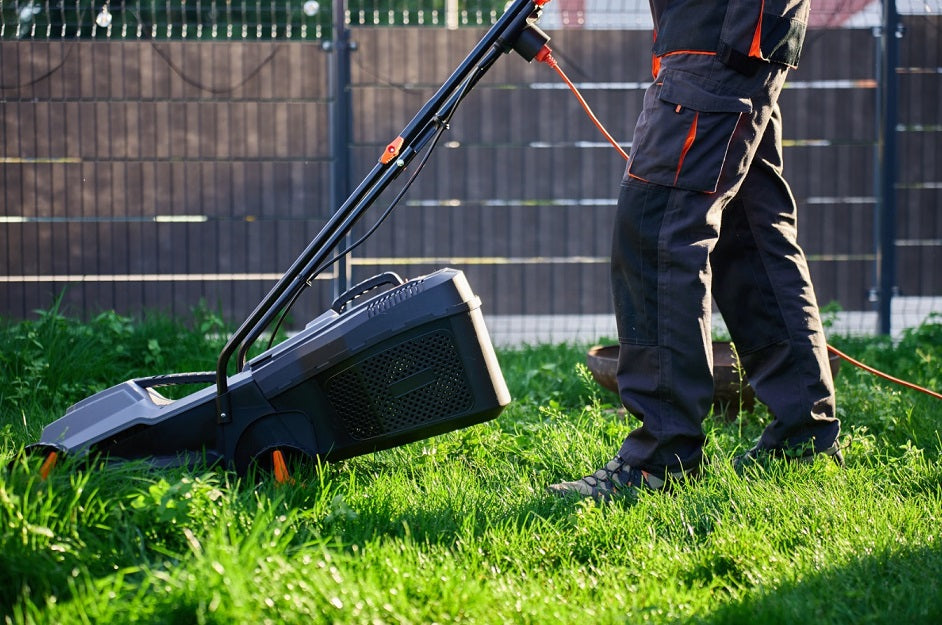
Refer to our grass cutting height chart and check the optimal height for different types of grass in different seasons. For precise cutting, you can opt for a robotic lawn mower. It mows your lawn automatically when it's needed. You don't need to wait for the weekend, and all you need to do is set a schedule. It maintains the grass at an optimal height even if you are away.

4) Soil Compaction
Your lawn's soil compacts over time. And it gets accelerated with over watering, high footfall, and heavy lawnmowers.
When the soil gets compacted, it blocks the pores. It causes hindrance in the exchange of water, air, and nutrients. That's why the lawn suffocates and is deprived of the essential nutrients and water. Over time, the grass turns yellow as it cannot absorb food and breathe.

Soil compaction is a natural process, and you cannot stop it. All you can do is aerate your lawn when it's the right time. It will create holes in the soil and make paths for air, water, and nutrients. It will alleviate the stress your lawn is going through.
5) Pests
Pests are the uninvited guests on your lawn. They could harm it in many ways, and one way is turning your grass yellow.
Grubs are common, and they can turn your grass yellow, especially in the late summer. They are beetle larvae, and when they are present in the soil, they eat up the roots. And once grass loses its roots, it can't absorb water, nutrients, and air. Thus, it eventually turns yellow and dies.

The problem is that you can't see grubs initially. They are hidden under the soil. You can only notice them by a little digging. If your grass has turned yellow, you can try to pull the grass. If the patch comes into your hand without any effort, it means there are grubs. They eat the roots, so you can easily pull the patch.
Another common uninvited guest is the Chinch Bug. They are small insects that suck fluid from the grass. They tear the grass blades, which exposes them to diseases. While sucking the fluid, these pests also inject a toxin into the grass, which is responsible for turning it yellow.
For both, you need to use insecticides. It's better to control them before it's too late.
6) Fungal Diseases
If the weather is humid, you are most likely to witness fungal diseases. They can turn your grass yellow. You see spots around your lawn rather than complete yellowing.
To deal with fungal diseases, you must ensure extra care for your lawn. If you do that, you can easily avoid fungal diseases.
Firstly, avoid overwatering as it traps too much moisture in the soil and creates a favorable environment for these fungal diseases.
You can use a fungicide to treat the yellow spots. Just make sure what kind of diseases are affecting your lawn to select the right fungicide.
7) Dog Urine
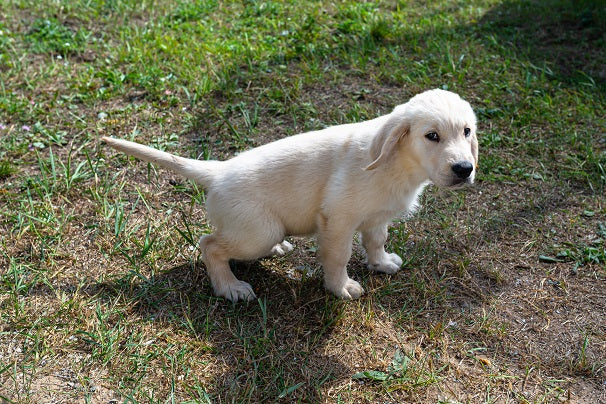
If you have a dog, the reason for the yellow patches might be the dog's urine, which is high in nitrogen. We have already talked about the fact that your lawn needs nitrogen, but if there is too much, it could also burn the grass and leave that yellow color you hate.

You can distinguish the spot easily. You will see a circle there. The center of the circle will be yellow due to high nitrogen, while the border will be lush-green due to diluted nitrogen.
Over time, you won't see the dark green circle around the yellow patch because the grass will eventually die if the dog continues to pee in that area. And if you want to spot it earlier, you can look for dark-green patches in the lawn that look different.
You can solve this problem by training your dog to pee in another area or a dedicated area. If the dog has already peed, water the area to dilute nitrogen.
8) Overfertilization
Fertilizer is necessary for your lawn's growth, but too much fertilizer can also burn your lawn. We have already talked about the effect of excess nitrogen in your lawn when a dog pees. The fertilizer you spread in your lawn also contains nitrogen, and if you do it too much, it will also lead to yellowing.
Determine the grass you have and pick a suitable fertilizer for your lawn. Secondly, know the adequate amount by looking at the manufacturer's recommendation.
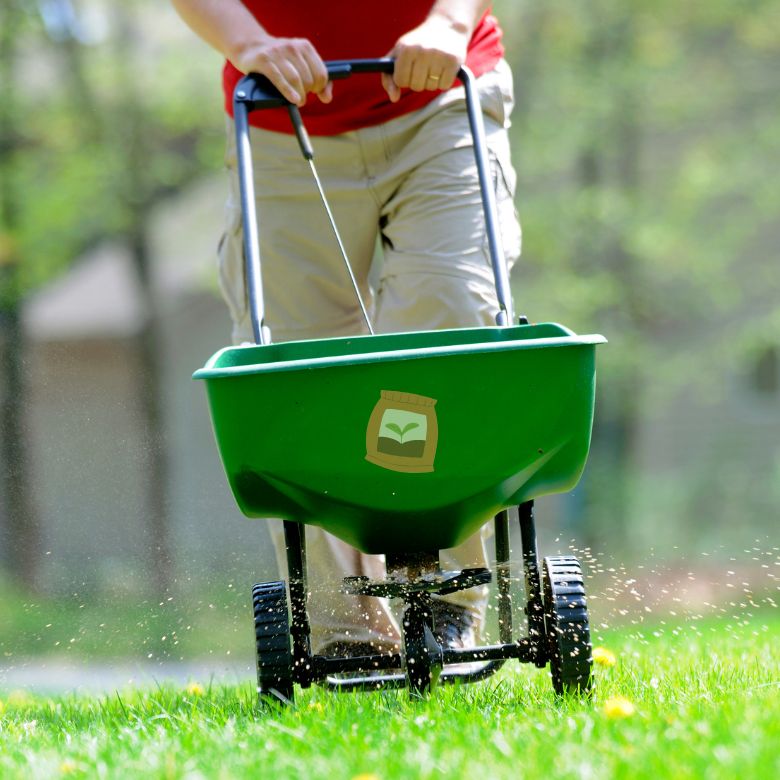
To precisely apply fertilizer in your lawn, you can opt for a fertilizer spreader. It will help you evenly apply the right amount without much hassle.

9) The Side Effects of Chemicals
Before you apply any kind of chemical, such as weed killer or herbicide, you need to be aware of the amount you need to use, the right time to use it, how to use it, and its side effects.
Often, lawn owners use too many chemicals on their lawns. It badly affects the lawn's health and could turn the grass yellow.
Another common issue is applying these chemicals at the wrong time. Never apply weed killers when the temperature is above 85⁰F. Due to high heat stress, the chemical turns into a gas and affects the grass blades.
Whether you want to use any preventive or killer chemical, apply it at the right time of the year. And if you see the yellow spots at the location where you applied the chemical, it's a clear indication that the chemical is the reason behind it.
Keep in mind that oil and gasoline spills are also dangerous for your lawn. They can also turn the grass yellow.
10) Dull Mower Blades
When the mower blade is dull, it tears the grass blades instead of cutting. It exposes the grass tips to the environment, which is why they dehydrate quickly and turn yellow.
If this is the case, you can check the grass blades. If they are ripped and the tips are yellow while the rest is green, it means you have to sharpen the lawnmower blade.
Keep in mind that when the grass tips are ripped, they become vulnerable to diseases. It's also possible that your grass might suffer from a disease and turn yellow after continuous ripping of the grass tips.
Once you sharpen the mower blade, the issue will be resolved. But if the blade is worn out, you will have to replace it. Check out how often to change lawn mower blades.

11) Thick Thatch
Thatch refers to the layer of dead and living matter that deposits between the grass blades and the soil. It naturally accumulates over time. As long as the thatch is thin, it does not affect the lawn. Instead, it acts as a protective layer.
And when it becomes thicker than one and a half inches, it creates a hindrance for air, water, and nutrients. It does not allow them to reach the roots, which is the reason your grass suffocates and suffers from thirst and nutrient deficiency. Finally, it turns yellow.
You need to keep an eye on the thatch buildup in your lawn. You can dig a hole in the lawn and inspect a small portion. The thatch looks like a brown, fibrous, and woody layer. It feels spongy when you walk on the lawn.
Put a finger towards the soil. If it reaches the cool and dark dirt easily, it means your lawn is fine. Otherwise, you need to dethatch your lawn. Check out our detailed guide on lawn dethatching.

12) Sunlight Blockage
Your grass needs sunlight for photosynthesis. Without adequate sunlight, it won't be able to produce enough food and energy for itself.
If any area of the lawn is under shade for any reason and the sunlight is blocked for a longer period, it does not get the sunlight it needs.
The only solution to this is to clear the blockage and let the sunlight reach.
In autumn, the grass blades are covered with dead leaves. It also blocks sunlight. So, make sure to regularly rake your lawn in autumn. Otherwise, the grass will turn yellow after being deprived of sunlight.

13) Dormancy
This is the only normal situation when the grass turns yellow, and you don't have to do anything. When the grass enters dormancy, such as winter, some or most parts turn yellow. It's normal, and the grass will revert to its original color when it is the growing season.
Cool-season grasses enter the dormant state when the air temperature is high, such as 90⁰F. So, they do not grow in summer and may turn yellow. Secondly, winter is the obvious season for dormancy.
Warm-season grasses enter the dormant state when the soil temperature is below 55⁰F. It remains dormant in low temperatures as well as winter.
Check out our lawn care calendar to know when these grasses are dormant or in the active growth state.

Final Words
For a lawn owner, a yellow patch is an eyesore. And it is necessary to treat it as soon as possible. We have listed the reasons why grass turns yellow. You have to identify the primary reason in order to follow the right treatment. We have also shared some tips to identify the issue. Once you identify the cause, you can try the recommended fix. It will hopefully treat the yellow lawn patch over time.