Fertilizing in summer is a bit risky. If you do it incorrectly or to the wrong grass type, you will end up harming your lawn rather than doing anything good. That’s why lawn owners often ask if they can fertilizer their lawns in summer.
Unfortunately, the answer isn’t straightforward, like a Yes or No. To decide whether fertilizer lawn is better or not, lawn owners need to consider a few important factors.
Let’s understand why fertilizing lawn in summer could be dangerous. We will explain which type of grass can be fertilized and what fertilizer to use in summer. Not only that, but we will take you through the step-by-step process of applying lawn fertilizer in summer without any worries.
Why Fertilizing in Summer Is Risky?
The primary risk of fertilizing in summer is Fertilizer Burn.
Synthetic fertilizers are actually salts. They are extremely powerful when it comes to water absorption. When you spread them on the lawn, they absorb moisture from the grass blades and roots. They quickly dehydrate the grass, and this natural process is called Osmosis.
When the water inside the grass blades is sucked, there is nothing left. The internal structure fails because cell walls start to shrink. At this stance, the grass looks yellow or straw-colored.

Osmosis can happen any time of the year. But in summer, it is extremely severe. Because the soil is usually dry because of intense heat. The evaporation rate is high, so the soil and grass lose moisture. The soil dries out quickly, and when you apply fertilizer, it makes things worse. The grass is unable to retain the moisture by absorbing water from soil, which is why it burns earlier.
The worst part is crown dehydration. The grass can recover if the grass tips are dehydrated, but if the crown is dehydrated, it cannot regenerate, which means the lawn becomes dead.
That’s not it. There is more.
When you add a high nitrogen the lawn in summer, you compel the grass to grow. It spends all its energy in in the top growth. Thus, the root maintenance is neglected. And summer is the time when grass needs a deep root system to absorb water from depth and fight drought.

Moreover, there is also a risk of fungus due to high nitrogen. The high humidity, heat, and nitrogen create the perfect environment for their growth. It could take over your entire lawn in no time.
Last but not least is the risk of weeds. The grass struggles in summer, but some types of weeds take the opportunity and start competing with the grass.
Which Type of Grass Can Be Fertilized in Summer
Cool-season Grasses
Cool-season grasses grow when the temperature is between 60⁰F and 75⁰F. They actively grow in spring and fall.
In summer, these grasses enter in summer dormancy. Which means they stop growing because they cannot handle heat stress. They save water and energy to survive through the extreme heat. You can see the change in color as they turn tan during this period, but it does not mean the grass is dead.
You should not fertilizer cool-season grass in summer. The reason is that these grasses are hibernating. They are waiting for the right temperature to start the growth phase.
But when your fertilizer them, you force them to grow. They wake up in the middle of hibernation and start growing the tips. They spend all their stored energy in the growth. It weakens the root system. Eventually, they die, as they do not nothing left to survive the harsh weather.
Simply put, if you fertilize cool-season grass in summer, you will force the grass to die.

Warm-season Grasses
Warm-season grasses love heat, and their favorable temperature range is 80⁰F to 95⁰F. Unlike cool-season grasses, they do not enter dormancy. Instead, they photosynthesize more efficiently in the summer season, which is the reason for their aggressive growth.
They grow actively in summer and spread everywhere in the lawn through stolons (above-ground runners) and rhizomes (below-ground runners). Even if there was a bare patch in the lawn, it will be filled automatically. These grasses repair on their own and fill every part of the lawn.
This aggressive growth can’t be achieved without nutrients, which is the reason they need fertilizer. Their metabolism is at an all-time high, so they need more fertilizer than usual.
Fertilizing warm-season grass isn’t optional; it’s necessary. Without essential nutrients, the grasses will become thin and change their color from green to yellow. Proper fertilization in summer ensures dense grass, which looks like a carpet. It not only makes your lawn aesthetically pleasing but also leaves no space for weeds.
Further reading: Cool-season grass vs Warm-season grass

What Fertilizer is Best for Grass in Summer?
We have now established that warm-season grasses need fertilizer in summer. But even in that case, you have to be extra careful while choosing the fertilizer.
The high heat in summers increases the chances of fertilizer burn, fungus, and a shallow root system. That’s why you can’t go with any fertilizer.
The best option for warm-season lawns is a slow-release organic fertilizer. The first reason is that organic fertilizers work differently. They do not absorb water to release nutrients. Instead, they rely on soil microbes to break them down.
Secondly, they have a very low salt-index, so there is a minimal chance of fertilizer burning. Lastly, these fertilizers slowly release nitrogen, so the concentration of nitrogen is in control, and it feeds the lawn for a longer period.
Organic fertilizers are incredible. They are also much safer for the environment. However, they are a bit costly.

If you can’t use organic fertilizers in your lawn, you can go with a slow-release synthetic fertilizer. The granules are coated with polymer or sulfur shell, which ensures slow availability of nitrogen.
Instead of a high-nitrogen fertilizers, you can opt for a high-potassium fertilizer. Potassium is a also an essential macronutrient. It helps the plant regulate its internal water pressure. It also strengthens cell walls against heat and drought. Thus, the grass can easily survive in the intense heat.
How to Apply Fertilizer Safely in Summer?
You know which type of grass needs fertilizer in summer and what type of fertilizer is the best. Now, it’s time to understand how to apply fertilizer the right way to prevent any harm.
Test the Soil
Before you fertilize your lawn in summer, it’s necessary to get the lawn soil tested. It helps you know what your lawn actually needs. For instance, if there is nitrogen deficiency, you get to know about it. And you can easily select the right fertilizer.

Other than nutrient deficiency, you also need to look at the pH levels and Cation Exchange Capacity (CEC). If the pH level is high or low, the fertilizer will not be absorbed. It will sit useless on the soil.
CEC is measure of how many nutrients the lawn soil can hold. If the CEC value it too low, the lawn soil will not hold nutrients. You must improve the CEC value before fertilization. CEC 1-5 is low, 5-15 is moderate, and 15-30 is high.
Collect a soil sample before fertilization and submit it to a lab. The detail report will give you an idea of the macronutrients, micronutrients, pH levels, and CEC value. It also recommends the right fertilizer to choose and what you can do to make the soil better.
Check out our detailed guide on lawn soil testing. We have explained how you can collect the sample from your lawn.

Keep in mind that you should only fertilize if your lawn needs it. Fertilizers are harmful for the environment. They contribute to water and air pollution. By doing a soil test, you get to know whether you should fertilize or not.
If the lawn is not deficient and you only want to make greener without growth, you can opt for Chelated Iron. It’s a micronutrient that boosts chlorophyll production and makes your lawn beautiful within a few days.
Mow the Lawn
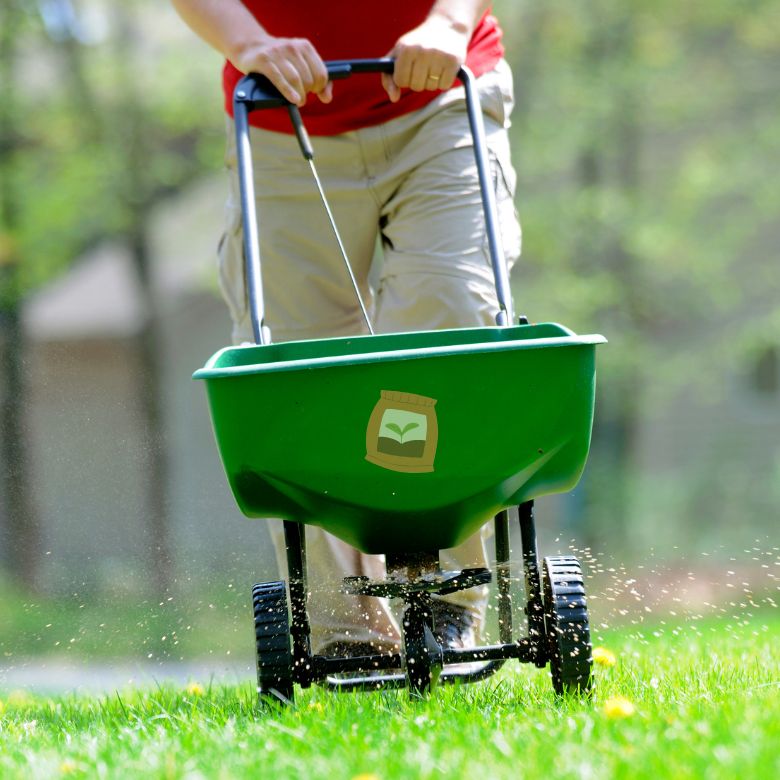
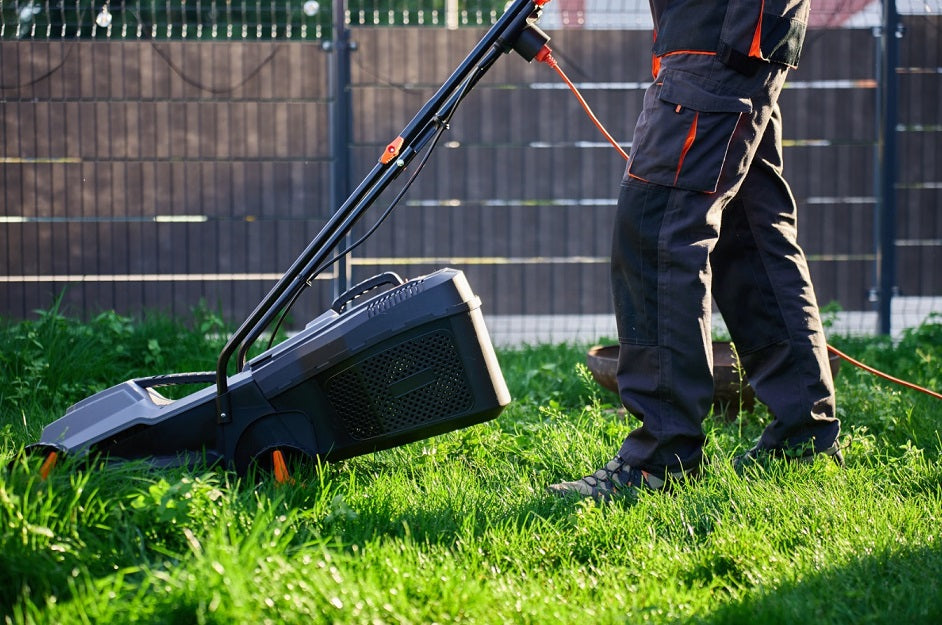
For better contact between fertilizer and soil, you should mow the lawn a day or two before you plan to fertilize.
When you cut the grass tips and make it a bit shorter, the fertilizer granules can easily land on the soil. It improves absorption and offers better results.
But it doesn’t mean you should scalp the lawn. Just mow a little higher than usual because taller grass provides shade for the soil. It reduces the chances of fertilizer burn.
You can use a robot lawn mower to mow the lawn without any hassle. Just set the time and height, and it will mow the lawn automatically. Secondly, it will do micro-clipping, which means it will finely cut the grass tips. The fine grass clippings easily break down and provide free fertilizer to your lawn.
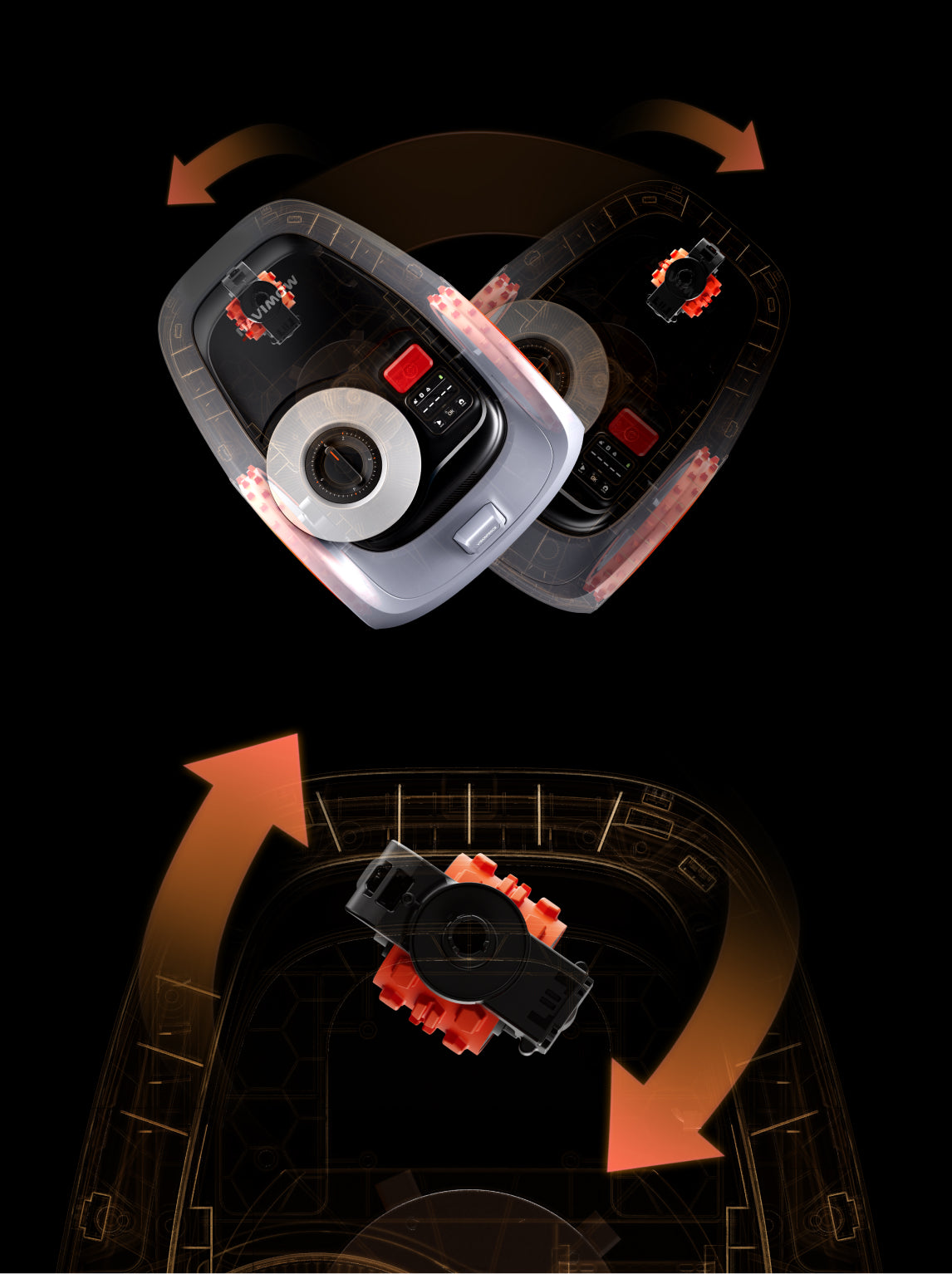
For small lawns, you can go with the Navimow i2 AWD series. They can handle lawns up to 0.25 acres. With the All-Wheel Drive and Xero-Turn™, they can mow difficult terrain. They precisely navigate your lawn with Network RTK and avoid obstacles to ensure safe mowing.

For lawns up to 1.5 acres, the best option is the Navimow X4 series. The mowers are built to handle tough terrain with 4WD, dual suspensions, and patented Traction Control System (TCS). They can take quick 180⁰ turns with the Xero-Turn™ technology. They are equipped with powerful motors that can handle long, thick, and dense grass without any hassle. They can navigate massive lawns with Network RTK, Vision, and VIO (Visual Inertial Odometry) and cover every corner.

Select the Right Time
In summer, you have to be extra careful with the fertilization time. The best time is the early morning, between 6:00 am and 9:00 am. If you accidentally miss this window, the next option is late evening, after 7:00 pm.
These windows are optimal because the evapotranspiration rate is low. The soil is also a bit cooler, so it prevents salts from absorbing too much water.
Never fertilize lawn in the afternoon. It’s the worst window because it accelerates osmosis and increases the chances of fertilizer burns.
Moreover, you should also check the temperature. Ideally, the temperature should be lower than 85⁰. If the temperature is higher than that, the grass won’t be able to process nutrients.
Water Immediately
After fertilization, water the lawn immediately. You should aim for at least 0.25 to 0.5 inch of water.
The water washes the fertilizer granules from the grass blades into the soil. It also dilutes the salts and allows the nutrients to move towards roots.

Final Words
You can only fertilize warm season grasses in summer. They grow actively in the season and require nutrients to support their growth. However, you have to do it correctly. Synthetic fertilizers are salts, and they can cause fertilizer burn and other issues. We have shared the step-by-step process that you can easily follow and flawlessly fertilize the lawn. If you have cool-season grass in your lawn, you should not fertilize it. It’s in hibernation during summer, and you should wait for fall to apply fertilizer.