Most homeowners water their lawn religiously and still wonder why it looks mediocre. Actually, the grass needs nutrients to grow, and water alone cannot supply them. A nutrient-rich meal via a fertilizer is what it needs.
Fertilizing restores the nutrients that grass needs to thrive. The only key is applying the right fertilizer in the right amount and at the right time. When done correctly, it encourages a thicker turf coverage and more resilient grass that can handle heat, drought, and heavy foot traffic.
If you have a lawn and plan to fertilize it, this guide is a good place to begin. You will learn what fertilizer actually does, which type suits your grass, when to apply it, and how to spread it step by step without burning your lawn or wasting a bag of fertilizer.
What Lawn Fertilizer Does: Understanding NPK
Grass is a living thing, just like us, and it needs a variety of nutrients to grow. In the wild, decomposing organic matter and natural soil activity continuously replenish what plants need, and they survive just fine on their own.

But an urban lawn is a different story. Regular mowing, foot traffic, and rainfall gradually strip the soil of its nutrients. When left unaddressed, the grass loses its color and becomes vulnerable to weeds and disease. That is where fertilizers come in.
Fertilizer provides the three essential macronutrients, commonly known as NPK. N stands for Nitrogen, which drives leafy green growth. P stands for Phosphorus, which supports strong root development. K stands for Potassium, which builds overall resilience against stress, drought, and disease.
These ratios are mentioned as labels on a fertilizer bag; something like 10-10-10 or 30-0-4. These represent the percentage of nitrogen, phosphorus, and potassium in that exact order. A bag labeled 30-0-4, for example, contains 30% nitrogen, no phosphorus, and 4% potassium.
A soil test can help identify deficiencies, and based on that, an appropriate NPK ratio fertilizer can be chosen.
Types of Lawn Fertilizers
In any garden store, you will find an entire wall of fertilizer options. To make things easier, we have grouped lawn fertilizers into four basic pairs. Each pair covers a different aspect, such as nutrient content, physical form, release speed, and source origin.
Content
Form
Speed
Origin
Complete vs Incomplete Fertilizers
Complete fertilizers contain all three macronutrients: nitrogen, phosphorus, and potassium. If you see three non-zero numbers on the label, like 10-10-10 or 16-4-8, that is a complete fertilizer. Incomplete fertilizers are missing one or more of the three. A label like 46-0-0, which is pure urea, is nitrogen only.
Incomplete fertilizers are not inferior; they are just more targeted. Whereas, complete fertilizers are kind of general usage; applied when plants lack all three nutrients.
Granular vs. Liquid
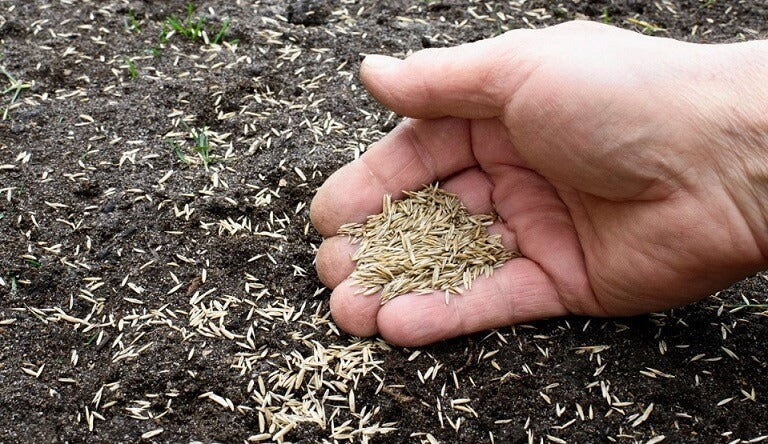
Granular fertilizers come in a dry, pellet form and are spread across the lawn using a spreader. They are easy to store, widely available, and best for large lawns because they cover ground quickly and feed the soil steadily over time.
Liquid fertilizers normally come in a ready-to-spray concentrate. They absorb faster since nutrients go directly into the soil and leaf tissue, making them a good option for quick green-up or spot treatments.
Research shows 90% of homeowners use granular fertilizers because of their ease of handling and cost. Liquid works best when you need fast results or are targeting a specific problem area.
Slow vs Quick Release
Quick-release fertilizers deliver nitrogen fast. You will see results within days, which sounds ideal, but there’s a tradeoff. Too much nitrogen hitting the grass too quickly can scorch the blades.
Slow-release fertilizers, also called controlled-release, break down gradually over several weeks or months. They feed the lawn more evenly, reduce the risk of burn, and require fewer applications throughout the season.
Quick-release formulas require frequent applications every 2 to 4 weeks, while slow-release fertilizers feed your lawn for 6 to 12 weeks per application.
Organic vs Inorganic
Organic fertilizers are derived from natural sources such as compost, bone meal, blood meal, and feather meal. They release nutrients slowly as soil microbes break them down, which also improves overall soil structure and microbial activity over time.
Inorganic or synthetic fertilizers are manufactured chemically and deliver precise, concentrated doses of nutrients. They work faster and give you more control over exact NPK ratios, but they carry a higher risk of burning the lawn if over-applied.
Prep Steps Before You Fertilize Your Lawn
Before moving into the fertilization process itself, here a few preparatory steps will make your application more effective:
Test your soil and pH
Testing is important to know what essential nutrients the soil is lacking before you spend money on fertilizer.
Along with nutrients, check your pH. Most grass types prefer a slightly acidic to neutral range of 6.0 to 7.0. If your soil falls outside that range, use lime to raise the pH in acidic soil or sulfur to lower it in overly alkaline soil.
Remove Weeds
Pull any visible weeds before fertilizing. Weeds compete directly with grass for the nutrients you are about to apply. If weeds are present during application, the fertilizer feeds them just as readily as it feeds your grass, undercutting the whole exercise.
Mow your Lawn

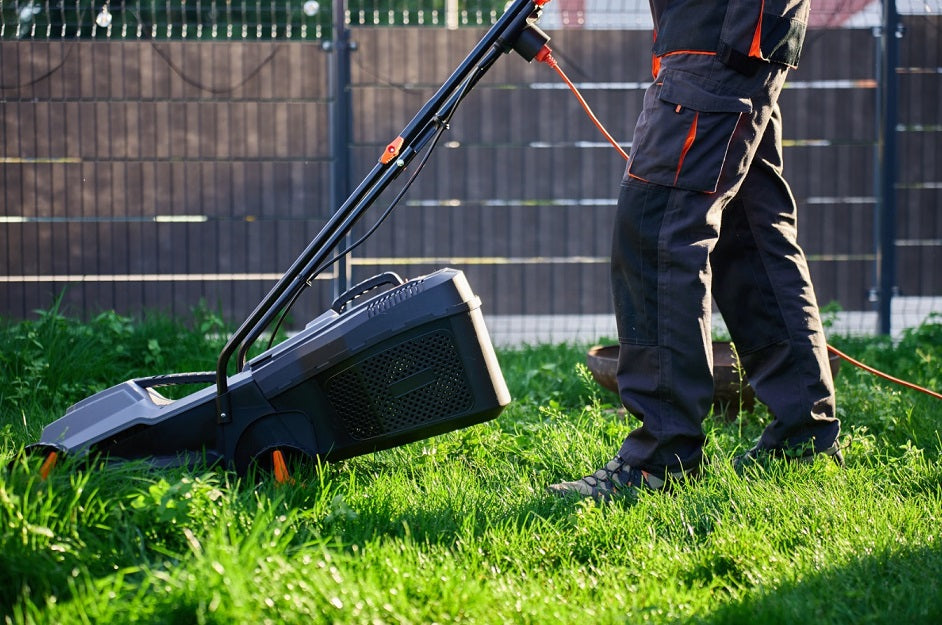
Mowing before fertilizing turns your lawn into a clean canvas. It removes overgrown grass and helps get rid of thatch and debris, allowing the fertilizer to reach the soil more easily.
The recommended window is 1 to 2 days before applying fertilizer, for better soil contact and nutrient absorption. Some lawn care professionals say you can fertilize the same day, with a gap of a few hours. But the first approach feels safer.
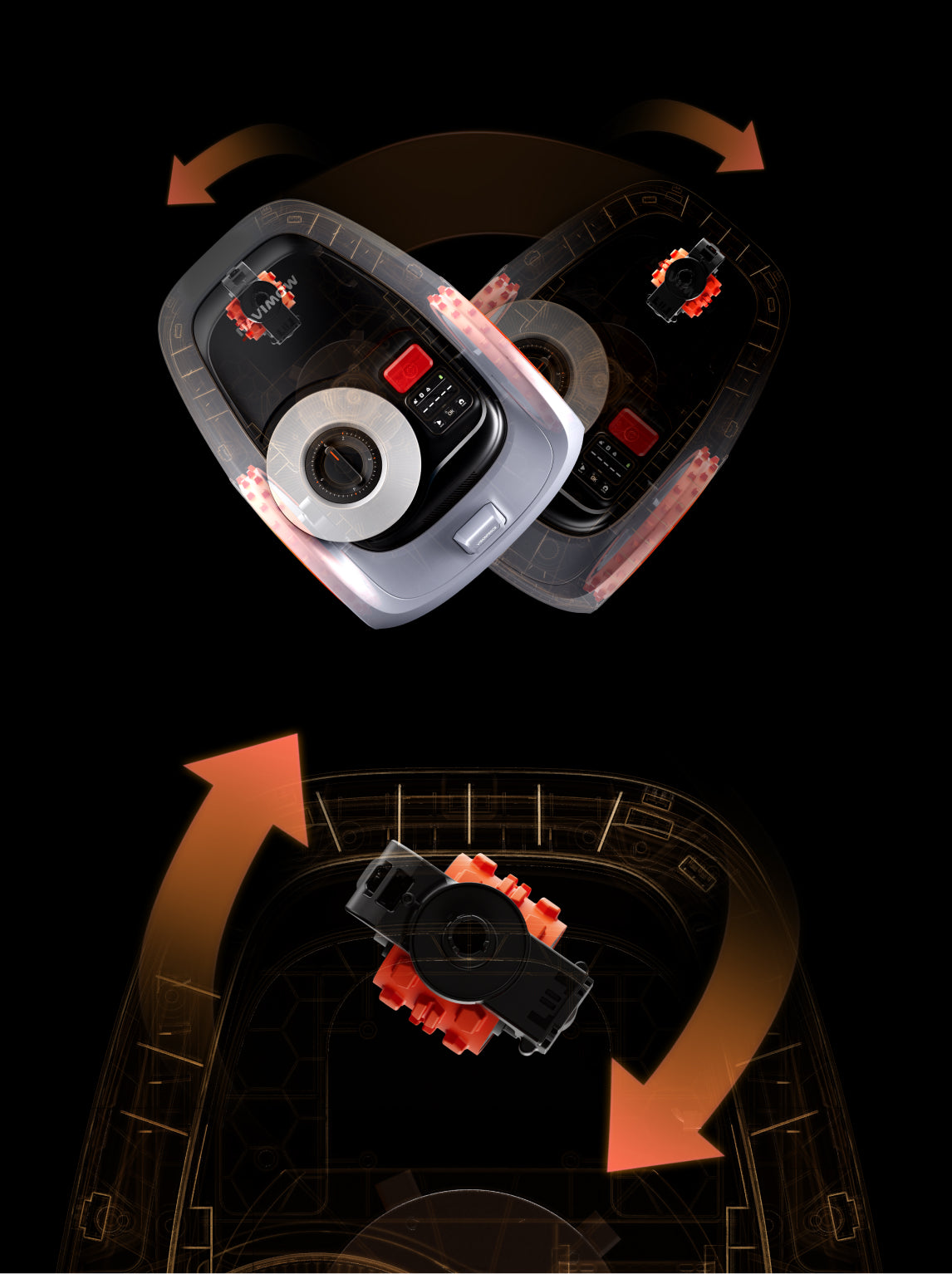
If mowing feels like the most tedious part of this process, robotic lawn mowers are worth considering. They autonomously mow on a set schedule and keep the grass at a consistent height. By using them, at least one part of the fertilization job gets easy!
Water Lightly

Water your lawn one to three days before fertilization so the soil is ready to accept it. Fertilizers are not accessible to plants in very dry soils, so a light watering session beforehand ensures the nutrients can actually move into the ground.
Check the Weather Forecast
Make sure there is no heavy rain or strong wind forecast for the days surrounding your application. Heavy rainfall will likely wash the granules off before they get a chance to absorb into the soil, taking your nutrients straight into the storm drain.
When to Fertilize the Lawn?
Ideally, pick the morning to fertilize your lawn because temperatures are cooler, the grass is less stressed, and morning dew helps granules settle into the soil without the burn risk that midday heat brings.
But beyond the time of day, the bigger question most homeowners have is: what months, what seasons, and how often should I fertilize the lawn? Well, it primarily depends on the type of grass you have installed.

Cool-Season Grasses
These grasses grow best when soil temperatures are between 50–65°F, which typically lines up with spring and fall. If you are in the northern US, Canada, or a higher-altitude region, this is likely the grass you have. Plan to fertilize 2–4 times a year.
Between the two timelines, fall matters more. Feeding in fall lets the grass store nutrients through winter, so it comes back noticeably thicker and greener in spring. A spring application is still useful, but keep it light.
Warm Season Grasses
Warm grasses love the heat with ideal soil temperatures around 65–70°F or higher. Like cool-season varieties, 2–4 applications per year is the general recommendation.
Late spring through summer, June to September, is when to fertilize. The grass is actively growing during this period and can actually put the nutrients to work.
How to Fertilize Your Lawn: Step-by-Step Method
So, once you have done the preparation, let's jump into the fertilization part
Step 1: Measure Lawn Area

For a simple rectangular lawn, multiply length by width. For irregular shapes, divide the lawn into smaller sections, squares, rectangles, and triangles, measure each one separately, and add them together for the total area. Do subtract non-grass areas like the driveway, patio, or house footprint from the total.
Once you have your square footage, you can calculate how many bags you need. Most fertilizer products are sold in bags covering 5,000 or 15,000 square feet. Divide your total lawn area by the bag's coverage to know exactly how many to buy.
Step 2: Select the Right Fertilizer
Select a fertilizer with an N-P-K ratio as close as possible to what your soil test recommends. For instance, if your test shows you are only low on nitrogen and potassium, a phosphorus-free formula like 32-0-4 makes more sense than a balanced complete fertilizer. If your soil is lacking nitrogen, choose a fertilizer with a high nitrogen content.

Grass type matters equally. Cool-season grasses like Kentucky bluegrass, fescue, and perennial ryegrass require around 2 pounds of nitrogen per 1,000 square feet each year for satisfactory growth. Warm-season grasses have different needs and feeding windows; choose accordingly.
Step 3: Choose Fertilizer Spreading Equipment
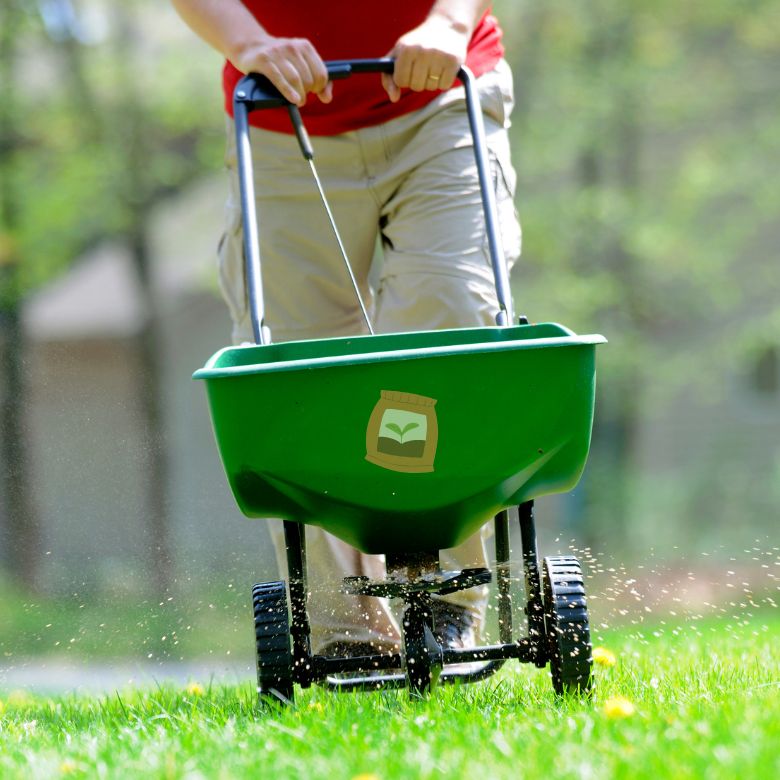
There are two main types of spreaders: drop spreaders and broadcast spreaders (or rotary spreaders).

Broadcast spreaders use a spinning wheel to spread fertilizer in a wide arc and work best for covering large areas, yards larger than 4,000 square feet. They are faster but less precise, and wind can affect where the granules land.
Drop spreaders distribute even rows of fertilizer exactly where you want them and work well for smaller lawns under 5,000 square feet. They are slower but give you much better control around driveways, flower beds, and sidewalks.
Once you have your spreader, set it to the exact application rate listed on the fertilizer bag.
Step 4: Apply Fertilizer with Strategy
Outline the perimeter of your lawn first. This makes sure you do not accidentally miss the edges or spill fertilizer onto sidewalks or driveways. If your broadcast spreader has a side-shield feature, engage it during the perimeter pass to keep granules off hard surfaces.

Once you have completed the boundary pass, cover the remaining area using back-and-forth straight rows, overlapping slightly with each pass, similar to your mowing pattern. Close the hopper hole whenever you need to stop or turn. This prevents excess fertilizer from piling up in one spot and causing burn.
Walk at a consistent pace throughout. Speeding up or slowing down changes how much product is distributed per square foot.
Step 5: Water the Lawn After Application
After applying, water your grass lightly so the fertilizer soaks into the soil. Aim to do this within 24 to 48 hours of application.

Watering activates the granules and moves the nutrients down to the root zone, where the grass can actually use them. This second watering is important because it washes fertilizer off the grass blades and into the soil.
Step 6: Clean
Sweep up any excess granules that landed on driveways, patios, or sidewalks and throw them away. If left out, rainwater will carry them into storm drains and nearby waterways. Empty any remaining fertilizer from the spreader back into the bag, then rinse the spreader thoroughly with a hose.
Signs Your Lawn Needs Fertilizer
So, how do you know a lawn needs fertilizer? Soil test is one way, but the grass itself often tells the story before you even pull out a test kit. Here are the signs to watch for.
-
Pale or Yellowing Grass: If your grass is looking washed out, lime-green, or outright yellow, that is almost always a nitrogen deficiency. Healthy grass holds a consistent deep green throughout the growing season.
-
Stunted Growth: During peak growing season, a healthy lawn should need mowing roughly every five to seven days. If yours is barely putting out new growth even in favorable conditions, nutrients are likely the bottleneck.
-
Patchy Areas: Sparse patches that refuse to fill in on their own are a sign that the grass lacks the nutrients needed to reproduce and spread. Thin turf is also an open invitation for weeds; once the grass thins out, weeds move in quickly to claim the space.
Common Lawn Fertilizing Mistakes
Fertilizing is simple, but a few common missteps can undo all the prep work. Here is what to avoid.
-
Over-Fertilizing: More is not better. Excess fertilizer scorches the grass blade and pushes nutrient runoff into nearby waterways.
-
Applying at the Wrong Time: Dormant or heat-stressed grass cannot absorb nutrients. Fertilizing outside the active growing window is largely wasted product.
-
Using the Wrong Fertilizer: A mismatched NPK ratio either oversupplies what the soil already has or misses what it actually needs.
-
Uneven Application: Inconsistent spreader speed or missed passes leave the lawn with visible stripes. Some areas overfed, others starved.
Conclusion
Fertilizing a lawn is not complicated. But it does reward the homeowners who take it seriously. Get the prep right, pick the right fertilizer, apply it at the appropriate times, and your lawn will show the difference within weeks.
This guide was meant to walk you through the entire process from start to finish. Still, we recommend doing a soil test before anything else, and maybe showing the results to an expert before moving for the best advice.
FAQs
Can you just throw fertilizer on the grass?
Technically, yes, but that would result in uneven distribution. Some patches overfed, others barely touched. You will literally see the arc of your throws appearing as streaks across the lawn. It is better to apply with a proper spreader and follow the prep steps covered earlier in this guide.
What months should you not fertilize?
Do not fertilize too early in spring when the grass should still be slow or dormant, and do not fertilize during hot mid-summer months, as it can cause irreversible damage to your lawn. For warm-season grasses, avoid fall applications less than one month before the first expected frost
Should you fertilize before or after rain?
After seems more appropriate. A small rain shower a day or two before application is fine as long as the grass is dry when you fertilize. Heavy rain right after application is the real problem, as it washes nutrients away before the soil absorbs them.