Common lawn care practices, such as adding synthetic fertilizers and frequent use of pesticides and herbicides, badly affect the environment. Not to mention the harmful fumes of gas mowers. All these pollute the air and water and affect living organisms, including humans, animals, birds, and even insects and microorganisms.
Lawn owners try to keep their lawn lush and green year-round and use lots of chemicals. They might be able to make their lawn aesthetically pleasing, but at the cost of harming the environment and nature.
As responsible earth dwellers, it’s our responsibility to take care of the environment. It doesn’t mean you can’t keep a lawn. You only need to switch to eco-friendly lawn care practices. Let’s see the eco-friendly options and enjoy a lush, green yard without any guilt.
1) Opt for Robotic Lawn Mowers
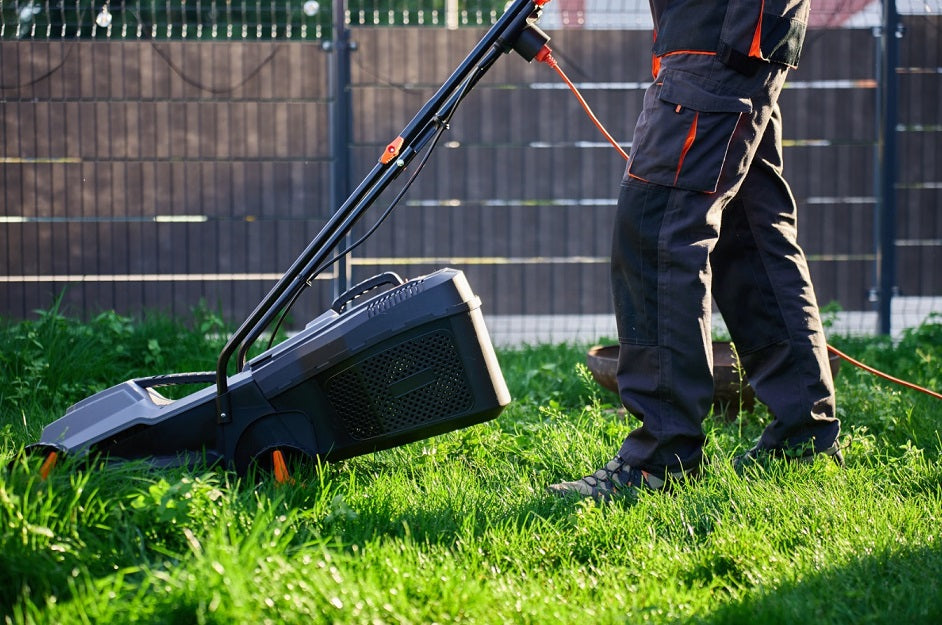
The first step in eco-friendly lawn care is to get rid of traditional gas mowers. They are not only harmful to the environment but also to the lawn. They emit harmful fumes that contribute to air pollution.
According to the CoPRIG Foundation report, in 2020 alone, gas-powered lawn equipment produced nearly 22,000 tons of fine particulates, which is equal to the pollution caused by 234 million typical cars annually. They emitted more than 68,000 tons of nitrogen oxides (NOx) and 350,000 tons of volatile organic compounds (VOCs) into the atmosphere.
Not only that, but more than 30 million tons of carbon dioxide were released into the atmosphere, which is a leading cause of global warming.

Gas lawn mowers not only consume too much gas but also require frequent maintenance. It increases the running cost of the mower. Secondly, the engine oil and fuel stabilizers are also environmental pollutants.
Another problem with gas mowers is the loud noise. They produce over 90 dB(A) noise, which requires hearing protection. It disturbs the people in the house and the neighbors.
There are tons of issues with using gas-powered mowers. That’s why it’s better to get rid of it and go with a better option. Starting from 2024, California has put a ban on the sale of new gas mowers. Similarly, other states have started working on regulations related to gas-powered lawn equipment.
Robot lawn mowers are the best when it comes to eco-friendly lawn care. Firstly, they are powered by electricity, so there is no direct emission. And if you charge the battery with your solar setup, it will also eliminate the indirect emissions.

These mowers do not pollute the environment. There is no gas, engine oil, or stabilizer needed. Thus, the lawn atmosphere and environment remain clean. The best thing about robot lawn mowers is the low-noise performance. They produce noise between 55-70 dB(A), which is unnoticeable. It won’t disturb the people in your house, and you won’t receive complaints from your neighbors. You can even use a robot mower at night if it has night vision.
Once you get a robot lawn mower, you can save a lot on lawn mowing. The electricity cost is hardly $20-30 annually. It does not require any maintenance; you only need to replace the blades after a certain time. Most importantly, they automate lawn mowing, so you don’t have to waste your time or hire someone else.
Robot Lawn Mower Options
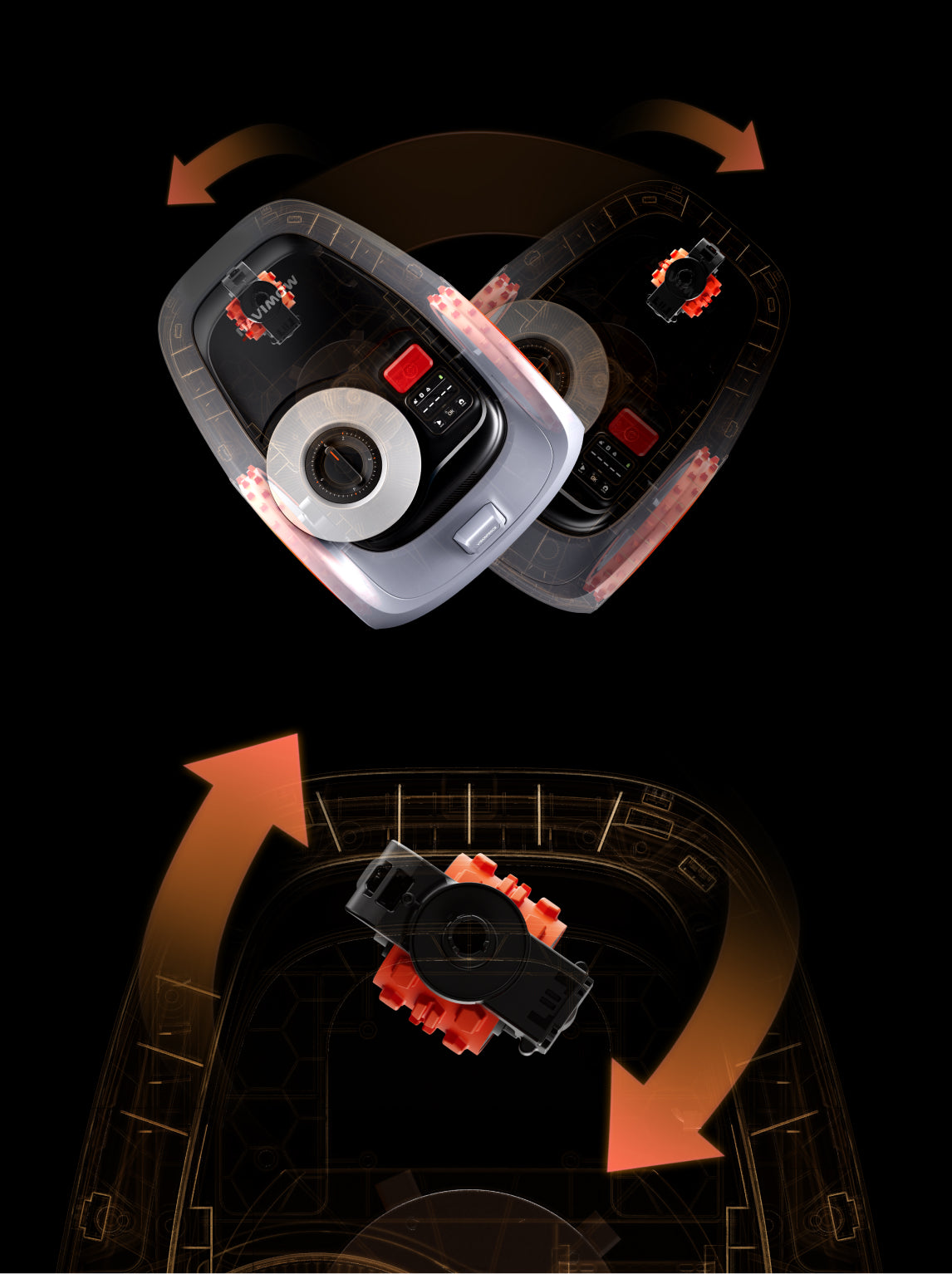
For small lawns, you can go with the Navimow i2 AWD series. With its advanced All-Wheel Drive (AWD) and Xero-Turn™, it can mow difficult terrain and cover tight spaces. It automatically maps your whole lawn and precisely mows every corner. It navigates with Network RTK and avoids 150+ obstacles with VisionFence™. The noise level is only 59 dB(A), so it won’t disturb a sleeping person or neighbors.

If you have a large lawn up to 1.5 acres, the best option is the Navimow X4 series. It’s designed to work on tough terrain and handle long, thick, and dense grass. The All-Wheel Drive, dual suspensions, and the patented Traction Control System (TCS) allow the mower to mow waterlogged lawns, pitted surfaces, and steep slopes up to 84% (40⁰).
The mower has dual 180W motors to cut thick, long, and dense grass. It works on all grass types as you can adjust the height from 0.75 to 4 inches. It also precisely cuts lawn edges, so you don’t have to use other power tools. It navigates massive lawns through NRTK, Vision, and VIO (Visual Inertial Odometry). It also has panoramic obstacle avoidance that detects 200+ obstacles and ensures safe mowing.
Further reading: Electric Lawn Mower vs Gas Lawn Mower

2) Fertilize Only When Needed
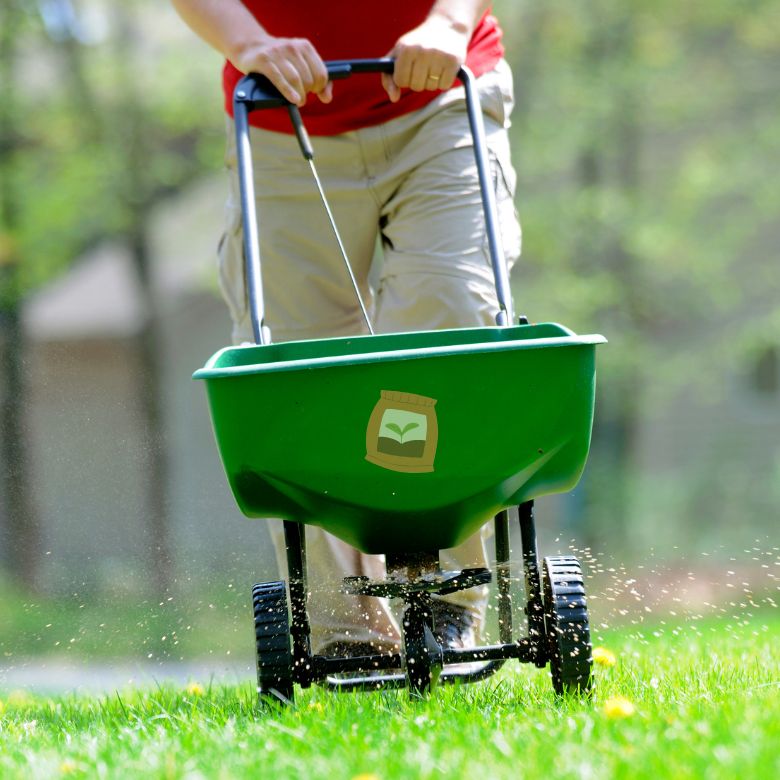
Some lawn owners do not have a lawn fertilizer schedule. They just fertilize whenever they want. In reality, it harms your lawn more than doing anything good.
You don’t know whether your lawn actually needs fertilizer or not. And if it needs one, then which nutrient does it need the most?
Do not take guesses when it comes to fertilization. Get the lawn soil tested by a lab. Collect a soil sample and submit it. You will get a detailed report that shows the levels of macronutrients (Nitrogen, Phosphorus, and Potassium) and micronutrients (Iron, Zinc, Manganese, etc.) in the soil. Thus, you know if there is any deficiency or not.

The best thing about soil reports is that they also give you the solution. They recommend the fertilizer the lawn needs and how much to apply. Thus, you can fertilize your lawn with confidence.
You can also do lawn soil tests at home using DIY kits, but they are not accurate. Plus, they do not provide much information. A lab soil test is recommended. Check out our detailed guide on lawn soil testing.
However, if you want to know the pH of the soil, you can use a digital pH probe. It gives an instant result with better accuracy.
3) Switch to Organic Fertilizers
Synthetic fertilizers are extremely harmful to the environment, and most lawn owners do not have any idea of the severity.
These fertilizers are responsible for water pollution. Suppose you have fertilized your lawn. After rain and overwatering, fertilizer nutrients will go into storm drains, which directly flow into the nearest pond or lake without treatment.
When it happens, the nitrogen and phosphorus present in the fertilizer become super food for the aquatic plants. Because of extremely high concentration, algae grow aggressively and create a thick, green mat. It blocks sunlight and slows down the photosynthesis of the aquatic plants. That’s why they cannot produce oxygen, which is essential for aquatic life.

The plants die in the first place. And then the algae die and settle at the bottom of the pond or lake. They feed aerobic bacteria, which increases their population exponentially. They consume the oxygen present in water, which leads to the death of fish and other aquatic animals.
That’s not it. Synthetic fertilizers create ammonia toxicity in fish and can cause their death. They release nitrous oxide, which is responsible for global warming. It traps 270-300 times more heat compared to CO2. These fertilizers are also responsible for polluting groundwater, increasing heavy metals in the soil, and harming pollinators.

Simply put, using synthetic fertilizers is a big NO. It harms the environment in various ways. The best option for your lawn is to use organic fertilizers.
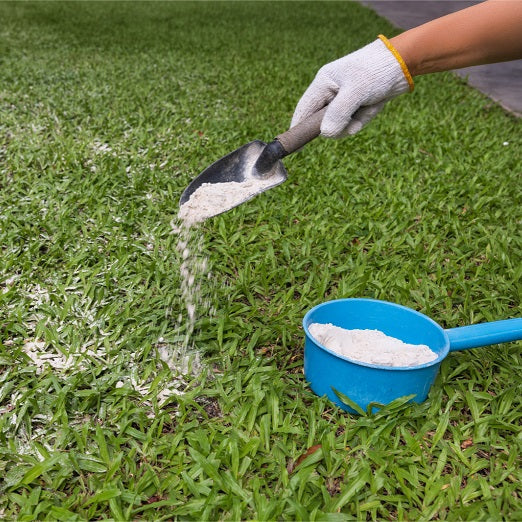
If your lawn needs fertilizer, you can go with organic options. These are a bit expensive, but they pose a much lesser risk to the environment. They are not soluble in water, and they rely on soil microbes to break them down. Thus, there is no chance of water pollution, even if it rains after fertilization. They neither emit harmful greenhouse gases nor pollute groundwater. The best part is that they improve soil health by encouraging earthworms and fungi.

Further reading: Is lawn fertilizer bad for the environment?
4) Go with Automated, Smart, and Precision Watering
Automated watering is the perfect solution to preserve water. If you are still watering with a water hose, it’s better to install a few sprinklers according to the lawn size. It allows you to have complete control over the amount of water.
Both overwatering and underwatering are bad for your lawn. You must be extremely precise on how long to water grass.

You cannot go with guesses in this case. You must calculate the exact amount of water your lawn needs. Most lawns need 1 to 1.5 inches of water per week. Now, you have to decide the duration based on the sprinkler rate.
Place a few tuna cans in your lawn and run the sprinkler for 15 minutes. After that, note the depth of water in each tuna can and calculate their average.
Suppose the average depth of water was 0.25 inches. Since you ran the sprinkler for 15 minutes, the sprinkler rate will be 1 in/hr.
If your watering target is 1 inch per week, it means you need to run the sprinkler for 1 hour per week. You can split this into two watering sessions and turn on the sprinkler for 30 minutes twice a week.
You can also use this formula to calculate watering duration for your lawn.
Watering Duration (minutes per week) = Target Water (inches) / Sprinkler Rate (in/hr) × 60
Keep in mind that you can’t fix the watering target for the whole year. It is necessary to adjust it according to rain, temperature, season, and other factors.
You can also opt for smart watering systems. They automatically adjust the duration of watering by considering different factors. They only water the lawn when needed and prevent overwatering and underwatering.

5) Dethatch and Aerate Lawn
Thatch is actually the layer of organic matter above the soil. When this layer increases above 0.5 inches, it creates a barrier that does not allow fertilizer, water, and seed to reach the soil directly.
If you fertilize the lawn, the fertilizer will sit over the thatch layer instead of the soil. Similarly, the lawn water will be absorbed by the layer, and the grass will suffer.
Thus, when the thatch layer is thick, it’s important to dethatch the lawn. Otherwise, the fertilizer, seed, and water you apply will be wasted in large amounts.

Lawn aeration is necessary to reverse soil compaction. Over time, the soil becomes compact due to foot traffic, mower’s weight, overwatering, and other issues.
If the soil has become too compact, it will affect water, nutrient, and air exchange. The grass will suffocate and strive for nutrients and water. This will lead to wastage.
Take a screwdriver and push it into the soil. If it glides easily, it means the soil is fine and has pores. But if you need to exert too much pressure to insert the soil to 2-3 inches, it means the soil is compact.
You need to do core aeration to give relief to the soil. During the process, you will remove soil plugs from the lawn. It will allow the soil to expand and create cavities for water, nutrients, and air exchange.
You can do core aeration using a manual aerator in a small lawn. If the lawn is large, rent a power core aerator.
After aerating and dethatching the lawn, the soil holds water and nutrients better. The grass grows actively and makes your lawn lush and green.

6) Improve Soil Content
If the soil has a high content of sand, it won’t hold the nutrients. They will wash away as you water the lawn or the rain hits the ground. Most of the fertilizer you apply will be wasted.
Healthy soil has the right balance of sand, silt, and clay. All these are necessary to hold the nutrients and water. If any of them is extremely high or low, the soil will behave differently.
Cation Exchange Capacity (CEC) is the measure of how many nutrients the soil can hold. Soil particles naturally have a negative electrical charge, while nutrients are positively charged. That’s why they attract each other.
High negative charges in the soil mean it can hold nutrients in high quantities. While the low negative charges mean the soil won’t be able to hold all the nutrients, and the excess will be wasted.

Lawn owners should have an idea of the soil CEC. They can get the soil test from a lab to know the exact value. If the CEC is low, they need to add organic matter to the soil to improve nutrient retention.
The CEC 1-5 is low, 5-15 is moderate, and 15-30 is high. The soil report also suggests how you can improve the soil CEC value.
By ensuring optimal soil CEC, you not only reduce waste but also prevent water pollution, as excess nutrients will wash away and end up in water sources through storm drains.
7) Manage Weeds Organically
Lawn owners apply pre-emergent and post-emergent herbicides to prevent and control weeds. These chemicals are harmful to the environment.
When you add these chemicals to the lawn, they contaminate groundwater. They are water-soluble, which is why they travel downward when it rains. They contaminate the local well water and municipal water sources.
Similar to fertilizers, herbicides also end up in storm drains. They contaminate ponds, rivers, and local streams. Often, weed control products have both fertilizer and weed-controlling chemicals. They contain a high level of phosphorus, which leads to algal blooms and harms aquatic life. Weed killers are also toxic to fish, other aquatic animals, and amphibians.

Moreover, herbicides also harm birds and mammals. When they eat seeds treated with herbicides, they suffer from various neurological issues.
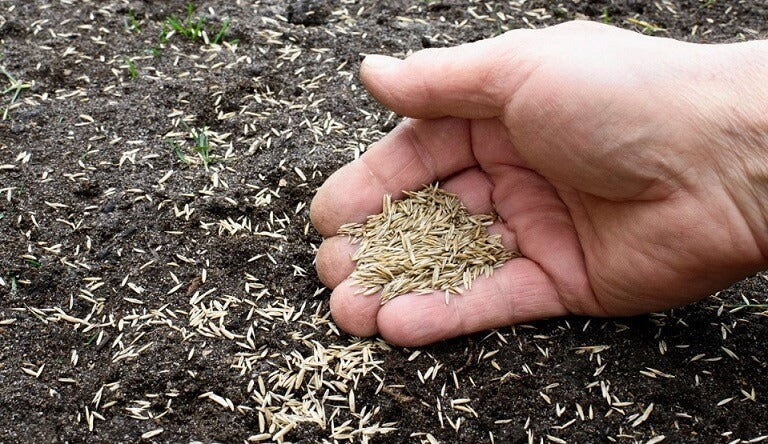
For eco-friendly lawn care, you need to stop the use of herbicides and go with safer options. Firstly, you can mow your lawn a bit high. It prevents sunlight from falling directly on the weed seeds, which reduces the chances of sprouting. Secondly, overseed the lawn every year to ensure there is no space left for the weeds to grow.
You can also use Corn Gluten Meal, which is an organic pre-emergent. It contains a natural protein that stops seed germination. It also contains about 10% nitrogen, which acts as a slow-release organic fertilizer for your lawn.
If there is a grown weed in the lawn, you can spot treat it. Pull it out manually from the ground if it is a broadleaf or grassy weed. If there are annual weeds, you can also pull them out before they flower. Do not hand-pull sedges and perennial weeds. For more details, check out the types of weeds.

Chelated iron sprays are also effective in killing weeds. Once you spray it, the weeds die from iron toxicity, and it does not harm the grass.
8) Organic Pest Management
Similar to fertilizers and herbicides, pesticides also pollute water sources. Many insecticides are toxic to fish and other aquatic animals. Some can cause endocrine disruption in amphibians, which leads to developmental deformities and reproductive failure.
They also pose a risk of contaminating groundwater as they can leach when it rains. The direct toxicity is harmful to humans and animals.
The problem with pesticides is that they do not differentiate between pests and beneficial insects, such as bees, ladybugs, and predatory wasps. They are lethal to everyone, which badly affects pollination.
Similarly, pesticides also harm the beneficial fungi, bacteria, protozoa, and earthworms. These beneficial microorganisms are necessary to break down the organic matter and feed the plants. If they kill the mycorrhizal fungi, it will affect the ability of the grass roots to absorb water and nutrients. Secondly, when it kills and reduces the population of earthworms, the soil compacts earlier.
You must deal with pests organically. For many pests, beneficial nematodes are excellent. They are microscopic, worm-like organisms. They enter the larvae of pests and release bacteria that kill their host within 24–48 hours. They do not harm humans, pets, earthworms, grass, or plants.

For Japanese Beetle grubs, Milky Spore is an excellent solution. It is a natural bacterium with a scientific name of Paenibacillus popilliae. When you apply it to the lawn, the grubs eat and die. They also release billions of new spores. They remain active in the soil for 10-15 years.
Diatomaceous Earth (DE) is made from the remains of tiny aquatic organisms. They work like broken glass and physically cut the outer shells of pests, which leads to their death. Apply it to your lawn to decrease pest activity.
Neem oil is a common organic pesticide that works on various pests like aphids or mites. Spray it on the pests, and it will disrupt their hormones and prevent them from feeding and maturing. You can also use insecticidal soaps. It contains potassium salts of fatty acids to break down the outer membranes of soft-bodied insects. It kills them quickly.
Final Words
It’s time to say goodbye to old practices and switch to eco-friendly lawn care. It is not an option but the need of the hour to keep the environment clean for ourselves, others, and generations to come. You only need to replace the old methods with eco-friendly practices. It requires minimal effort but offers long-term benefits. We have shared some eco-friendly lawn care options for lawn mowing, fertilization, watering, pest & weed control, and soil improvement. By adopting these options, you can make your lawn lush and green without harming the environment.