


For some people, mowing a lawn is a relaxing Saturday ritual. For others, it’s a sweaty, backbreaking chore that you try to put off as long as humanly possible.
If you fall into that second group, you’ve probably found yourself pushing a heavy mower at least once or twice in your life (likely more), and are wondering if there’s a better way.
There is. A different kind of mower can make your life much easier, and it’s called a self-propelled lawn mower.
But what is a self-propelled lawn mower, and is it the right choice for you? In this post, we’ll explore how self-propelled mowers work, who they’re for, and what you should consider before bringing one home.
What is a Self-Propelled Lawn Mower?
The history of lawn mowing is full of clever inventions that were designed to make yard work a little easier on the muscles.
The first lawnmower was invented by Edwin Budding in England in 1830, and it required a lot of pure human muscle to get it rolling. For decades, mowing the lawn meant sweat, grit, and a fair share of grumbling, especially as suburbs boomed after World War II and lawns got bigger.

By the 1960s, engine-powered mowers changed the game, taking much of the work off your arms.
The real innovation arrived when the self-propelled mower hit the scene. A self-propelled lawn mower has a drive system that turns the wheels for you. Instead of you needing to provide all the muscle to move it forward, the mower does the heavy lifting.
You simply walk behind it and guide it where it needs to go, like the difference between pushing a stalled car up a hill and driving one with the engine running. Both will get you to the top, but one requires a whole lot less effort.
Unlike regular push mowers, these machines use their own engine to turn the wheels. You just guide it around the yard while it does most of the legwork. Today’s self-propelled mowers are the direct descendants of those early designs, combining reliable power with smooth, easy operation.
How Does a Self-Propelled Mower Work?
A self-propelled mower uses a portion of the engine's power to operate a transmission, which in turn powers the wheels.
You control this function with a bar or lever on the handle, often called a "bail" or "drive control". When you squeeze this lever, the mower engages its drive system and starts moving forward. When you let go, the wheels stop turning, and you can maneuver the mower manually.

It’s easiest to compare it to a car’s accelerator: you press the gas to go and release it to slow down or stop. With a self-propelled mower, you squeeze the drive control to move forward and release it to stop the forward motion, all while the engine keeps the blade spinning. This gives you precise control, which is perfect for navigating around flower beds, trees, and other obstacles in your yard.
This system is a significant upgrade from the traditional push mower. With a push mower, 100% of the forward momentum comes from you. Every push, every grunt, every bead of sweat is your own physical effort. Self-propelled mowers take that burden off your shoulders, turning a grueling task into a leisurely stroll.
Front Wheel, Rear Wheel, or All Wheel Drive?
Just like cars, self-propelled mowers come with a few different drive options, each of which has its own strengths and weaknesses:
Front Wheel Drive (FWD)
Front wheel drive mowers pull the machine forward using the front wheels. This is a common and effective setup, especially for yards that are mostly flat.
The big advantage here is maneuverability. When you need to turn or pivot, you can easily lift the front wheels off the ground by pushing down on the handle. Since the rear wheels aren’t powered, you can swing the mower around with minimal effort.
This makes FWD mowers ideal for lawns with lots of obstacles like trees, gardens, and landscaping features that require frequent turning.

Rear Wheel Drive (RWD)
Rear wheel drive mowers push the machine from behind, using the rear wheels for power. This is where things get interesting, especially for anyone with a hilly or sloped yard. RWD provides superior traction when you are mowing uphill.
When you push a mower up a slope, your weight naturally shifts toward the handle, which can cause the front wheels of an FWD mower to lose some grip. With RWD, the power is at the back, right where you need that extra pushing force. The wheels dig in and help propel the mower up the incline without slipping.
Rear wheel drive is also beneficial if you frequently bag your grass clippings. As the bag at the back fills up and gets heavier, it adds weight over the drive wheels, increasing traction even more.

All Wheel Drive (AWD)
For the most challenging terrains, there are All Wheel Drive AWD mowers that distribute power to all four wheels, giving you the ultimate traction and control. If your yard features steep hills, uneven ground, wet patches, or a combination of tough conditions, an AWD mower can handle it all with confidence.
These mowers dynamically adjust the power sent to each wheel based on the traction available. This means if one wheel starts to slip, the others compensate to keep you moving forward steadily. While often the most expensive option, an AWD self-propelled mower offers unmatched performance for yards that would make other mowers struggle horribly.

The Benefits of Choosing Self-Propelled Lawn Mowers
If you’re weighing whether a self-propelled mower is worth it, the first thing to be aware of is likely the most obvious: less physical effort. Mowing with a self-propelled lawn mower becomes less of a workout and more of a walk. That's why it is an excellent lawn mower for large lawns.
After all, mowing an acre of land with a traditional push mower can feel like you’re training for a CrossFit competition. But with a self-propelled mower, you can cover the same area in less time (and with a fraction of the energy). Given that yard work like mowing can easily burn 135 calories or more, switching to a self-propelled lawn mower is a huge energy saver, a huge plus for homeowners who have physical limitations or are getting older.
Beyond just saving your back, self-propelled mowers often deliver a more consistent and professional-looking cut. Because the mower moves at a steady pace, it cuts the grass more evenly. You can ensure the best height to cut grass.
When you use a push mower, your speed can vary. You might slow down on hills or speed up on flat sections. This inconsistency can lead to a slightly uneven finish, but a self-propelled mower's controlled pace ensures each pass is as good as the last.

Is It Time for an Upgrade…or a Revolution?
A self-propelled mower is a fantastic piece of equipment that makes traditional lawn care much more manageable. It takes the "work" out of "yard work" and helps you get a beautiful, evenly cut lawn without the physical toll. It is a logical and worthy upgrade from a standard push mower.
But what if you could take another leap forward? What if you could get a perfect lawn without walking behind a mower at all?
That’s where robotic lawn mowers come in.
Can you imagine a future in which you never have to think about mowing the lawn again? Where there’s no more scheduling a time to do it, no more sweating in the sun, and no more wrestling a heavy, cumbersome machine out of the garage?
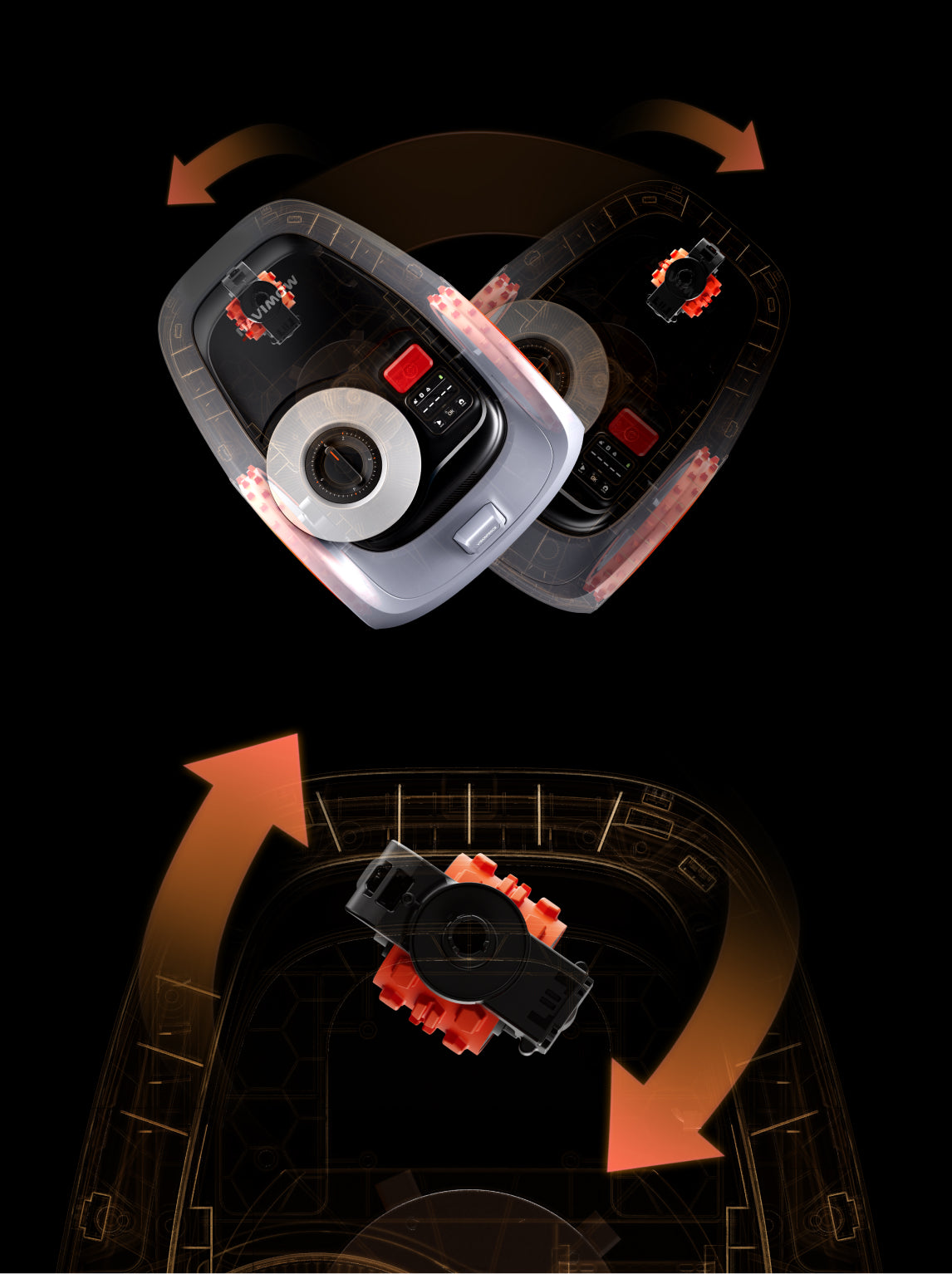
Navimow is leading the revolution in lawn care with its smart, wire-free robotic lawn mowers. Unlike older robotic mowers that require you to bury a boundary wire around your yard, Navimow uses GPS and advanced sensors to navigate with remarkable precision. All you have to do is set the virtual boundaries using an app on your phone, and Navimow will get to work.
Navimow mows your lawn systematically, creating a perfect striped pattern instead of just bumping around randomly. It is quiet enough to run at night, and it automatically returns to its charging station when it is done or needs more power. If it starts to rain, its sensors will tell it to go back home and wait for the right time to mow the lawn.

Propel Your Lawn Care into the Future with the Navimow
Choosing a self-propelled mower is a great step toward easier lawn maintenance. But choosing Navimow is a step toward a future where you have more time to simply enjoy your beautiful yard, not just work on it. You get all the benefits of a perfectly manicured lawn with none of the labor.
If you’re tired of pushing and ready for a change, a self-propelled mower is an excellent choice.
But if you’re ready to reclaim your weekends completely, a Navimow robotic lawnmower can do for you. Your perfect lawn is waiting.



Share