


Most lawn owners complain that their lawnmower doesn't start for the first mow of spring. It usually happens because they winterize or store their lawnmower in winter without any maintenance, servicing, or following the right steps.
Eventually, they need to call a mechanic for a service or repair to get their lawnmower running again. They need to spend a hefty amount on repairs and replacements. And in the worst case, they might need to replace the lawnmower.
If you know how to winterize a lawnmower, you can save your time and money, and your lawnmower will be ready for the first mow of spring. It will start at the first pull or push of a button.
We have created this comprehensive guide on how to winterize a lawnmower. By the end of this article, you'll be able to winterize your lawnmower property and save yourself from the hassle.
Why is Winterizing Your Lawnmower Necessary?
Prolonged Life: With proper winterizing, you can enhance the life of your lawnmower. The components or parts will last longer and be ready to work when needed.
Preventing Fuel System Damage: Most lawnmowers fail in the spring because of clogs in the fuel system. The fuel sitting for more than 30 days starts to build a sticky residue and leads to corrosion. You can prevent this from happening by winterizing your lawnmower.
Rust/Corrosion Protection: The parts of your lawnmower can rust due to moisture and acid. But when you store the mower after cleaning the internal parts, there are fewer chances of corrosion and rusting. Even the movable parts remain intact if you lubricate them properly.
Protects Engine Components: Engine components can corrode over time because of the used oil. It contains acids, moisture, and fine metal particles that can damage the engine. Thus, replacement of the used oil is mandatory before winterization.
Avoid Expensive Replacements: If you winterize your lawnmower properly, you will not have to replace the expensive parts in the spring season. It will be ready to work, and you just need to pull the cord.
Further reading: When to stop mowing your lawn before winter?

How to Winterize a Gas Lawnmower?
You don't need professional help to winterize your lawnmower; you can do it on your own. Here's the complete step-by-step procedure.
Step 1: Disconnect the Spark Plug
Disconnect the spark plug before you do anything. It is necessary to prevent the accidental start of the lawnmower during the winterization steps. It makes the operation safe. Otherwise, you could harm yourself.
Step 2: Clean The Exterior
Start with the exterior cleaning. Use a microfiber cloth to clean the exterior. Get rid of dust and debris from the lawnmower.
It will prevent the dust and particles from getting inside the lawnmower during the winterization process.
Step 3: Clean/Replace the Spark Plug
Use an appropriate socket and ratchet to take out the spark plug from the lawnmower. Examine the tip of the plug. You will notice carbon or oil. Use a wire brush or sandpaper to clean the tip.
Install the spark plug again on the lawnmower. You can also replace the spark plug with a new one.

Step 4: Remove/Stabilize the Fuel
The fuel sitting in your lawnmower is the root cause of many issues. Most of the time, lawnmowers do not start because the fuel in the mower has not been changed for more than 30 days.
Over time, the fuel builds up a sticky residue and starts corroding your lawnmower's internal parts. It's better to remove the fuel if you want to store it.
Empty the fuel tank. Disconnect the fuel line from the carburetor and collect fuel in a container. Once the tank is empty, you can reconnect the fuel line. Now, turn on the mower and let it run until it completely runs out of gas and stops. It empties the fuel lines and carburetor as well.
Another option is to add the recommended amount of stabilizer to the fuel tank along with fuel. Run the mower for 5-10 minutes so that the stabilizer can circulate in the entire system.

Step 5: Clean the Carburetor
The gasoline in the carburetor must also be cleaned. Otherwise, it will clog the tiny fuel jets and corrode the carburetor.
For carburettor cleaning, you need to take it out from the lawnmower, disassemble it, clean it, reassemble it, and then reinstall it. Check out our complete guide on how to clean lawnmower carburetor and follow the step-by-step process.

Step 6: Change the Oil
You cannot leave used oil in the lawnmower engine. It contains acids, moisture, and tiny metal particles. All these are dangerous for your engine, and they can lead to corrosion.
If you leave the old oil, it will badly affect the bearing, seals, and other components. Your mower will not run in the spring.
Run the lawnmower for a few minutes to warm up the oil. Then, drain the oil and refill it with fresh oil, which is free from contaminants that can harm your engine.

Step 7: Do Engine Fogging
The combustion cylinder in the engine has air trapped inside. This air also contains some moisture, which can corrode the piston and cylinder walls. It leaves rusty marks and creates a hindrance to the functioning.
To prevent corrosion, you can do fogging. For this, remove the spark plug. Now, you need to pour one teaspoon of fresh oil into the plug hole.
Finally, pull the cord several times to circulate the oil. It coats the cylinder walls and piston to prevent corrosion in the future. It's simple yet effective.
Step 8: Sharpen the Blade
If you leave the blade as it is, it will corrode quickly. Because of the acidic grass clippings, moisture, and air contact, it will corrode. So the next time you start to mow your lawn, the blade won't be able to cut grass.
Tip your lawnmower on the side. Remove the blade from the mower. Be careful as the blade is sharp.
Take out any grass clippings and scrape all the debris on the bottom of the mower. You can also use a wire brush to clean everything. After cleaning, coat the bottom area with WD-40 to prevent corrosion.
Now, it's time to sharpen the blade. You can use an angle grinder or similar tool to sharpen it. After sharpening, reinstall it on the mower. Just make sure to coat with WD-40. For more details, check out how to sharpen lawn mower blades.

Step 9: Clean/Replace the Air Filter
The dust in the air filter can enter the carburetor and other components of the engine. It's better to clean or replace it.
Take out the air filter from the assembly. If it's a paper filter, tap it on the ground to remove dust. If it's completely blocked, you can install a new one.
In the case of foam filters, you can clean them with water and soap. Dry them out and then install them on the mower.

Step 10: Lubricate Moving Parts
The moving parts, such as wheels and pivot points, need lubrication. Apply WD-40 to prevent corrosion and ensure smooth working.
Lubricate every moving part. Be it a bearing, lever, height adjustment mechanism, or anything else, apply WD-40 or any other lubricant evenly. Finally, wipe off the excess.
Too Laborious? Switch to a Robotic Lawnmower
We have shared the step-by-step process of winterizing a gas lawnmower. It's easy but quite laborious. It takes a lot of time and effort, which is why some people skip winterizing their lawnmowers.
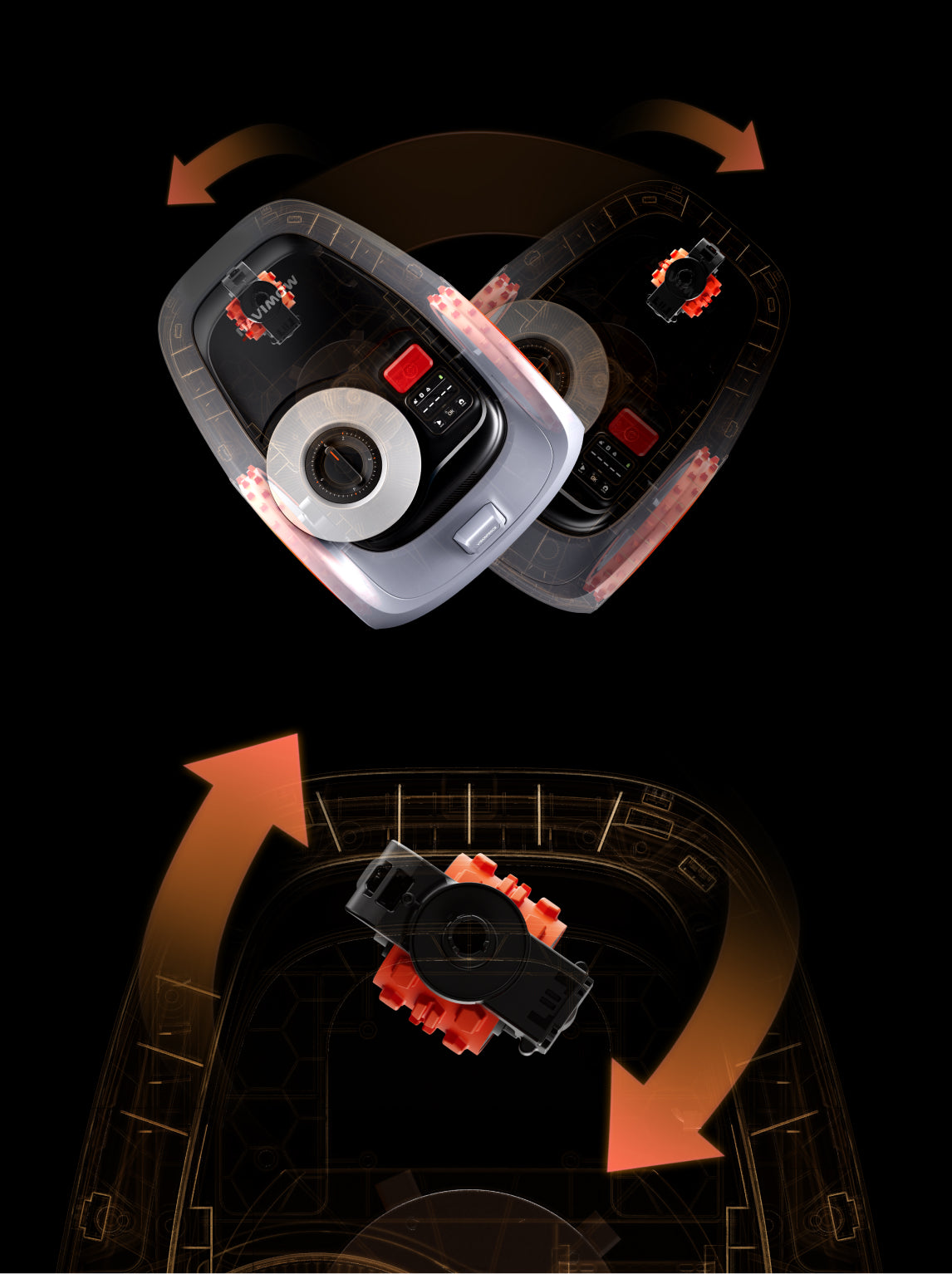
If you want to get rid of this lengthy winterization process, switch to a robotic lawn mower. It's a kind of electric mower that can be winterized with ease. You need to clean the mower thoroughly, replace the blade, and charge the battery up to 80-90%. That's it.
Not only are robotic mowers easy to winterize, but they are also easy to use. They actually automate lawnmowing: you only need to set the schedule, and the mower will mow the lawn on its own. They keep your lawn perfectly cut year-round and save you from wasting your weekends. They are also cost-effective, efficient, and extremely precise.
Here are some mowers you can get for your lawn.
For Large Lawns—The Navimow X4
The Navimow X4 can handle lawns up to 1.5 acres. With its All-Wheel Drive (AWD), it mows on any kind of terrain, including pitted surfaces, waterlogged lawns, and slopes up to 84% (40⁰). It also features Xero-Turn™ technology for quick 180⁰ turns without harming the lawn.
Its dual motors cut thick, long, and dense grass without any hassle. Users can adjust the height from 0.75 to 4 inches, which is suitable for all grass types, and enjoy precise results on the lawn and edges. Its VisionFence™ detects 200+ obstacles and ensures safe mowing. It precisely navigates large lawns with NRTK and offers centimeter-level accuracy.

For Complex Lawns—The Navimow H2
The Navimow H2 series uses an AI Triple Fusion system, which combines High-res solid state LiDAR, Network RTK, and Vision, for extremely precise navigation. With all these technologies, it creates a 3D map of your lawn to detect obstacles instantly and accurately mow every area of the lawn. It can seamlessly switch between positioning modes in just 20ms, ensuring optimal precision and reliability.
It's capable of mowing lawns up to 0.5 acres. Once you drop it on the lawn, it automatically maps everything and starts mowing. Its VisionFence™ detects 200+ obstacles with 0.4-inch precision and makes the mower pet and children-friendly. You get the artisan-level results and unstoppable cutting performance for tough lawns.

For Small Lawns—The Navimow i2 AWD
For small lawn owners, the Navimow i2 AWD is perfect. It's a compact and affordable mower equipped with advanced features. It has All-Wheel Drive (AWD) to tackle difficult terrain and handle slopes up to 45% (24°). It also has Xero-Turn™ for quick pivots and work in narrow, tight spaces.
The mower features anti-scratching and anti-slip technology. It uses a patented Traction Control System to maintain enough traction and balance on the ground. It mows your lawn with exceptional precision, and you can also make creative doodles, shapes, and numbers. It can detect up to 150+ obstacles and navigate small lawns with the Network RTK.
It's smart home-ready. All it needs is a voice command or tapping on the app to start mowing. The best thing is its low noise level of 59 dB(A), which means it won't disturb your neighbors or family.

FAQs
Do lawn mowers need to be winterized?
Yes, lawnmowers must be winterized if you want to save them from corrosion, clogging, and component wear and tear. For prolonged life and smooth working in the spring, winterize it properly. Otherwise, get ready for professional maintenance and repairs.
Is it okay to leave gas in a lawn mower over winter?
No, do not leave gas in your lawnmower for more than 30 days. After that period, the fuel creates a sticky residue and corrodes your lawnmower. It's better to drain it properly and even clean the carburetor.
Do you need to put a fuel stabilizer in a lawn mower?
It is not necessary, as you can drain the fuel. But if you don't want to keep fuel during winterization, pour fresh fuel and add stabilizer. Run the engine for 5-10 minutes to let the stabilizer circulate. It will prevent clogging and ensure a smooth start in the spring.




Share