


Gas mower owners often complain about hard starts and running issues. Most of the time, they struggle because of the nasty and clogged carburetor.
The gasoline sitting in your lawnmower, especially with a high ethanol blend, leaves behind a sticky residue and also causes rusting. Due to this, the tiny fuel and air passages get clogged.
If you own a gas lawnmower, you should know how to clean the lawnmower carburetor. Regular cleaning and maintenance will ensure a quick start in the first pull and better performance.
Let’s learn the step-by-step process of cleaning a lawnmower carburetor. You can do it yourself at home within 15 minutes.
Preparation and Tools You Need
Before you start working, ensuring safety is mandatory. You are dealing with gasoline and carburetor cleaner, so make sure the area is well-ventilated. You shouldn’t inhale the fumes.
There should be no flame or spark source nearby. Keep the area clear to work freely.
Moreover, before touching anything, disconnect the spark plug. It is necessary to prevent accidental engine start.
Tools/Items Needed:
- Gloves
- Eye protection
- Socket or wrench set
- Flathead screwdriver
- Carburetor cleaner
- Gaskets (if the old ones are broken)
- Rags

Take Carburetor Out of Lawnmower
Usually, carburetors are hidden behind the air filter assembly or around it. The location of the carburetor varies in different lawnmowers.
Keep in mind that the gasoline tank is connected to the carburetor. You’ll see a gas line going to it. It is helpful in case you don’t know what the carburetor looks like or where it is.
Once you have identified the carburetor, it’s time to take it out. Some lawn owners try to clean the carburetor without removing it from the lawnmower. It’s easy but not effective.
If you want to clean your carburetor properly, it’s better to remove it from the lawnmower. For this, follow the simple steps below.
Step 1: If there is any gas in the tank, empty it. You can use a siphon pump for this. Another option is to remove the fuel line from the carburetor and put the line in a container to collect fuel.
Step 2: Look at the air filter assembly. Use a cloth or brush to remove dust and debris around the air filter and carburetor. Then, you need to remove the complete housing to unveil the carburetor. Use a screwdriver or wrench to remove the assembly. Pull the filter housing away from the lawnmower. It will come out easily.

Step 3: Now, the carburetor will be visible. There will be metal rods on the top of the carburetor to control the throttle and choke. Take a photograph to remember their configuration and carefully remove rods and springs. They are only connected to a small hole, and you can remove them by hand.
Step 4: Disconnect the hose, tubes, or anything connected to the carburetor. Remove the mounting nuts and pull the carburetor carefully. Keep in mind that there will be a gasket at the back of the carburetor.
Disassemble the Carburetor
You have the carburetor in your hand. You are ready to disassemble it. For effective cleaning, it is important to disassemble the parts and clean them separately.
Here’s how you can disassemble the carburetor.
Step 1: Before opening the carburetor, it’s better to clean the outside. Use the carburetor cleaner and spray it over the carburetor. It will remove all the dirt. Otherwise, it will go into the carburetor while opening it.
Step 2: You can start by removing the ball. It’s located at the bottom, and it’s where the fuel is collected. While opening it, put a container below to catch the gas inside it. Use a wrench or ratchet to open the bolt under it. There is usually one bolt, but there can be two. Remove the bolt and then wiggle the ball a bit to remove it. It will come out easily.
Note: The bolt you have removed to open the ball could be the main jet. You will see a tiny hole there.
Step 3: It will expose the float, which is connected with a hinge pin. Remove the pin and take out the float along with the metering needle. In some carburetors, you can just pop out the pin from the hinge using nose pliers. Along with the float, there will be a metering needle; keep it aside. At this stage, you can also remove the gasket on which the ball is placed.
Note: Depending on the carburetor you have, you might not need to follow Steps 4 and 5. There could be a plastic jet inside that can be popped out and cleaned using carburetor cleaner.
Step 4: It’s time to remove the main jet and the emulsion tube. The side from where you remove the float, you’ll see a hollow cylinder with a screw in it. This screw is actually the main jet. Use the screwdriver to unscrew it. Now, you need to take out the emulsion tube. Push it from the above opening, and it will come out of the cylinder easily.
Step 5: You will see two screws on the carburetor. One covers the pilot jet, while the other is the idle screw. You need to remove the idle screw first to remove the other. But before that, document how tightly the idle screw is tightened by looking at the threads at the back. Once you remove the screws, you’re all set to clean.
Clean the Lawnmower Carburetor
The actual cleaning of a carburetor is extremely simple; it’s the steps we have to follow that make things complicated.
Professionals put the parts in an ultrasonic cleaner. And then, once it is cleaned, they reassemble. It is unlikely to have an ultrasonic cleaner at home, but if you have one, you should use it. It offers the best results.
Most people don’t have an ultrasonic cleaner. They can clean the carburetor using the carburetor cleaner.
Spray the cleaner through all openings of the carburetor. The pressure and the chemical will help clean the sticky residue, corrosion, or anything else. You can also use a brush to clean the outside of the carburetor.

Clean the bowl of the carburetor. It is where the sticky residue resides. Clean it properly using a wire brush and carburetor cleaner.
You also need to thoroughly clean the main jet and the emulsion tube. Use the cleaner to spray from its tiny holes. It will clear any residue and make the holes open for fuel.
Some people also use a metal wire to clean the hole, but it is not recommended as it can damage the component. Spraying the carburetor cleaner from a pressurized can is more than enough.
Reassemble the Carburetor
Now, you need to reassemble the carburetor parts. It is just like reversing the steps you have followed above.
Step 1: We’ll start by putting in the screw that covers the pilot jet, and then put in the idle screw. Like we said, not all carburetors have these, so you can skip this step.
Step 2: Insert the emulsion tube in the hollow cylinder and put the main jet. Tighten the screw to secure it in place. If your carburetor has a plastic jet, you can install it at this stage.
Step 3: Attach the metering needle to the float and put it back. Insert the hinge pin. If you just popped out the float earlier, you need to put it back the same way.
Step 4: Put a new gasket on the ball. Remember the screw you first removed? It also has a gasket; replace it with a new one.
Step 5: Set the ball back on the carburetor and tighten the screw.
Install the Carburetor
As you have successfully reassembled the carburetor, you can install it on the lawnmower.
Step 1: A gasket is placed on the carburetor openings. Use a blade to remove any remaining pieces of the old gasket. And put new gaskets on both sides.
Step 2: Bring the carburetor close to its place. Reconnect the metal rods on the top of the carburetor to the holes. And then place the carburetor in its place. Give it a push and make sure it is sitting there perfectly.
Step 3: Reconnect the fuel line to the carburetor. Place the clip on it to make it leak-proof.
Step 4: Now, it’s time to put on the air filter plate. You can clean it before doing that. Place it and tighten the bolts. Connect the air filter tube at the back.
Step 5: Place a new air filter and close the assembly.
Testing
Put some gasoline in the tank. Just a little to give your lawnmower a start.
Reconnect the spark plug and start the mower. Your mower will start running smoothly.
Keep it running for a few minutes, and you'll notice how it's going. The proper flow of fuel ensures smooth running.
Say Goodbye to Carburetor Cleaning—Get a Robotic Lawnmower
Gasoline lawnmowers are hectic and require frequent maintenance. We’ve just witnessed carburetor cleaning, but that’s not it. There are other parts, which could also create various issues.
Most lawn owners complain about the lawnmower sitting idle and not working when they need it. Maintaining a gas lawnmower is not everyone’s cup of tea. It’s good for professionals, but not for a common lawn owner who does lawn care once in a while.
You can get rid of this hassle and mess by getting a robotic lawnmower. It does not need carburetor cleaning or frequent maintenance. Moreover, it automatically mows your lawn according to the schedule. Thus, you don’t need to spare time to mow your lawn.
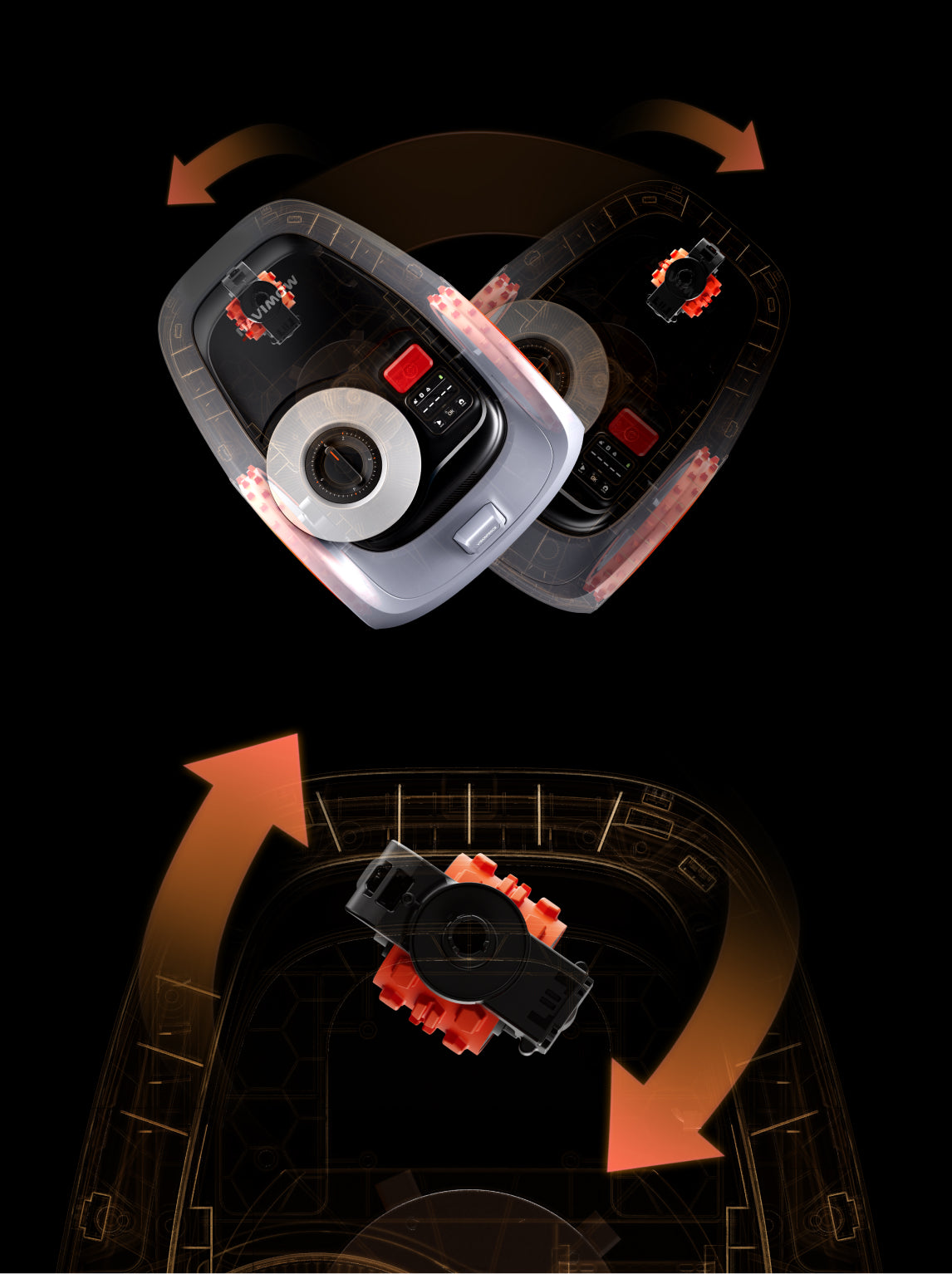
Navimow i105 is a high-tech and innovative lawnmower that every lawn owner needs for automatic mowing. It connects to a mobile application, and the user can control everything and get real-time updates.

With AI assistance, it understands your lawn, obstacles, perimeter, and edges. It precisely mows every part and manages multiple zones. Not only that, but it knows the best time to mow through real-time weather forecasts. If you have this mower, you’ll never have to worry about lawn mowing.
FAQs
Can you clean a lawn mower carburetor without removing it?
You can only clean the outside part. For proper cleaning, you need to remove the carburetor from the lawn mower and disassemble it. It is necessary to clean the tiny jets to unclog and to get rid of the sticky residue and corrosion for better performance.
How do I know if my lawn mower has a clogged carburetor?
If your lawnmower is not starting, it is an indication that the carburetor could be clogged. Secondly, if your lawnmower starts, but struggles to run smoothly, it means there is an issue with the carburetor. Other indications are fuel leakage, hard starting, and stalling.
Can you use WD-40 to clean lawn mower carburetor?
No, it is not the right option as it leaves a residue and cannot clean the property. A better option for thorough cleaning is a carburetor cleaner.



Share