This is one of the most frequently asked lawn care questions: How often should I fertilize my lawn so it looks as green as my neighbor's, or that park down the street?
Well, there's no fixed answer. It depends. On your grass type, your lawn goals, and the type of fertilizer you're using. At the bare minimum, once or twice a year is a reasonable starting point, and more if you start noticing certain warning signs.
What are those signs? How do you determine the right fertilization frequency for your lawn? What factors actually matter, and how much?
This guide covers all of that, along with a proper seasonal fertilization schedule to keep your lawn healthy year-round.
How Many Times Per Year? (The Real Answer)
Anywhere from 1 to 6 times per year, depending on your situation. Here’s a breakdown:
-
Once a year is the bare minimum; it keeps your lawn alive and functional, but rarely produces the thick, green results most homeowners want.
-
2–4 times per year is the sweet spot for most residential lawns, enough to maintain color, density, and health.
-
4–6 times per year, spaced roughly 6–8 weeks apart, is territory for high-maintenance or showcase lawns.
Factors That Determine How Often You Should Fertilize
Now come the deciding factors, which actually govern your fertilization frequency and schedule. For simplicity, we've covered three primary factors: your grass type, your lawn goals, and your fertilizer type.
#1 The Grass Type
Grasses are broadly classified into two categories: cool-season and warm-season. Just as both thrive in different climates and regions, their fertilizer requirements and frequency also differ significantly.

Cool Season Grass
(Kentucky Bluegrass, Tall Fescue, Fine Fescue, Perennial Ryegrass)
These grasses grow most actively in spring (April, May) and fall (October, November), when soil temperatures sit between 50–65°F. They're common across the northern US, Canada, and higher-altitude regions.
Recommended frequency: 2–4 times per year
For cool-season grasses, fall is the most critical fertilization window. A fall application lets the grass store nutrients in its roots, which fuels noticeably thicker green-up the following April. A spring application supports active growth but should be light to avoid excessive top growth with shallow roots.
Warm Season Grass
(Bermuda, Zoysia, St. Augustine, Centipede, Bahiagrass)
Warm grasses thrive in summer heat, actively growing when soil temperatures reach 65–70°F and above. They dominate lawns across the southern US, the Gulf Coast, and tropical regions.
Recommended frequency: 2–4 times per year
Late spring through summer (Jun to Sep) is the prime fertilization window for warm-season grasses. This is when they're actively growing and can actually use the nutrients. Fall fertilization is a common mistake here; applying nitrogen as these grasses approach dormancy can stimulate tender new growth that gets damaged by the first frost.
Note: Centipede grass is an exception. It's a low-maintenance variety that only needs fertilizing once per year in late spring. Over-fertilizing the centipede actually damages it.
#2 Your Goals/Lawn Type
So, what kind of lawn do you have, or are you trying to build? A backyard for the kids to play on has very different standards than a golf fairway. The more demanding the use and appearance expectations, the more frequent and precise your fertilization needs to be.

Standard Household Lawns
Most homeowners just want something that looks healthy, stays green through the season, and doesn't embarrass you in front of the neighbors.
A light spring feeding, one or two applications during the growing season, and a fall winterizer is what residential lawns need.
Commercial Parks
Commercial lawns are held to a higher and more consistent standard. Patchy, yellow, or thin grass reflects poorly on a business or municipality, so there's far less tolerance for imperfection.
Such lawns are normally managed by professional landscaping contractors on fixed schedules using commercial-grade products. For such lawns, fertilizer applications are spread evenly across the growing season, usually every 6–8 weeks.
Golf Courses
This is the top tier of lawn management, where turf is both a playing surface and a product. Golf fairways, greens, and sports fields face extreme wear, tight visual standards, and near-zero margin for error.
Greens and tees may be fertilized weekly during peak season with micro-doses of fast-release nitrogen to maintain precise color and density.
#3 Fertilizer Type
You know, fertilizers come in different options, and no, we're not talking brands. The nature of what you're applying has a direct impact on how often you need to apply it.
Slow-release vs. Fast-release
Fast-release fertilizers deliver nitrogen to the grass quickly. You'll see results within days. The tradeoff is that nutrients are used up or leached out of the soil within 2–4 weeks, meaning you need to reapply more frequently. They also carry a higher risk of burning if over-applied.
Slow-release fertilizers break down gradually over 6–12 weeks, feeding the lawn steadily rather than in one spike. They're more forgiving and require fewer applications overall.
Organic vs. Synthetic
Synthetic fertilizers are chemically made and nutrient-precise. You know exactly how much nitrogen, phosphorus, and potassium you're delivering. They work faster but offer no soil health benefits beyond the nutrients themselves.
Organic fertilizers, compost, bone meal, feather meal, biosolids, release nutrients slowly as soil microbes break them down. They improve soil structure, microbial activity, and water retention over time
Quick and slow-release normally fall under the synthetic category, so their frequency should be similar to as mentioned earlier. For organic fertilizers, which slowly add nutrients to soil, they may be applied 2 to 3 years annually.
Seasonal Fertilization Schedule
Now that you know what determines your frequency, the next question is when exactly, which months and seasons give your lawn the best chance to actually use what you're feeding it.
Early Spring
In early spring, roots are already long and full of nutrients stored from the fall, and shoots use that stored energy for initial growth. That means the lawn doesn't actually need an immediate feed the moment it turns green.
So, avoid feeding cool-season grass too early, as this encourages leaf growth while leaving the root system weaker and more susceptible to damage.
Wait until your lawn has been mowed two or three times. Apply early spring fertilizer between March and April, once your grass is starting to green up and beginning to actively grow. Greenasitgets
Late Spring
This is peak growing season, and the most productive feeding period. By late spring, the grass is busy and using up stored energy, so it needs to be kept well nourished.
Cool-season grasses in late spring are slowing down after their early growth flush, while warm-season grasses are coming out of dormancy. Fertilizing in mid to late spring encourages healthy growth as soil temperatures rise.
This is also your best slot to tackle broadleaf weeds like dandelions and clover alongside fertilizing, using a combination weed-and-feed product if needed.
Summer
Summer is the trickiest season, and for most homeowners with cool-season grass, it's largely a hands-off period.
In warm summer temperatures, leaf and root growth slow down. Roots can be damaged when soil temperatures exceed 85°F. Fertilizing cool-season grass during this window pushes lush growth right when the plant is least equipped to handle heat stress.
However, for warm-season grasses, summer is the prime feeding window. Early to mid-summer is the peak growing period for warm-season grasses. Fertilizing now supports strong, dense growth during the hottest days. mid-summer application, timed around July, helps these grasses outcompete weeds and maintain density through the heat.
Fall
Experts say that if you only fertilize once a year, make it fall. This is the single most important feeding window for cool-season grasses, and arguably the most underutilized by homeowners who focus all their energy on spring.
A two-part fall approach works best for serious lawns: an early fall feed in September to kick-start recovery after summer, followed by a winterizer application 6–8 weeks later.
Signs Your Lawn Needs Fertilizer
If you're already fertilizing but not seeing results, or you've been running on the bare minimum, your lawn may be telling you it needs more. Here's what to look for:
-
Pale or Yellowish Grass: The most obvious signal. Yellow or lime-green color typically means nitrogen deficiency. Healthy grass should be a consistent green. If it's fading, it's hungry.
-
Slow Growth: If the lawn is barely growing even during its active season, it's likely running low on nutrients. Healthy grass in peak season should need mowing every 5–7 days.
-
Thin or Patchy Turf: Sparse areas that don't fill in on their own indicate the grass lacks the nutrients to reproduce and spread. Thin turf also invites weeds to move in.
-
Increased Weeds: Weeds thrive in nutrient-poor, low-density grass. If dandelions, clover, or crabgrass are spreading, it's often a sign your turf is too weak to crowd them out.
If you're seeing two or more of the above signs, don't guess; test. A basic soil test tells you exactly which nutrients are missing,
When NOT to Fertilize Your Lawn

Fertilizing at the wrong time wastes money and damages your lawn. Avoid these situations entirely:
-
Before or During Frost: Cold or frozen ground can't absorb nutrients.
-
Before Heavy Rain: If more than an inch of rain is forecast within 24 hours, hold off.
-
During a Drought or Heatwave: Drought-stressed grass is already struggling. Adding fertilizer forces growth, but the plant doesn't have the water resources to support it.
-
On Newly Seeded Lawns: Fresh seed needs time to establish roots first. Fertilizing too early overwhelms tender seedlings. Wait until the new grass has been mowed at least twice.
-
On Dormant Grass: Dormant grass has shut down nutrient uptake.
Mowing and Fertilization: Why They Work Together
Most homeowners treat mowing and fertilizing as two separate chores. They're not. If you get the timing between them wrong, you quietly undermine both.
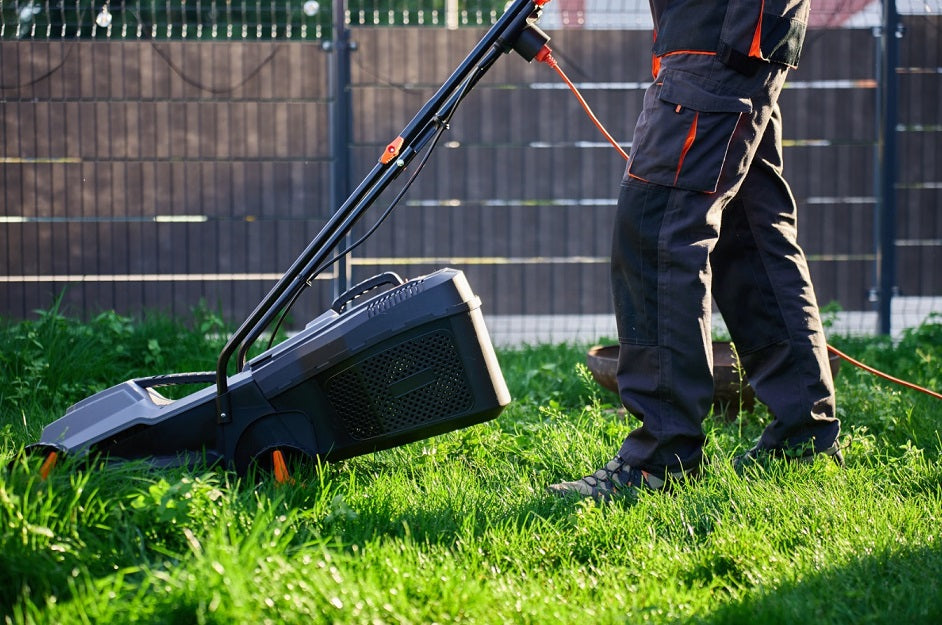
The basic rules: Mow one to two days before applying fertilizer. Wait 24–48 hours before mowing again. Never cut more than one-third of the blade in a single mow; scalping forces grass to drain soil nutrients just to recover.
Leave your clippings. As they break down, they return nitrogen and potassium naturally back into the soil, adding up to 25% of your annual fertilizer needs at zero cost.
How Robotic Mowers Support Fertilization?
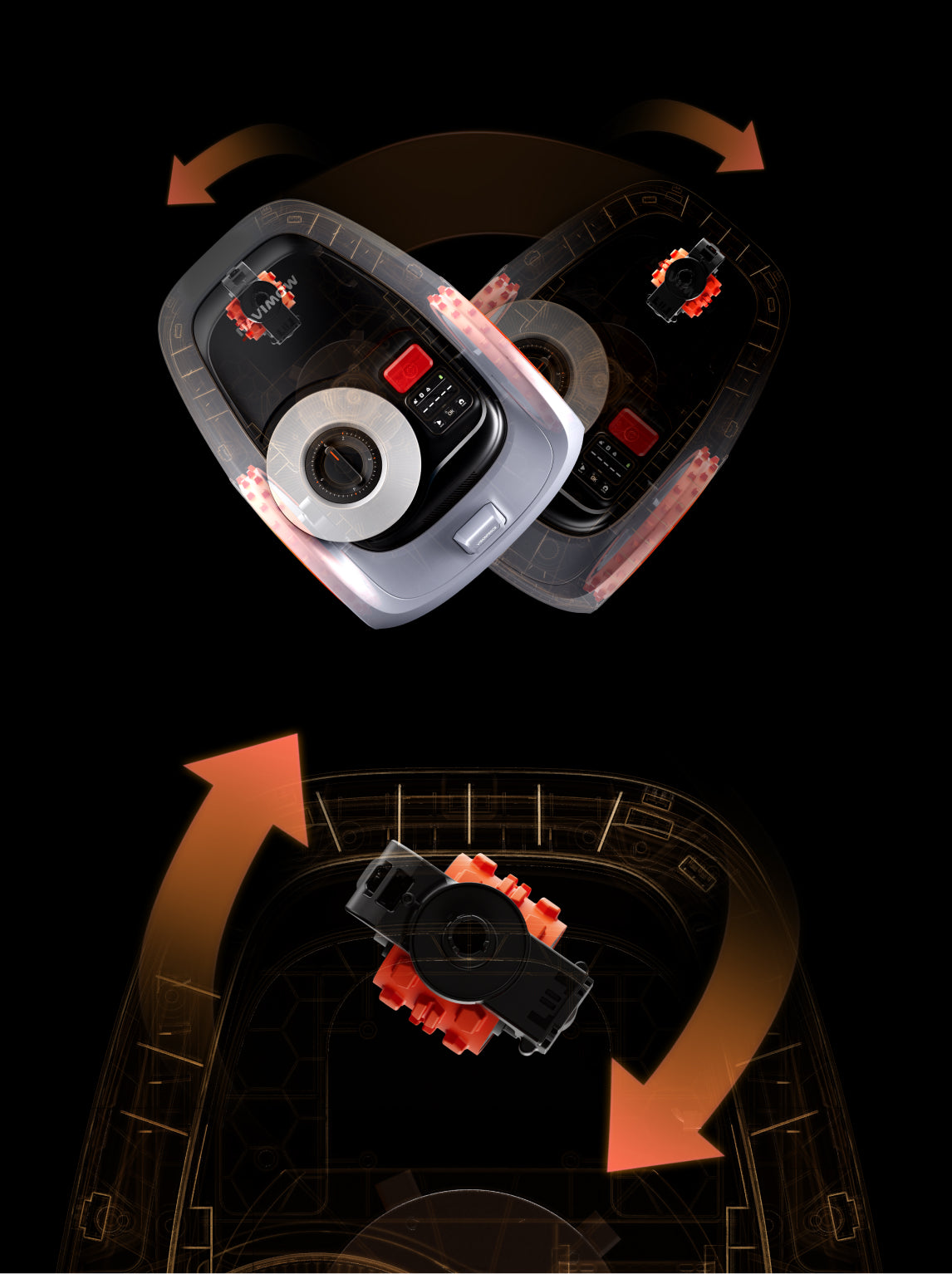
You can't automate fertilization yet, but mowing is a different story. Robotic lawn mowers, like Navimow X4 Series, map your lawn's boundaries, navigate autonomously, and cut on a set schedule, returning to their charging dock when done. And most importantly, they leave the clippings, which are naturally fertilizer for the soil.