To control weeds in the lawn, people often opt for a pre-emergent herbicide. It could be an effective measure, but you have to do it correctly and at the right time.
The timing of the application matters a lot. Even if you know you need to do it in spring, you have to select the right month or time window. Otherwise, you won't see any effect.
We're here to explain when to apply pre-emergent in spring. We will discuss how to determine the right time and do it the right way.
To understand when the best time to apply a pre-emergent in spring is, it is better to start with the basics. Let's see what a pre-emergent is and how it works to figure out the right time.
What is a Pre-Emergent and How Does It Work?
A pre-emergent herbicide is a chemical used to prevent weeds. Yes, it is a preventive measure that stops weeds from growing.
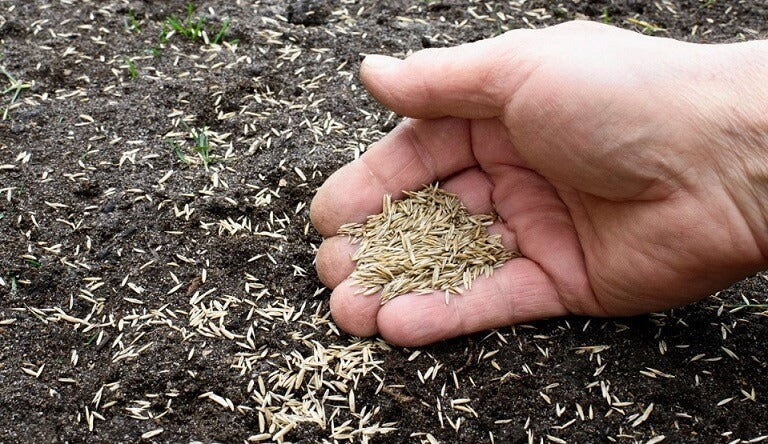
Suppose there is a weed seed ready to sprout and grow, ruining your lawn. A pre-emergent is meant to stop it from germinating.
Once you apply a pre-emergent, it is absorbed into the soil after watering and forms a preventive barrier. When weed seeds begin to germinate, they pull moisture from the surrounding soil. But they also absorb the pre-emergent while doing that. The pre-emergent enters into the weed seeds and disrupts the cell division process so that the sprout cannot grow. Eventually, the growth stops, and seeds die.
The most important thing to understand is that a pre-emergent does not work on the weeds that are already grown. It's only for the weeds that haven't grown yet. If there are already weeds in your lawn, you should opt for a post-emergent herbicide.

Why Does the Perfect Timing Matters?
The timing of pre-emergent herbicide application is crucial. You can't be too early or too late.
Suppose you apply it too early in the spring. At this stage, the temperature won't be favorable for weed growth. The herbicide will stay on the soil without doing anything. Over time, the barrier will fade away. And when it's time for the weed seed germination, its effectiveness will be reduced, or it won't be able to do anything. Thus, it is useless to apply pre-emergent too early.
Similarly, if you apply too late in the season when the weed seeds have already germinated, the pre-emergent will have no effect. At that time, the weeds might have broken through the soil surface. As stated earlier, it does not work on weeds that have already grown; you must use post-emergent.

Why Should You Apply Pre-Emergent in Spring
Spring is the time when your lawn wakes up from winter dormancy. It's ready to grow and turn green again. But like grass seeds, weed seeds are also ready to germinate and mess up your lawn.
When you apply a pre-emergent in spring, it prevents the weed seed growth. If you don't do it now, you won't be able to do it later. It's the best time to stop the weed invasion before it starts. It creates a line of defense for the whole year and reduces the number of weeds in your lawn.
If you don't apply a pre-emergent in spring, it means you are inviting more weeds. Yes, when a single weed seed grows, it becomes capable of producing a massive number of seeds. Thus, you are multiplying the seeds, which will result in an overwhelming invasion.
You will witness invasive growth in the summer. Your lawn will be filled with weeds, and then, it will be more difficult and costlier to deal with them using a post-emergent.
The worst part is that the weeds will steal water, sunlight, and nutrients, which is why the grass will struggle.

The Right Time to Apply Pre-Emergent in Spring
Spring is the perfect time to apply a pre-emergent, but knowing the exact timing is necessary. Ideally, you must apply pre-emergent just before the germination of the weed seeds. At this time, the barrier remains active in the weed's favorable period and is ready to stop seed growth.
Here is how to figure out the exact time to apply pre-emergent.
Check the Soil Temperature
Weed seeds actually wait for the right temperature to germinate. When spring starts, the temperature is a bit low, but it gradually increases. Once it reaches a consistent soil temperature of 55⁰F at a depth of 2 to 3 inches, it is a favorable time for weed growth.
Thus, you don't need to follow any specific calendar or month. Depending on the region you live in, the right time could be in early February or late April. Just keep an eye on the soil temperature to know the best time with 100% certainty.
Get a simple probe-style thermometer. You should check the soil temperature every day. Ideally, you can do it in the mid-morning before the sun rises. Take readings each day.

Once you see a consistent soil temperature of 55⁰F, you should apply the pre-emergent. By consistent, it means there should be a 4–5-day streak.
Never rely on a single reading or high temperature in the mid-afternoon. Beginners often make this mistake. A consistent temperature is the key to achieving excellent results.
Check Online Resources
You'll find some online resources and local bodies that share soil temperature data. You can check the whole trend of your area. The real-time data shows how soil temperature changes and whether it is consistent.
Often, universities and local bodies install trackers and sensors for weather monitoring. They also monitor the soil temperature and share it online. You can get accurate data from them for better results.
Look for Indicators
Experienced gardeners can tell the right time by looking at the natural indicators. They might not need thermometer readings.
The first indicator is daffodils. When they start to bloom, it means you should get everything ready. It shows the best time for pre-emergent is near, and you can monitor the soil temperature and other indicators.
Keep an eye on the blooming of Forsythia. If you see any bush around that is starting to open, it means the soil temperature is about 55⁰F. You can apply a pre-emergent. Keep in mind that you have to do it right after the blooming. You have enough time until the petals start to drop.
Similarly, the blooming of Star Magnolias and Ornamental Pears also indicates the soil is warming up, and it will soon hit 55⁰F. You have a one-week window to apply the pre-emergent.
How to Apply Pre-Emergent the Right Way?
Once you know the best time to apply pre-emergent in spring, you should get ready for the application. The time window is short, so apply the pre-emergent before it closes. Here's how you can apply it the right way.
Mow the Lawn
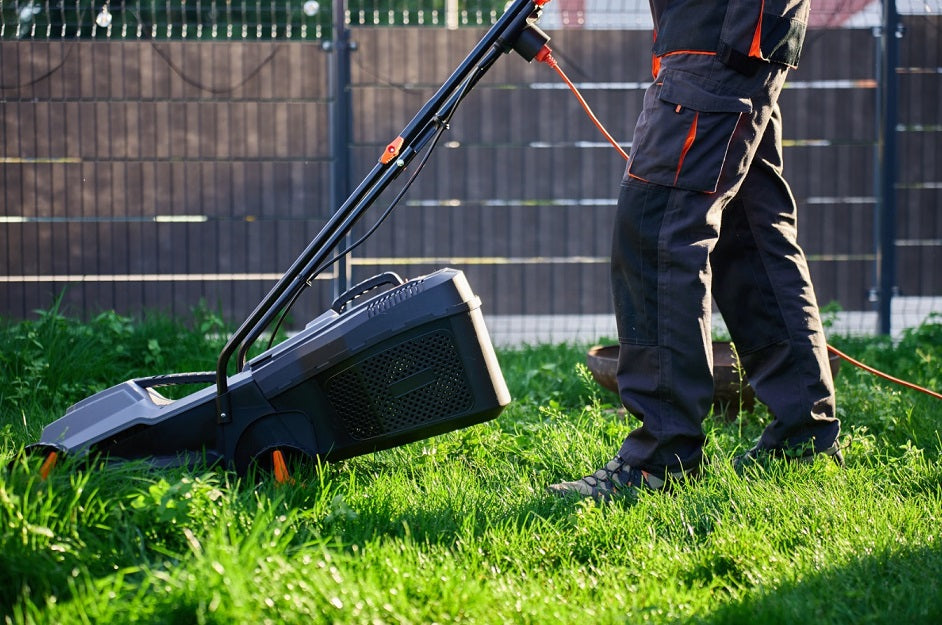
Before applying a pre-emergent, it's better to mow the lawn. It allows the pre-emergent to reach the soil rather than staying on the grass tips.
It's good to ensure the best height to cut grass, but specifically for the application of a pre-emergent, you can slightly lower the deck. Shorter grass provides better access to the soil.
For an even and automated cut, you can use a robot lawn mower. If you have a large lawn up to 1.5 acres, the Navimow X4 series is perfect. It precisely cuts thick, long, and dense grass with its dual cutting motors. Even if the lawn is uneven, its adaptive blade technology ensures you get a perfect cut without any scraping.
It works on all terrains because of the All-Wheel Drive (AWD) and can handle slopes up to 84% (40⁰). It features Xero-Turn™ technology, so it can make a 180⁰ turn at its place without damaging the lawn. With the EdgeSense™, it cleanly cuts edges along the boundaries and transitions.

The mower detects 200+ obstacles and maintains a safe distance from children and pets. It navigates large lawns with the NRTK and Vision technology at centimeter-level accuracy. It automatically maps your whole lawn, and you can mow up to 120 zones.
If you have a small lawn, you can go with the Navimow i2 AWD. It's a compact and affordable mower for lawns up to 0.25 acres. It's also equipped with All-Wheel Drive (AWD) and Xero-Turn™ technology, so it can conquer difficult terrain and mow in tight, narrow areas. It handles slopes up to 45% (24⁰).

It navigates your lawn with EFLS™ NRTK and Vision and maps everything automatically. You can mow up to 20 zones with exceptional precision. Its VisionFence™ detects 150+ obstacles, ensuring safe mowing.
Rake and Dethatch
After mowing, you should consider raking the whole lawn. Collect the debris, leaves, sticks, and everything. Make sure your lawn is clean.
If your lawn has thick thatch more than half an inch, it's better to consider Dethatching. The thick thatch layer blocks pre-emergent herbicides, keeping them from reaching the soil.
Dethatch your lawn first. Remove the layer of dead organic matter and expose the soil. After that, you are ready to apply the pre-emergent.

Apply the Pre-emergent
Here comes the most important part. Based on the types of weeds you expect in the lawn, you can choose a suitable pre-emergent.
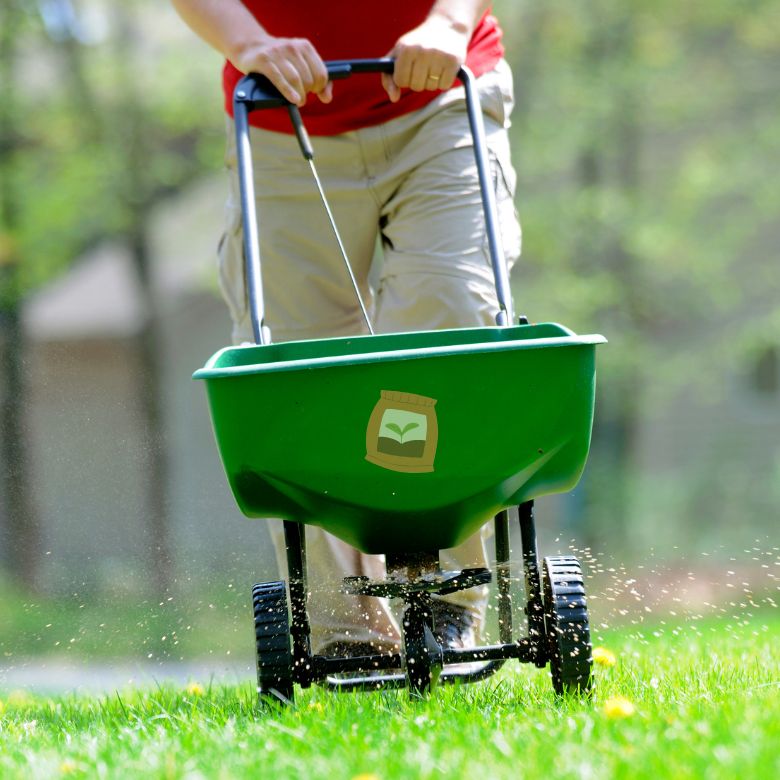
If you go with a granular pre-emergent, you have to use a spreader. Read the label carefully and check the application rate.
The application rate is usually mentioned on the product. It is in pounds per 1,000 square feet. Measure the lawn area and calibrate the spreader output.
Start with the medium or slow setting. After doing a few rows, you will get an idea of how to adjust it correctly. You can also test the output on a driveway or sidewalk. Adjust the dial of the spreader to match the recommended rate.

But if your lawn is too small, you can also opt for a handheld spreader. Fill it and move across the lawn to apply an even layer of granules everywhere.
Some people go with liquid pre-emergent instead of the granular ones. In that case, read the label and prepare the solution. You need to add water to a certain amount of the herbicide.
For the application, you can use a sprayer. Fill the sprayer tank and apply it evenly to the lawn. Just make sure to wear gloves, protective goggles, long sleeves, and shoes.
Water the Lawn
Water is necessary to activate the pre-emergent herbicide.
If you have used the liquid one, you have already added water. But with granules, you have to activate them through watering.
For this, read the manufacturer's guidelines to know how much water you need. If there is light rain ahead, the lawn will be watered automatically. But if not, you need to turn on your sprinklers.
Usually, you need to water 0.25 to 0.5 inches. If you don't know how to give the exact amount of water, check out our guide on how long to water grass. We have explained how to calculate the sprinkler time based on the required water volume.

Keep in mind that you should water the herbicide after application. Do not leave it. The sun will degrade the chemical before it can get to the soil. Thus, make sure to do it at the right time to save your effort from going to waste.
Take Care of Your Lawn After Pre-Emergent Application
For optimal results after applying pre-emergent, consider the following.
Stay Off the Grass
Just after the application, stay off the grass. Do not leave children and pets on the lawn, and avoid walking as much as possible.
Let the wet pre-emergent dry out and go into the soil. Once the lawn is completely dry, you can walk on it and enjoy it as you like.
Don't Aerate
Spring isn't the ideal time for lawn aeration. But if the lawn is in extremely poor condition due to compaction, some lawn owners might consider doing it.
After applying a pre-emergent, you shouldn't aerate. It will disturb the lawn soil and break the pre-emergent barrier. Thus, you won't be able to see the results you are expecting.
Further reading: Should you aerate your lawn in spring?
No Deep Digging
Whether you want to plant new flowers or move your existing flowerbed, wait a while. You cannot dig deep after applying a pre-emergent, as it will break the barrier at that spot.
Let the pre-emergent do its magic first. After 6-8 weeks, you can do anything you want.
Avoid Flooding Your Lawn
You have to water your lawn carefully. If you flood the lawn, it will push the pre-emergent barrier deeper. For pre-emergent to work, it must stay in the top 0.5-1 inch of the soil.
Water the lawn to keep the soil moist. Do not overwater.

Do Not Mow Low
For better results, do not mow low. You can keep the grass height at the higher end of the recommended range.
When the grass is a bit tall, it keeps the soil a bit cooler. Secondly, it produces shade and prevents weed growth.
Fertilize with Care
If you have applied the pre-emergent and fertilizer combination, you don't need to fertilize again.
But if you applied only pre-emergent, apply fertilizer after two weeks. But even in that case, do not water heavily for fertilizer granules. You have to save the pre-emergent barrier.
Further reading: When to fertilize lawn in spring?
Do Weeds Still Grow After Applying Pre-Emergent?
If you apply pre-emergent at the right time and the right way, it will reduce the growth of weeds. But it doesn't mean it can offer a 100% result.
Expect an 80-90% reduction in weed growth. Some weeds will still grow by breaking the pre-emergent barrier, and it's totally fine.
Wherever you see weeds in the lawn, just spot treat them. Pull them out by hand and dispose of them properly. You can also apply a light post-emergent to that area.

Final Words
Applying pre-emergent in spring is an effective way to reduce weed growth year-round. However, you have to do it the right way and at the right time. The timing is crucial, as if you do too early, it won't remain effective when the time comes, and if you do too late, the pre-emergent will not be able to do anything on the weeds that have already germinated.
You must keep an eye on the soil temperature. When it stays consistently at 55⁰F, you are ready to apply the pre-emergent. We have explained how to know the exact time to apply pre-emergent and how to do it correctly. Now, you can easily achieve excellent results. Remember, do not disturb the soil after the application, as it can destroy the barrier, and your effort will go in vain.