Ever fired up your lawnmower and wondered whether the noise could actually get you in legal trouble? What if it disrupts your neighbors and they complain? What's the ideal time to mow a lawn that keeps you on the right side of the law?
Mowing hours are largely regulated at the local level, though certain patterns hold across most jurisdictions. For example, in New York City, mowing is legally permitted between 8 AM and 7 PM on weekdays, and 9 AM to 6 PM on weekends and public holidays. Most other cities follow a similar framework.
Want to know more? Read through this blog to learn more about the laws that govern lawn mowing noise, who sets them, how they vary across key U.S. states, and a modern mowing solution that can help you stay compliant without ever having to check the clock.
What’s the Acceptable Limit for Legally Mowing a Lawn?
There’s no universal legal mowing time. But there are two considerations in this regard, which can help you properly decide when to mow:
Permitted time window: Many cities define start and stop times for powered lawn equipment. Those hours are the most visible rule. Most of the accepted limits fall under this bracket.
| Type of Day | Start Time – End Time |
|---|---|
| Weekdays | 8:00 AM – 7:00 PM |
| Weekends | 9:00 AM – 6:00 PM |
| Public Holidays | 9:00 AM – 6:00 PM |
Noise threshold and measurement. Some codes specify maximum decibel levels measured at a property line or a defined distance. Equipment that exceeds those levels may be restricted even inside permitted hours.
Lawn Mowing Legal Guidelines for Different States/Cities
Now, let’s focus on what each state/city law says about the use of lawn mowing equipment.
NYC
NYC has one of the most clearly defined mowing laws in the country. As per NYC 311, powered lawn equipment is allowed on weekdays from 8:00 a.m. to 7:00 p.m., and on weekends and New York State and Federal holidays from 9:00 a.m. to 6:00 p.m., or until sunset if later. Mowing at any time in a way that creates unreasonable noise is also prohibited, regardless of the hour.
Houston, Texas
In Houston, Chapter 30 of the Code of Ordinances covers this. Lawn mowers and garden tools are permitted between 7:00 AM and 8:00 PM, provided the equipment does not produce sound exceeding 85 dB(A) when measured from the nearest residential property line
Miami Beach, Florida
Per the City of Miami Beach's official noise control page (Sec. 46-152), lawn mowers, edgers, weed trimmers, and other noise-producing equipment are prohibited between 8:00 PM and 8:00 AM on weekdays, and between 8:00 PM and 10:00 AM on weekends and holidays. Gas-powered leaf blowers and chainsaws are outright banned in Miami Beach under a separate ordinance.
Los Angeles, California
In Los Angeles, LAMC Section 112.04 is the governing rule. Between 10:00 PM and 7:00 AM, no person shall operate any lawn mower, backpack blower, lawn edger, riding tractor, or any other device that creates a loud or raucous sound within any residential zone or within 500 feet of a residence.
Alexandria, Virginia
Alexandria's city website (Sec. 11-5-4 (16) of the City Noise Code) is explicit: the use of power lawn and garden equipment, including lawn mowers, edgers, and leaf blowers, is permitted Monday through Friday from 7:00 AM to 9:00 PM, and on Saturdays, Sundays, and holidays from 9:00 AM to 9:00 PM.
Seattle, Washington
Seattle's noise ordinance (SMC 25.08) governs construction and maintenance noise. Construction and maintenance, which includes lawn and garden equipment, may take place between 7:00 AM and 10:00 PM on weekdays, and 9:00 AM to 10:00 PM on weekends and holidays.
| City | State | Weekdays | Weekends / Holidays |
|---|---|---|---|
| New York City | New York | 8:00 AM – 7:00 PM | 9:00 AM – 6:00 PM |
| Houston | Texas | 7:00 AM – 8:00 PM | 7:00 AM – 8:00 PM |
| Dallas | Texas | 7:00 AM – 7:00 PM | 8:00 AM – 7:00 PM |
| Miami Beach | Florida | 8:00 AM – 8:00 PM | 10:00 AM – 8:00 PM |
| Los Angeles | California | 7:00 AM – 10:00 PM | 7:00 AM – 10:00 PM |
| Detroit | Michigan | 7:00 AM – 10:00 PM | 7:00 AM – 10:00 PM |
| Alexandria | Virginia | 7:00 AM – 9:00 PM | 9:00 AM – 9:00 PM |
| Seattle | Washington | 7:00 AM – 10:00 PM | 9:00 AM – 10:00 PM |
Why Laws Regulate Lawn Mowing?
Mowing is a necessary chore for any household with a yard, so why regulate and put restrictions on it? You already know the answer: the traditional equipment.

Noise Pollution
Some lawn mowers can be really loud, especially gas-powered push and riding mowers, which generate around 85 dB to 100 dB. That falls squarely under noise pollution, and noise at that level impacts both health and day-to-day activities.
Health Impact
WHO classifies sound exposure above 85 dB as seriously harmful. When a traditional mower runs for hours, it can cause cumulative hearing damage, elevated stress levels, and increased blood pressure, not just for the person mowing, but for anyone nearby exposed to that sustained noise.
Disruption of Daily Life Activities
That's one of the most compelling reasons why regulation had to come in. Neighborhoods get seriously impacted. If you're mowing very early in the morning when people are asleep, or late at night when they're winding down, that noise disrupts the very quiet hours they were counting on for a peaceful rest.
Who Sets the Rules (and Why They Differ)
Since noise pollution impacts each community differently, the laws are subjective to the state or locality, primarily designed by any of these three entities:
Local Governments
City councils adopt noise ordinances and define hours for powered equipment. These ordinances may include time windows, decibel thresholds, measurement distance, and complaint procedures. That means the enforceable rule is almost always a municipal code or local guidance page
Homeowner Associations (HOAs)
HOAs can and often do impose stricter rules than the city. HOA covenants are contract documents enforced by the association. If you live in an HOA community, check those rules first because HOA fines and enforcement are separate from municipal citations.
State or Provincial Regulations
State or provincial governments rarely prescribe mowing hours. They typically set general nuisance laws while leaving timing and measurement details to cities and counties.
How to Check Your Local Law?
As said, legality is very subjective, and it's very likely that your state isn't in the above list. So, here's how you can check your local regulations:
- Search "[Your city] noise ordinance" and open the municipal code or the city's official code compliance pages. Example targets: 311 portals, Municode library, or department pages.
- Look for headings: noise, powered equipment, construction hours, or statutory nuisance. Note weekday, weekend, and holiday rules separately, as they often differ.
- Check HOA covenants separately. HOA rules are contractual and enforceable by the association, and they can be stricter than city law.
- If the code is unclear, call your city's code enforcement office directly. They can walk you through what applies to your address.
- Ask your neighbors who have lived in the area longer, or join local community groups and neighborhood forums
How Robotic Lawn Mowers Help You Stay Legal
The regulation largely stems from the noise factor involved in traditional push mowers. But what if there's an alternative that takes that problem off the table entirely? That's where robotic lawn mowers come in.
Lower Acoustic Signature
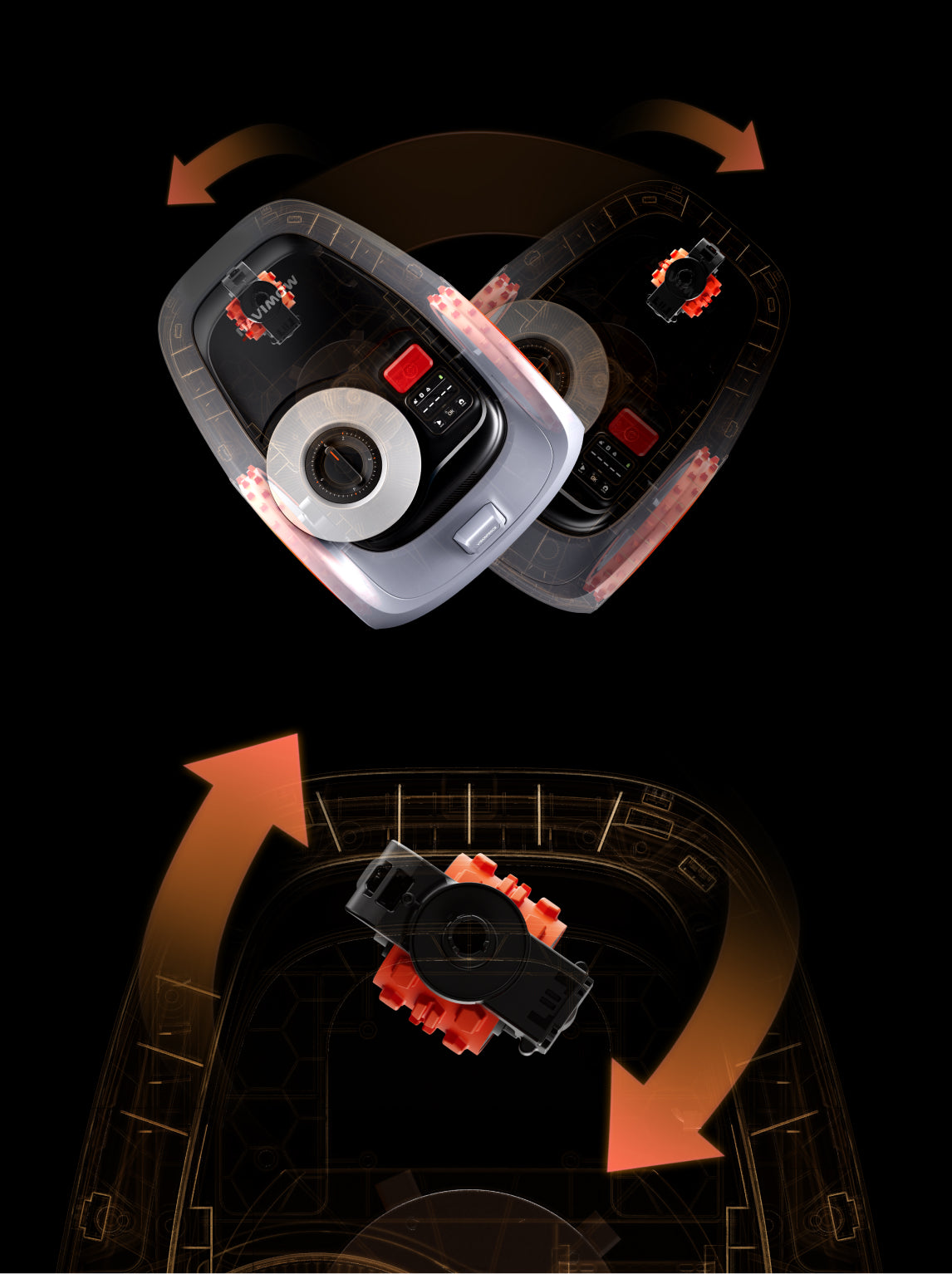
Robotic lawn mowers commonly operate around 50 to 63 dB(A). For instance, one of Navimow's models, the i2AWD series, runs at just 59 dB, comparable to a quiet conversation, and much lower than a gas push mower or ride-on mower, which often exceeds 90 dB(A). That kind of noise level is unlikely to trigger any complaint or legal violation.

Precise Scheduling
Robotic mowers can be programmed to operate strictly within your city's permitted windows. If your city allows a 7:00 AM start, schedule the robot for 8:30 AM and avoid any early complaints.
Autonomous Operation
Unlike push mowers, you don't have to maneuver bulky equipment all across the lawn yourself. They're battery-powered, with sensors that autonomously navigate through obstacles and narrow paths and then return to their charging docks on their own, making the whole process hands-free and hassle-free.

Environmentally Friendly
And since they're battery powered, there's neither the engine noise nor the smoke that comes with gas-powered equipment. That makes robotic mowers a much cleaner and greener option for your lawn and your neighborhood.
FAQs
Is there a national mowing time law?
No. Federal law does not set standard mowing hours. Municipalities and states have their own ordinance that govern the noise and equipment use.
What’s the general legally permitted time for mowing?
It largely varies from state to state. Common municipal patterns place start times between 7:00 and 9:00 AM and stop times between 6:00 and 10:00 PM, with weekends and holidays carrying stricter windows than weekdays.
Can electric or robotic mowers run anytime?
Even though these mowers fall within the accepted sound range and won't impact neighbors the way gas-powered tools do, it's still advisable to follow the permitted timelines to avoid any potential complaints or penalties.
Do noise limits apply on holidays?
Yes, they apply on holidays. Holidays are normally treated the same as weekends. So if your city's weekend window is 9:00 AM to 6:00 PM, that same rule applies on public holidays.