Sometimes, no matter how much you fertilize your lawn, it still stays pale or yellow. And that’s where the lime does its magic.
Lime is a gardener's or lawn owner’s magic wand to adjust soil pH levels. It’s a natural element that can solve various lawn issues and make your lawn lush and green again.
Let’s understand what lime does to the soil. We will explain what lime actually is and how it affects and benefits your lawn. We will also share common signs that indicate your lawn needs lime and take you through the step-by-step process of applying it the right way.
What is Lime and What Does It Do to the Soil?
Lawn Lime or Agricultural Lime is the powdered form of a natural rock used to adjust the pH levels in the lawn, garden, or crop.
You will find two common types of limes used in lawns:
Calcitic Limestone: Its chemical name is Calcium Carbonate and is obtained from natural limestone deposits.
Dolomitic Limestone: It’s Calcium and Magnesium Carbonate obtained from rock formations containing both calcium and magnesium. It works like Calcitic Limestone but has an additional nutrient, magnesium.

How It Works
Lime is not a food or macronutrient for grass. Instead, it’s only a soil conditioner that adjusts the pH level of the soil.
Ideally, the soil’s pH level should be slightly acidic to neutral, between 6.0 and 7.0. If it is too acidic, it has an excess of charged hydrogen ions and aluminum ions. It binds the essential nutrients, nitrogen, phosphorus, and potassium, and makes them unavailable for grass.
That’s where you need to use lime. When you spread it over your lawn and water it, the carbonate dissolves. It starts reacting with the acidic hydrogen ions in the soil and converts them into water and carbon dioxide.
As acidic hydrogen ions decrease, the soil pH increases. If you add the right quantity, you can bring the pH level to the sweet spot where the nutrients are accessible for the grass to support its growth.
Benefits of Adding Lime to the Soil
Makes Essential Nutrients Available
Acidic soil blocks the soil nutrients and makes them inaccessible for the grass. Even if you apply a bag of fertilizer, grass will not absorb it. The reason is that the positively charged hydrogen and aluminum ions react with the fertilizer compound and lock it. They make all these essential nutrients insoluble, which is why grass roots cannot absorb them.
As a result, the grass starves for nutrients, even though they are abundantly present in the soil. In the end, the grass turns pale.
When you add lime to such soil, it neutralizes the acidic ions. So, the nutrients that were blocked by the ions become available. They dissolve in water and feed the grass.

Improves Soil Structure
A healthy soil contains beneficial bacteria, fungi, and earthworms. They are necessary to maintain the soil structure. Without them, the lawn can become compacted and covered in thick thatch.
When soil becomes acidic, the activities of soil organisms get disturbed. Firstly, the microbes go dormant. They will no longer be available to break down the dead plant material, which is the reason thatch builds up quickly. If the thatch layer is thicker than 0.5 inches, it starts blocking water, oxygen, and nutrients from reaching the roots.
Earthworms do not live in acidic soil. They go away, so there is no one to naturally aerate. Thus, the soil gets compacted and blocks air, water, and nutrient exchange.
Lime helps bring the optimal pH level. Once it increases the pH level, the soil’s biological life is restored. Over time, the population of beneficial bacteria and earthworms increases, and this improves the soil structure.
Reduces Weed and Moss Growth
The grass becomes pale and weak because of acidic soil. It struggles to survive, and that’s when moss and weeds see the opportunity to grow.
Moss can take over the bare spot in no time. It can thrive in acidic soil because it gets its food from moisture in the air. It does not rely on soil nutrients. It can spread freely in your lawn where the grass is weak.
Similarly, some weeds can grow in acidic soil despite low nutrition, such as broadleaf plantain and sheep sorrel. Dandelions also like this soil condition and can grow because of their deep taproots.
You can add lime to reduce moss and weed growth. But keep in mind that lime is not an herbicide. It won’t kill the weeds. Instead, it will make the soil favorable for grass and help it grow. Once the grass becomes dense, it blocks sunlight for weed seeds and moss. It starves them out and takes its area back.

Provides Lawn Essential Micronutrients
Lime also provides calcium and magnesium to the grass. These are micronutrients, and they are quite important for turfgrass health.
Calcium makes the grass stronger. If there is an adequate amount of calcium, the grass can bear foot traffic, lawnmower runover, and heavy rain. It builds stronger cell walls that can withstand such conditions. Without enough calcium, the grass will die too early because it is weak and tender. It’s also responsible for deep root development, which helps the grass soak water from the depth.
Magnesium is the central atom of the chlorophyll molecule. It’s necessary for photosynthesis. If there is a lack of magnesium, the grass cannot produce enough food, and the blades turn pale or yellow.
Reduces Heavy Metal Toxicity
Heavy metals are naturally present in the soil. At the optimal soil pH level, these metals do no harm to the grass. But when the soil becomes too acidic and the pH goes below 5.5, heavy metals like aluminum and manganese dissolve into soil moisture.
Free aluminum is toxic to grass roots. It makes them brittle, which is why they cannot absorb water. The grass looks drought-stressed no matter how wet the soil is.
Lime also addresses this issue. It increases the soil pH and forces dissolved heavy metals to precipitate out. They become insoluble again, so they can no longer harm the grass.
Types of Lime You Can Use in Lawn
There are primarily two types of lime based on their chemical composition.
Calcitic Lime
Calcitic Lime is a pure ground limestone found in deposits. If you want to boost the pH of your lawn and add calcium to it, you can use it.
It strengthens the cell wall and enhances heat tolerance. It also supports deep root formation. When applied in the right amount, it can resolve pH issues and improve turfgrass health.
Dolomitic Lime
It’s another type of limestone that’s naturally found with high levels of magnesium. So, it can add calcium and magnesium to the soil.
You should opt for this type if your lawn is low in magnesium. Otherwise, use calcitic lime. The magnesium in the lime restores chlorophyll in the grass and turns it green again.

Available Physical Forms
Pelletized Lime: Agricultural limestone crushed to form a fine powder, which is then turned into pellets. They are water-soluble, so when you apply water after spreading the pellets, they dissolve easily. It’s perfect for DIYers and new lawn owners. The pellets are easy to handle and mess-free. They can be spread evenly across the lawn using a spreader.
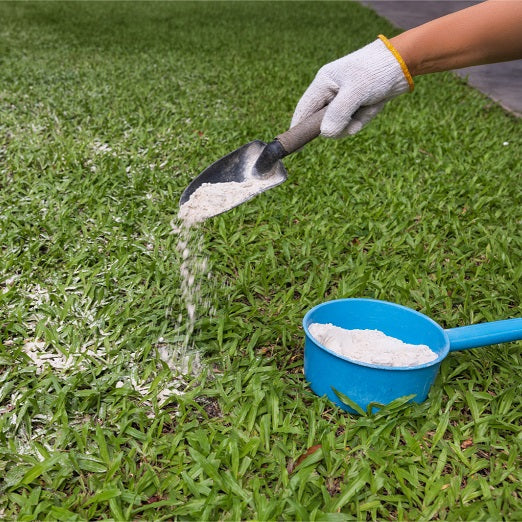
Powdered Lime: It’s crushed lime that dissolves quickly into the soil. It’s a budget-friendly option for lawn owners, but it’s a bit messy. A slight breeze can spread the dust across your whole lawn. There is a high risk of uneven application, and powder might also spread in the area where it’s not needed, such as the driveway. You have to handle it carefully.
Fast-Acting Lime: This is a specialized form combined with natural acids, like humic acid, to improve action time. It dissolves faster and reduces the pH levels within a few weeks. It’s excellent if your lawn needs urgent pH adjustment. However, it’s a bit expensive. If the soil is extremely acidic, you should go for it.
Liquid Lime: Small lime particles are dissolved in a carrier liquid. You can use a sprayer to spread it on the lawn. It penetrates immediately and offers quick results. It’s also easy to apply and handle, but it’s again an expensive option.
Signs You Might Need Lime
Yellowing of Grass
If you witness yellowing of grass in your whole lawn or a wide area, it clearly indicates fertilizer scarcity or acidic soil. Before applying any fertilizer, check the soil pH using a pH meter at different parts of your lawn. If the pH is low, it means the soil needs lime.
In acidic soil, grass blades may stay pale green or yellow-tinted even after you apply fertilizer because it does not allow the nutrients to be absorbed by the grass roots.
Secondly, they cannot absorb magnesium from the soil. It’s necessary for chlorophyll. Without it, you will see only yellow grass in your lawn.
Moss Spread
Moss is actually an opportunist. It grows in locations where the grass is already weak. It does not compete with the grass or steal its nutrients.
If you see moss spreading consistently in your lawn, it means there is something wrong with the grass. There could be various reasons for moss growth, such as waterlogged soil, low pH, too much shade, compacted soil, etc. However, if you don’t see any waterlogging, shade, or compaction, there is a greater chance of acidic soil.
In extreme acidity, moss can form a thick blanket on your lawn and cover the area quickly.

Acid-tolerant Weeds
Some weeds can thrive in acidic soils. They can even tolerate pH levels of 4.5 to 5.5. Because of high acidity, the grass automatically thins out, and the soil is exposed. The sunlight gives enough energy to the weed seeds to germinate.
If you see broadleaf plantain, buckhorn plantain, sheep sorrel, or dandelions in your lawn, it means the soil is acidic. These weeds prefer acidic soil, so they can easily grow and thrive when your grass struggles.
How to Apply Lime to Your Lawn?
Follow this step-by-step guide to apply lime to your lawn the right way.
Soil Testing
When it comes to lawn soil, you shouldn’t guess. You should rely only on tests.
You might have an idea of the soil pH level if you have used a pH meter. However, sending a soil sample to a lab is a better option.
The lab report offers a detailed overview of the soil nutrients and deficiencies. For instance, you'll know whether magnesium is present to decide between Calcite and Dolomite lime.
Most importantly, the report also shares some recommendations, such as what you should add to the soil and the suitable quantity.
For more details, check out our lawn soil testing guide and learn how to collect a sample.

Select the Optimal Window
Fall is the best time to apply lime to the lawn. Whatever you apply, it’s mostly absorbed, and there are fewer chances of washing it off the surface.
The primary reason for fall application is that standard lime needs 3 to 6 months to show complete results. If you apply it in the fall, the soil will have the perfect pH in the spring, and it will be ready for fertilizer application and aggressive growth.
The second-best window is early spring. If you missed the fall season, you can apply now. Frequent rains in spring help dissolve palletized lime, and the growing grass takes advantage of the fresh nutrients.
You can apply lime almost any time. Just avoid applying it when the ground is frozen and during midsummer and dry drought.
Mow the Lawn
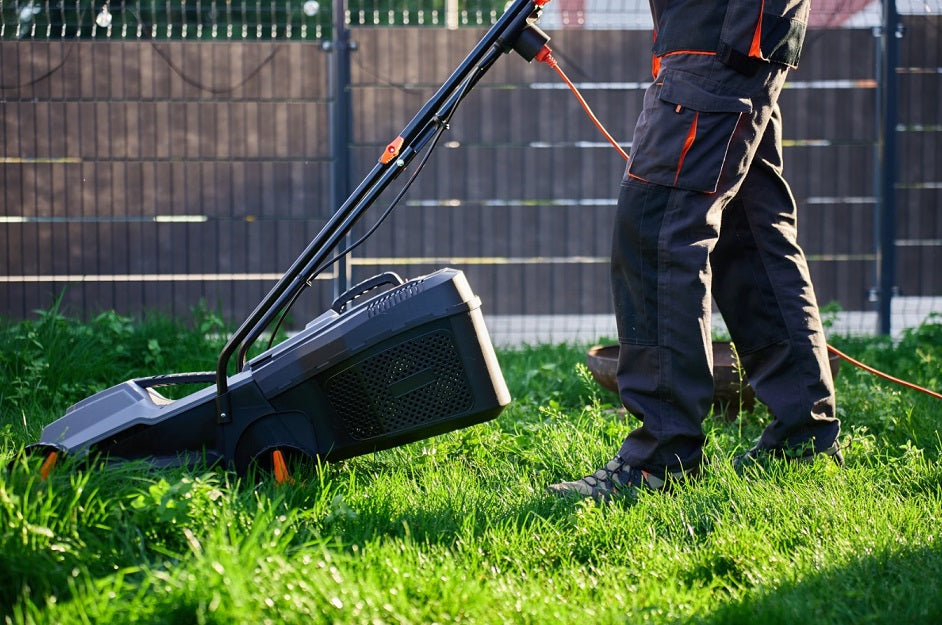
Before applying lime to the lawn, mow the whole area. This time, mow shorter than the normal height so that lime can easily reach the soil.
If you are using a traditional mower, bag the clippings. A better way is to use a robot lawn mower. Set it on a schedule a day before the lime application. It will automatically mow the lawn. Moreover, it will produce fine clippings that act as natural fertilizer.
A robot lawn mower maintains your lawn throughout the year. Just set the schedule, and it does everything on its own. It not only saves you time but also keeps the lawn perfectly maintained and ensures artisan-level cutting.
For small lawns, you can go with Navimow i2 AWD. If you have a medium or complex lawn, check out Navimow H2. For large lawns, the best option is Navimow X4.

Aerate and Dethatch If Needed
Soil compaction blocks water, air, and nutrients. If the soil is compacted and you apply lime, it won’t reach the grass roots. Use a screwdriver to check if the soil is compacted. Push it into the soil. If it glides easily, the soil is fine, but if you need to exert too much pressure to push it 2 to 3 inches into the soil, it has been compacted.
You should aerate compacted soil before lime application. Use a manual or power aerator. Core aeration is an effective technique as it removes soil plugs from the ground and reverses compaction.
Sometimes, the soil is not compacted, but there is a thick layer of thatch sitting above the soil. And in the case of acidic soil, it’s quite common. It’s a layer of dead organic matter. If it’s over 0.5 inches thick, it is better to dethatch the lawn. Otherwise, the lime you apply will sit on the top of the thatch layer.
Spread Lime in the Lawn
Now, you are ready to spread lime in the lawn. The soil test report has the recommended amount per unit area.
Suppose the recommended amount is 100 lbs per 1,000 sq. ft. Ideally, you should not apply more than 50 lbs per sq. ft. in a single application. In this case, you can apply half of it in the spring season, and the second half in the fall, or vice versa.
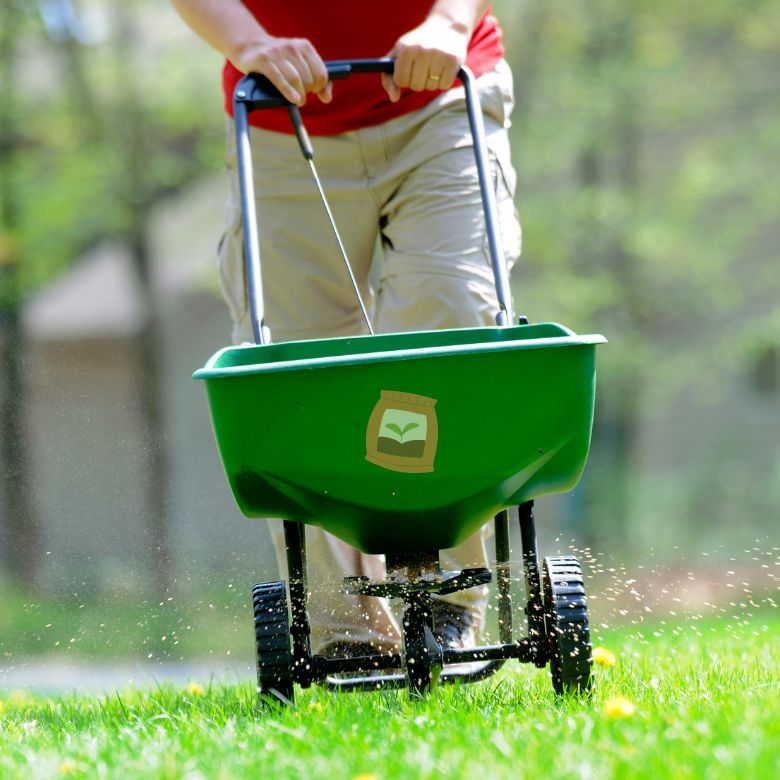
Use a broadcast spreader to spread the lime. Adjust the dial setting and test it on the driveway. Apply lime in a crisscross pattern. Firstly, fill the spreader with half of the lime amount and go north to south. Then, fill the other half and spread it east to west. Always apply in parallel lines and try to overlap the previous line a bit.

Water the Lawn
Finally, you need to water the lawn. It’s a necessary action after the application of lime. The water will dissolve the lime and help it reach the roots.
Turn on the sprinkler and water lightly. After that, limit activity on the lawn and keep children and pets away until the grass has dried.

Final Words
Lime is a natural rock that brings the soil pH to an optimal level. Once you add it to acidic soil, it increases the pH level, unlocks nutrients already present in the soil, and helps the grass become green and dense again. We have explained what it does to your lawn and when you can apply it. Before application, get the soil tested. Once you figure out your lawn soil is acidic and it needs lime, follow the step-by-step process to add lime and restore the optimal pH of the soil.