Ever seen the soil around trees or new flower beds covered with wood chips or gravel? You probably thought it was there just to make things look neat and presentable, right?
Well, that's a lawn care technique, known as mulching. Its purpose is more functional than aesthetic. You cover the soil surface so it can hold on to its natural properties, instead of losing them to wind, rain, heat, or changing conditions. But there's more to it than that - It's not always gravel or wood chips. Sometimes, inorganic materials like plastic sheets are used as well. So what's the logic behind that?
Read through this blog to learn what mulching is, the types commonly used, best practices to follow, and where it is necessary to use it.
What is Mulching?
In the late 18th century, Parisian market growers discovered that covering the soil between strawberry plants with straw kept weeds down and reduced rot and pest damage. It was called "paillis", from the French word "paille," which means straw. That technique slowly evolved from using just one material to many more modern options, and is now called mulching.
Mulching is the technique of applying a layer of material over the soil surface or around plants. This layer can be organic, inorganic, or made from growing planters or even plastic sheets. The purpose is to shield the soil from weather and external stress and improve soil conditions.

Benefits of Mulching
So, what differences can a layer make? Bare soil loses moisture quickly, heats up in the sun, and erodes under wind and rain. A mulch layer acts as a shield. It does not block plant growth because roots live below the surface, and light is only needed by the leaves above ground.
- It slows evaporation
- Reduces temperature swings
- Prevents raindrops from compacting the soil
- Stops snail and other disease infestations
- Prevents soil erosion
- Blocks weed growth in the soil
Classification of Mulches
Mulches can be classified in different ways. The most common method is based on the nature of the material. A mulch can be organic, such as leaves, grass clippings, or bark, or it can be inorganic, such as plastic, rocks, or rubber. Each of these groups has further sub-types, usually named after the material being used.
Another way to classify mulch is by its purpose. There are landscaping mulches, used to improve the appearance of lawns and garden beds. And horticultural mulches, which support plant growth and soil health.
In reality, both types often overlap. Decorative mulches still provide functional benefits, and horticultural mulches can also improve appearance. The name usually reflects which purpose is considered more important in that context.
Organic/Biodegradable Mulches
Organic mulches are made from natural plant or animal materials that decompose over time. Because they break down, they gradually add organic matter to the soil, which improves soil structure, supports beneficial soil organisms, and can increase nutrient availability.
Organic mulches are temporary and need periodic replacement because of their decomposition over time. Common options in organic mulches are:
Shredded Leaves
Leaves from deciduous trees are a common and cost-effective organic mulch. When shredded before application, they allow water and air to reach the soil while slowly decomposing. If used whole, they can mat down and block water infiltration, so shredding helps prevent that issue. Dry leaves are also common to prevent freezing of plants underneath in winter, and can be removed in the summer.

Grass Clippings
Grass clippings are high in nitrogen and break down quickly once spread on the soil. They return nutrients to the soil as they decompose and can help improve soil fertility.
Fresh clippings should be applied in thin layers or mixed with other materials to avoid matting and odor problems.

Wood Chips
Wood chips are a widely used organic mulch made from chipped branches and wood waste. They decompose relatively slowly compared to leaves or grass clippings. As they break down over several years, they contribute organic matter and help conserve soil moisture, moderate soil temperature, and suppress weeds. You'll often find them around trees, shrubs, and perennial beds.

Straw
Straw is a lightweight mulch made from cereal crop stalks after the grain has been harvested. It helps retain soil moisture, suppresses weeds, and prevents soil erosion. Straw is popular in vegetable gardens because it does not compact easily and lets water infiltrate while keeping soil surface conditions stable.

Bark
Bark mulch comes from the outer layer of tree trunks and is available as shredded strands or larger nuggets. It decomposes more slowly than many other organic mulches, so it lasts longer before needing replacement.
Bark mulch is effective at reducing water loss and suppressing weeds. It is available in different colors and is commonly used in landscape beds and around ornamental plants.

Inorganic Mulches
Inorganic mulches include synthetic or non-living materials that are placed over the soil surface. Unlike organic mulches, they do not decompose quickly and will not add nutrients to the soil. Many of these materials are chosen for their long life, weed suppression, and visual appeal.
Rocks and Gravel
Rocks and gravel are among the simplest inorganic mulches. These materials do not break down, so they can last for many years once placed.
They are normally used in dry-climate landscaping, pathways, and around plants that tolerate heat, because rocks can absorb and radiate heat. While they help suppress weeds and reduce soil erosion, rocks do not feed the soil or improve its structure.

Rubber Mulch
Rubber mulch is made from recycled tire rubber pieces. It does not decompose and therefore remains in place for a long time. Rubber mulch is effective at suppressing weeds and retaining soil moisture, and it provides insulation that can slightly raise soil temperature (around 3℉).
Since rubber is non-porous, water passes through to the soil, but the rubber itself does not add nutrients. Rubber mulch is also soft and springy, which is why it is used in playgrounds.

Plastic Mulch
Plastic mulch consists of thin plastic film laid over the soil. It is widely used in commercial crop production to warm the soil, conserve moisture, and suppress weeds. Plastic mulch can change soil temperature by absorbing or reflecting heat depending on its colour and thickness.
Plastic does not break down easily; it lasts through a growing season, but must be removed and disposed of afterwards. Many farmers combine it with drip irrigation to improve water efficiency.

Living Mulches (Ground Covers)
Growing mulches are layers of living plants that cover the soil surface instead of burying material on top. These plants grow close to the ground and act like a mulch by shading the soil and suppressing weeds.
Many groundcovers also bring added benefits. For example, clovers can fix nitrogen. Similarly, a plant, creeping comfrey, draws nutrients up from deeper soil layers.
In some farming systems, cover crops are used as living mulches but are usually killed with herbicides or incorporated into the soil at a specific time. Live mulches may also need to be mechanically or chemically removed or killed at some point to prevent them from competing with the main crop for water, nutrients, and light.

Risks Involved in Mulching the Soil
One risk is over-mulching. Too thick a layer can trap excessive heat in summer, stress plants, and slow water infiltration. It can also prevent oxygen from reaching roots, leading to root suffocation and poor growth.
Mulch placed directly against plant stems or tree trunks can trap moisture against the bark and reduce gas exchange. This can lead to inner bark decay because roots grow up into the mulch instead of into the soil.
Some mulch materials can have chemical or pest concerns. Rubber mulch may leach chemicals and can become very hot in sunlight. Moreover, fresh organic materials may attract rodents, insects, or carry weed seeds.
How to Apply Mulch: Step by Step
Now let's move to the practical side: how mulching is actually done over planting beds or garden areas.
1. Weed Removal
Pull out existing weeds, including the roots, so they don't grow back under the mulch. If the soil is compacted, lightly loosen the top layer. You can do dethatching. This helps water move into the soil instead of sitting on top of the mulch.

2. Mulch Calculation
Calculate how much mulch you need. Mulch depth usually ranges from 2 to 3 inches for beds and 3 to 4 inches around trees and shrubs.
The basic formula is:
Mulch Volume = Area x Depth (feet)
For square or rectangular beds, area is length times width, and for circular ones, area is π × Radius². Let's say if your bed is 10 ft × 5 ft and you want 3 inches of mulch:
Area = 10 × 5 = 50 sq ft
Convert depth: 3 inches = 0.25 feet
Volume = 50 × 0.25 = 12.5 cubic feet

Mulch Calculator
0 cubic yards
3 cu-ft bags: 0
3. Spread the Mulch
Spread the mulch evenly across the soil surface. Keep mulch 2–3 inches away from plant stems. Around trees, maintain a mulch ring, but never pile mulch against the trunk. Level the mulch so water can still soak in.

4. Replace or Remove
Mulch breaks down or shifts over time. Based on the type you're applying, you have to remove or replace it.
- Organic mulches: Top up once or twice a year.
- Inorganic mulches: Check for compaction, heat buildup, or surface algae.
- Plastic mulch: Are Often removed at the end of the season in farming use.
- Rubber or stone mulch: They may only need occasional cleaning or repositioning.
Where Lawn Mowing Meets Mulching
So, you've seen how beneficial mulching can be for soil, especially when organic materials are used. We've already discussed how it works and how to apply it correctly.
Now imagine if there were a machine that could create this organic mulch for you automatically, without any extra effort.
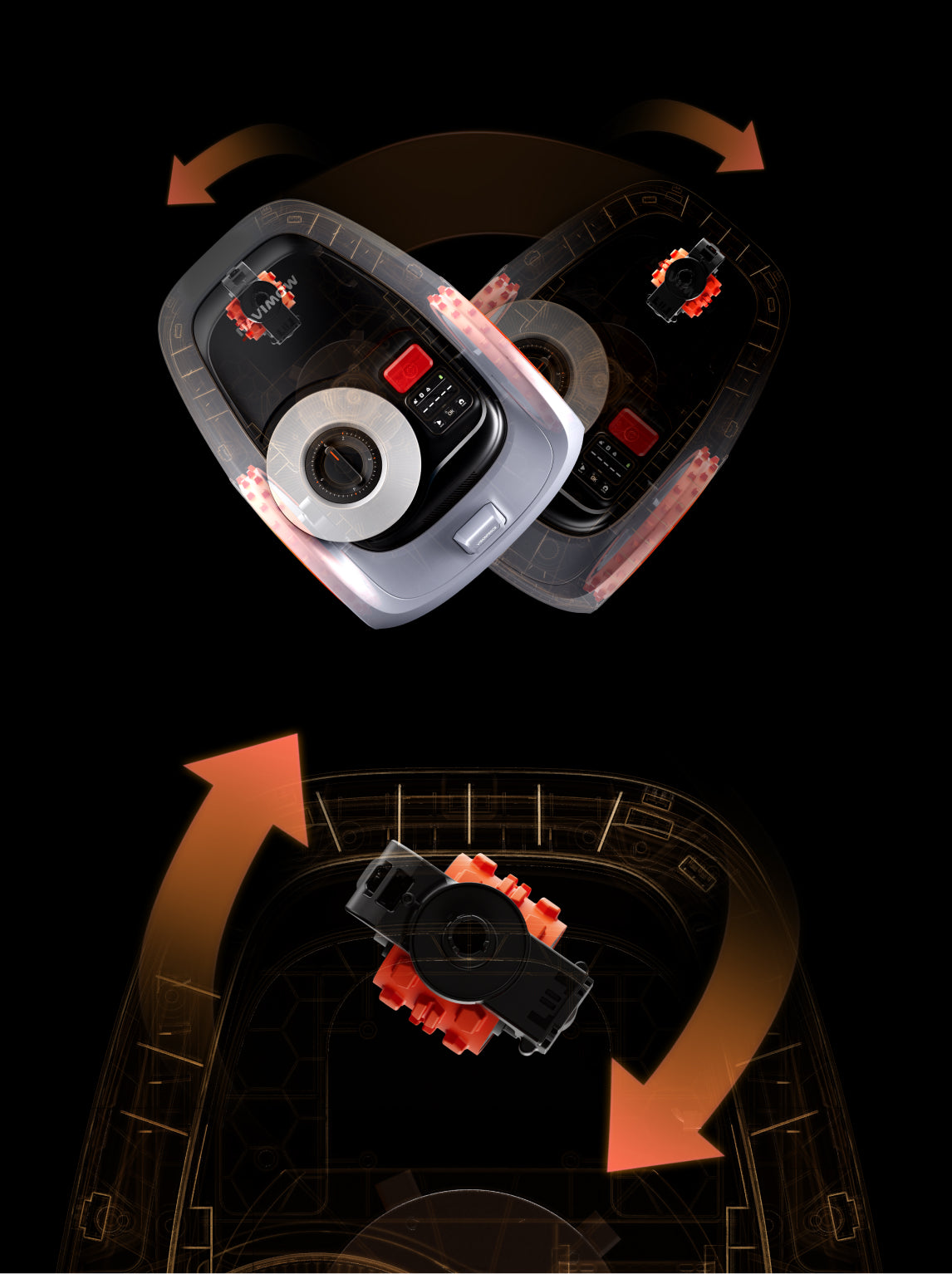
That is exactly what many modern robotic lawn mowers do. Models from Segway Navimow are designed to cut grass autonomously and very finely. They don't use traditional grass catcher bags. Instead, the tiny clippings fall straight back into the lawn. Over time, this works like a light mulch layer that supports soil moisture retention and improves turf health.
With a robotic mower, you're not only automating the demanding job of mowing. You're also supporting a natural mulching process at the same time. Take a look at our robotic lawn mower collection and choose the model that best matches your lawn size and maintenance needs.