


For lawns that suffer from the shade of large trees, tall fences, and building shadows, the choice of grasses becomes a bit limited. You can’t go with every grass type because most of them would die due to a lack of direct sunlight.
Choosing a grass variety for shade is definitely a struggle for beginner lawn owners. But not after reading this comprehensive guide.
We’ll share the best grass for shade you can opt for in warm and cool climates. We’ll dive into some suitable grass varieties, the amount of sunlight they receive, and how to care for them to ensure a healthy, lush, and green lawn year-round.
When Do You Need Shade-Tolerant Grass?
If your lawn or some parts of it remain under shade for most of the day, it means you cannot choose a standard grass type. It is necessary to opt for a shade-tolerant grass that can thrive in less sunlight.
But no matter what grass type you choose, even the shade-tolerant grass, it still needs sunlight. It’s an essential part of photosynthesis.
Shade-tolerant grass varieties need around 4 to 6 hours of sunlight to survive. If your lawn receives less than 4 hours of direct sunlight, shade-tolerant grasses will starve to death.
Why Shade-Tolerant Grass Survives in Less Sunlight?
Every grass type needs sunlight to produce its food via photosynthesis.
The standard grass types need more than 6-8 hours of sunlight every day to produce the required energy. Otherwise, they will die quickly, no matter how hard you try to take care of them.

On the other hand, shade-tolerant grasses need less light. They have a high chlorophyll density along with flat and thin leaf blades. It allows them to collect energy even from dappled and indirect sunlight. That’s the reason it can survive even if there is minimal direct sunlight.
Another problem with standard grass is that when it receives shade, it tries to grow taller to catch the sunlight. But this makes it thinner and prone to diseases. Eventually, the grass fails. In contrast, shade-tolerant grasses are meant to handle shade and take energy from indirect light. They remain in their optimal condition.
Thus, choosing special grass for shade is the ideal option if there is less sunlight.
Best Cool-season Grass for Shade
For lawns that bloom in cool weather, you need to go with shade-tolerant cool-season grasses.
Fine Fescues
Fine Fescues are shade-tolerant grasses for low-temperature regions. There are mainly five members in the fine fescue family. All of them survive in 3-4 hours of dappled light. It grows more slowly than other grasses, which is the reason it conserves energy and survives in shady areas.
The best one for shades is Chewings Fescue. It can grow in dense shade, such as trees. It even grows in the forest and thrives like healthy grass.
The second-best member is Hard Fescue. It’s not only suitable for shades but also for lawns that get less water. After that, we have Creeping Red, Sheep Fescue, and Slender Red.
Fine Fescues are needle-like blades. They are thin, and when they cover your lawn, it looks like a fine carpet that feels incredible. They require less food, less watering, and less sunlight, which is the reason they are perfect for shaded lawns in cool areas.

If you want to plant fine fescues, they grow quickly. Within 7-12 days, its seeds sprout quickly. Which means you can grow it in less time.
Keep in mind that Fine Fescues look great and feel comfy, but they are not durable. They can’t tolerate high foot traffic. They are also heat sensitive and can go dormant if the temperature goes over 90⁰F.
You need to provide it with very little nitrogen. If you overfertilize it, it will become prone to diseases. Moreover, you need to protect it from pet waste, which can quickly burn the grass and turn it yellow.
Further reading: Why is my grass turning yellow?
Tall Fescue
If you are looking for a durable option compared to fine fescues, you can opt for Tall Fescue. It can handle high foot traffic. Thus, you don’t need to worry about kids playing on the grass and pets roaming around.
But keep in mind that it needs more sunlight compared to Fine Fescue. Aim for at least 4-6 hours of sunlight for its optimal health. Thus, it can grow well in moderate shade.
It has a deep root system that allows it to get nutrients and water from the soil. Which is why it can grow even on hot and dry days. It requires minimal maintenance and can bear heat. The notable feature is that it stays green longer in winter compared to other cool-season grasses.

Moreover, if you have too many flowerbeds in the lawn, Tall Fescue is perfect. It grows in bunches rather than spreading horizontally. Therefore, you can easily keep it away from flowerbeds.
You also need to consider its disadvantages before planting. Firstly, it has a medium-coarse texture. Which means it’s not extremely soft. Some of the varieties are thick and scratchy, which are difficult on bare feet. However, modern turf-type varieties are much better.
Secondly, it grows in bunches, so when a patch dries out, you are left with a bare spot. You have to do manual overseeding to bring it back to life. Learn how to overseed a lawn in spring.
Rough Bluegrass
Rough Bluegrass is an incredible cool-season grass variety. Not only does it handle shade, but it also thrives in extremely damp conditions. The other grasses on this list would die or turn yellow if there is too much water due to damp or poorly drained soil.
It needs only 3 to 4 hours of sunlight. This is the reason it can grow in extremely shady conditions. It grows under dense tree canopies where the sunlight is minimal, and the soil is damp.
When you look at the Rough Bluegrass in your lawn, you see shiny grass lying flat. The reason is the gloss underside of leaf blades that can reflect light. It looks appealing, and its light green to lime-green color makes it more distinctive.

Rough Bluegrass grows through stolons (above-ground runners). Therefore, if there is any bare spot, it can automatically cover it with dense and thick grass.
The problem with Rough Bluegrass is that it can’t bear heat or lack of water. In high temperatures, it goes dormant and turns reddish-brown. Secondly, it has shallow roots, which is why it can’t absorb water from the depth.
It can only absorb water from the soil surface. Therefore, it needs extra care when it comes to water. You have to do frequent and light watering and ensure the soil never dries out.
Best Warm-season Grass for Shade
If you live in a warmer region, you have to go with shade-tolerant warm-season grass. It will cover your lawn and thrive in hot temperatures.
St. Augustine Grass
St. Augustine is undoubtedly the best option when it comes to selecting a warm-season grass for shade. It requires only 4 hours of direct sunlight, which is why it can grow well even in shady lawns.
The best part is that it can take energy from dappled light. So, no matter if your lawn is under the shade of trees or on the north side, the grass will grow without any issues.
You can find different varieties of St. Augustine. They are ideal for different situations. Some incredible shade-specific varieties are Palmetto, Seville, CitraBlue, and Amerishade. They all thrive in 3-5 hours of sunlight. Keep in mind that Floratam is also a variety of St. Augustine, but it’s not suitable for shade.
People love to have St. Augustine grass because it becomes extremely dense. It almost looks like a carpet and has wide blades. It can take over your lawn and fill every corner with greenery. Its high density not only makes it aesthetically pleasing but also prevents weed growth by leaving no space for them.

Another advantage of having St. Augustine is that it can tolerate cold, drought (to some extent), and even salt in the coastal properties.
If you are planning to plant St. Augustine, you also need to know about its cons. Firstly, you need to take care of its watering. It has low drought resistance and is badly affected if it stays thirsty for long. Secondly, you need to keep an eye on the Chinch Bug. Treating it instantly is needed if you want to save your lawn.
Zoysia
Zoysia is moderate when it comes to shade tolerance. It’s neither as good as St. Augustine nor as bad as standard grass types. If your lawn receives 4 to 6 hours of sunlight, you can go with it.
You can find different varieties of Zoysia, and they vary a little in terms of shade tolerance. The best one is Zeon Zoysia. It’s the shade master grass and an excellent choice. Then, you can go with Palisades, which can handle shade as well as drought.
Your third choice could be Innovation. It’s a new variety of Zoysia that is good for both cool temperatures and shade. For moderate shade performance, you can also go with Empire and Meyer. They require at least 6 hours of sunlight.
Zoysia is known for its luxurious feel. When you walk on it, it feels soft, thick, and comfy. It’s like walking on an expensive rug. It can also handle high foot traffic, so you can enjoy the comfort of your lawn as much as you want. And the best part is that it is the best-looking warm-season grass that elevates the aesthetics of your lawn.

It can handle drought and cold. It’s better than St. Augustine in terms of drought-resistance. It works great in areas where it’s too hot for some grasses and too cold for the others. You can use it in Transition Zones in the US without any worries.
Most importantly, Zoysia is capable of recovering on its own. It spreads via Rhizomes and Stolons, so if there is a patch in the lawn for any reason, it will recover from the damage without overseeding.
While planting Zoysia, you need to consider a few things. Firstly, it grows slowly. It’s good that you need to mow it less frequently, but it can take two growing seasons to fill in. Secondly, it produces more organic matter, so you have to pay attention to lawn aeration and dethatching. Do not over-fertilize it, as it can worsen the situation.
Centipede Grass
Centipede is another moderate shade-tolerant grass. It needs 6 hours of sunlight to grow healthy. It’s a perfect grass variety for places where the soil pH is acidic. It can grow well when the pH is around 5.0 to 6.0. Thus, you can plant it under pine trees and sandy soil where other grass types fail.
It’s a low-maintenance grass. Firstly, it grows slowly, so you need fewer mowing sessions to maintain it at the best grass cutting height. Secondly, it needs minimal fertilizer requirements. So, if you have less time to maintain your lawn in shade, it could be a great option. Just make sure it is not under the heavy shade of buildings and dense canopies.
It’s a dense grass type. Which is why it produces a thick mat and prevents weeds from sprouting. So, it solves another problem of lawn owners.
Keep in mind that the color of Centipede grass is yellowish green, which appears lighter. Do not expect it to become dark green. Also, it is a slow-growing grass, and it takes more time for recovery. It can easily grow in sandy soils, but there are chances of Nematodes that can damage roots, so you have to be cautious about that.
How to Maintain Grass for Shade
Grass for shade is different, and so is its maintenance. It’s easy to maintain them, but you need to know how to do it the right way.
The Right Mowing Height
Shade-tolerant grasses can’t be mowed at the standard height. You have to increase the deck height and let the grass be taller than usual. So, if the optimal height of grass is 3 inches in normal conditions, you should mow it at 4 inches in shady areas.
The reason behind this is that sunlight is limited in shady areas, so when you increase the grass height, it has more surface area to collect the light that’s available. Secondly, it will promote deep root growth so that the grass can obtain nutrients and water easily from the soil.
As a rule of thumb, raise the mower blade 1 inch higher than usual. It will ensure the grass’s survival. But even in this case, follow the one-third rule. Never mow more than one-third of the grass height.
Here’s a quick grass cutting height chart for shade-tolerant grasses.
|
Grass Variety |
Normal Cutting Height |
Optimal Cutting Height Under Shade |
|
Fine Fescues |
2.5 to 3.0 inches |
3.5 to 4.0 inches |
|
Tall Fescue |
3.0 inches |
3.5 to 4.0 inches |
|
Rough Bluegrass |
1.5 to 2.0 inches |
2.5 to 3.0 inches |
|
St. Augustine |
2.5 to 3.0 inches |
3.5 to 4.0 inches |
|
Zoysia |
1.5 to 2.0 inches |
2.5 to 3.0 inches |
|
Centipede |
1.5 inches |
2.0 to 2.5 inches |
Mowing shade-tolerant grasses is necessary, and if the height increases more than the optimal height, your lawn suffers. It’s difficult for most lawn owners to mow the grass at the right time. Your grass will go out of control if you wait for the weekends.
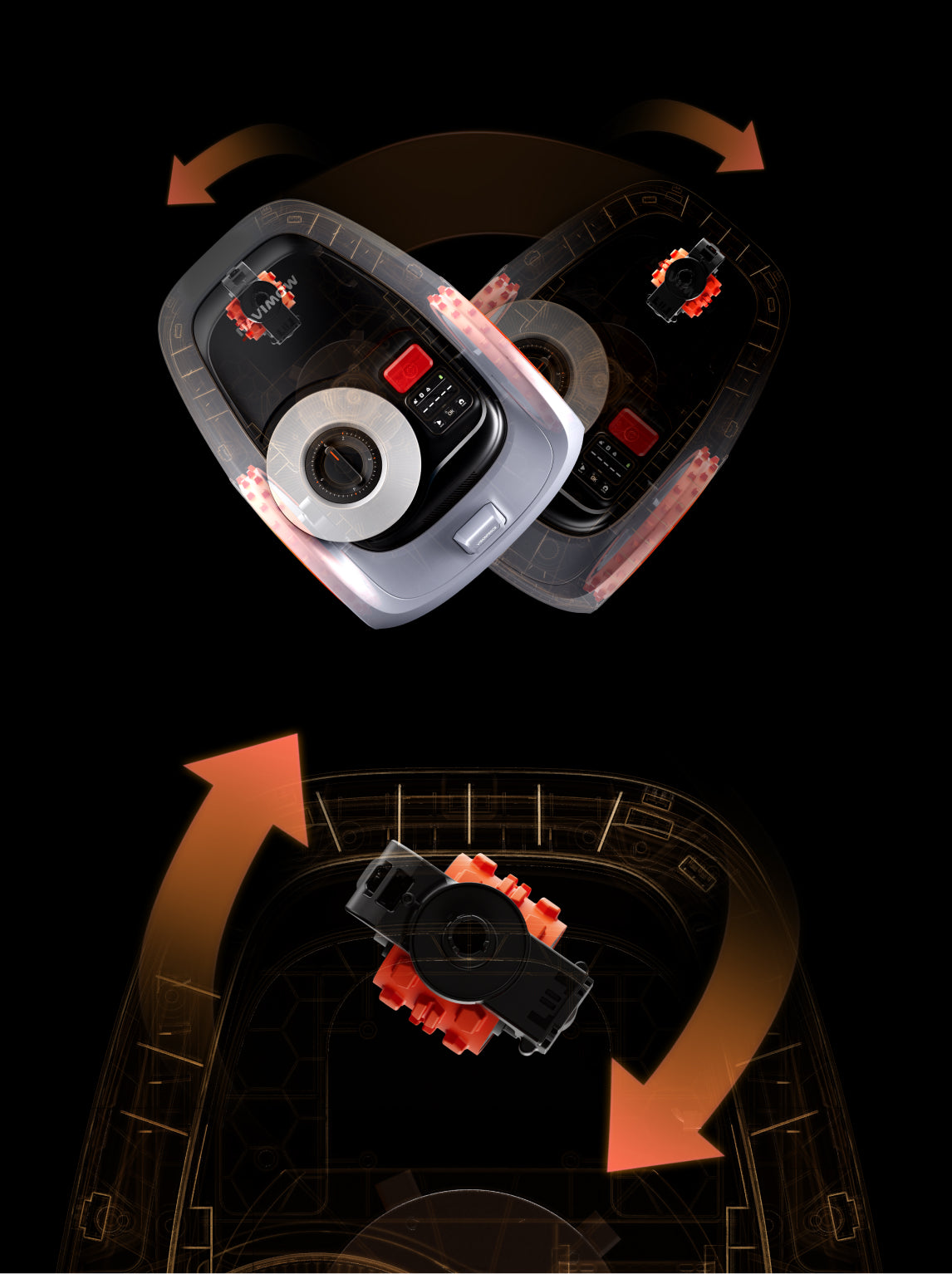
The best way to maintain shade-tolerant grasses is with a robotic lawn mower. Just set the optimal height and schedule, and it will mow your lawn automatically. You don’t have to put any effort or spend your time. Your lawn will also be well-maintained even if you are away.
Proper Watering
An adequate amount of watering is important for a healthy shade-tolerant grass. You have to ensure the soil doesn’t stay damp for a long period. It invites fungus and other lawn diseases and pests.
As the soil receives less sunlight, the evaporation rate is slow. The idea is to water deeply and infrequently. It’s better to understand your grass and water it when it needs it. Keep in mind that Rough Bluegrass needs light and frequent watering, which is against other shade-tolerant grasses.
Also, figure out the best time to water grass. Ideally, it is the early morning, so the grass has enough time to dry out. It’s better to consider the type of grass and set a proper watering schedule. Learn how long to water grass and calculate the adequate amount.

Less Fertilization
You might think your lawn in the shade needs more fertilizer. But in reality, it needs less. Too much fertilizer can actually damage your lawn.
The reason is that shade grass grows slowly, and it needs fewer nutrients than the grass under the scorching sunlight.
If you add too much fertilizer, it will accelerate the growth and deteriorate the grass’s health. It will make the grass prone to diseases.
It’s better to fertilize only in the peak growing season. Check out our lawn care calendar to know the right time to add fertilizer.
Further reading: When to fertilize your lawn in spring?

Improve Light and Airflow
Even if your lawn receives less sunlight, you can try a few things to improve light and airflow. If there are trees around, maintain them. Thin out the lower branches to give the grass more access to sunlight. Even if there is no direct sunlight, the dappled light will support its growth.
Secondly, do not leave grass clippings on the lawn. It will prevent sunlight and air from reaching the soil. Also, if there are leaves, make sure to remove them as soon as possible.
Minimize Foot Traffic
It’s good to minimize foot traffic on shade-tolerant grasses as much as possible. Shade-tolerant grasses receive less light, which translates to limited energy production. Therefore, the grass takes longer to recover. In severe cases, the grass doesn’t have energy for self-repair and quickly turns into a bare spot.
Try to minimize the foot traffic as much as possible. You can definitely walk on your lawn, but reduce high foot traffic, children’s activities, and dog runs.
Final Words
If you have a lawn that receives only 4-6 hours of sunlight, do not experiment with a standard grass type. We have some of the best shade-tolerant grasses you can opt for warm and cool regions. Pick a suitable one by looking at the grass texture, the light it needs, pros & cons, and other details we have shared. Plant them in your lawn and follow the maintenance tips we have shared. You will never have to see bare patches under shade again.
Share