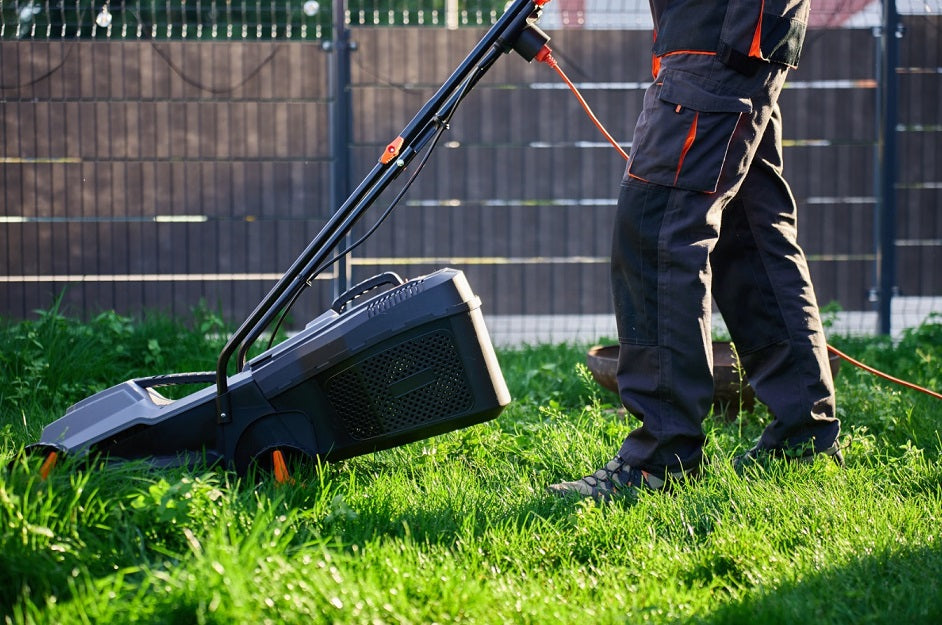
Lawn mowing is an aggressive exercise that engages multiple muscle groups simultaneously and requires extensive effort. Thus, as you get older, it becomes a bit difficult to handle the labor-intensive chore. In fact, older adults (65+) account for 20% of mower fatalities despite being fewer operators.
But the question is, at what age should you stop doing it? Is there a specific number?
That’s what we will be discussing in this article. We will highlight the risks associated with mowing at an old age and share the signs that indicate you should stop mowing. Not only that, but we will also explain how you can keep your lawn perfectly manicured without putting your health at risk and breaking the bank.
At What Age You Should Stop Mowing?
Unfortunately, there is no specific number.
A 70-year-old active person who walks or jogs daily and does lightweight training could mow the lawn with a mower. He won’t face any issues as he can bear the intense activity because of high cardiovascular endurance, better bone density, and muscle mass. Moreover, his nervous system is trained to handle the labor and pain.
However, it doesn’t mean he should do the labor-intensive job. It could be a once-in-a-while activity, but not something to do regularly at an old age. Mowing a lawn requires a lot of effort. It’s much different than walking in the morning and training muscles at the gym. It’s an extreme activity without any control over the intensity and time. As long as the lawn isn’t completely mowed, you have to push the mower.
At the same time, a 60-year-old person with several health conditions and limited activities would struggle. It happens to people who have spent their lives on a desk job with minimal activity throughout the day. They often suffer from knee pain, low-back disc degeneration, high blood pressure, etc.

Lawn mowing also burns calories. A 150 lbs individual burns around 160-200 calories every 30 minutes. You burn more or fewer calories, depending on your weight, age, type of mower, terrain, and other factors. You can learn more by reading How many calories does mowing the lawn burn. Thus, it is an aggressive exercise, and you lose energy as you continue. For a healthy and young person, it’s a full-body workout. But for an older adult, it could be a reason for injuries and a strain on the body and heart.
That’s why, instead of looking at the age number, you have to consider the fitness level and pre-existing health issues. Because the number doesn’t do justice, you must look at the broader picture. Let’s look at the self-assessment you can do on your own.
The Self-assessment Before Mowing the Lawn
You can easily decide whether you can mow the lawn or not by looking and testing your balance, grip strength, fitness, and stamina.
The Balance
The first step for the assessment is balance. You have to check if you or the elderly person can walk straight without any hassle. If you have difficulty balancing on a flat floor, then mowing a lawn is a bad choice. Because lawns are not flat, they are uneven with slopes, divots, mole hills, tree roots, etc.
If you can walk the entire yard without any issues and balance yourself in divots and slopes, there is a chance you can handle the mower. Because when mowing, you not only balance yourself but also the mower. You have to handle the mower even if you fall into a divot. Otherwise, you’ll end up injuring yourself.

Upper Body Strength
To handle the continuous vibrations and pivoting of the mower, you need to have good upper-body strength. Firstly, you have to ensure you can grip the handle of the mower firmly for 30-45 minutes. If your hands go numb within 10-20 minutes, you can’t mow your lawn.
If you own a gas mower, you also need to pull the starter cord with force. It requires strength, and if you are already suffering from muscular pain or joint issues, you can’t do that on your own.

Stamina
You should have enough stamina to mow the lawn for 45-60 minutes straight. But if you feel shortness of breath or fatigue just by walking a few blocks, mowing the lawn will be extremely difficult.
There should be enough strength and stamina to sustain moderate cardiovascular effort. Normally, people who do lightweight training and jogging have better stamina. They can handle an elevated heart rate during mowing.
Heat Tolerance
Last but not least is heat tolerance. It’s something that some youngsters also struggle with. You have to mow your lawn in the sun. The direct contact with sunlight while doing a laborious task for 45 minutes is not everyone’s cup of tea. Because of the heavy physical activity and sweating, your heart has to work exponentially harder to pump blood to the skin to cool down.
If you can’t handle high heat normally during the day, you should not think about mowing a lawn. It will be an excessive burden on your body. It could also lead to heat exhaustion or cardiac distress.

Clear Signs When You Should Stop Mowing
If you are mowing at an old age, make sure you don’t experience any of the following signs. If you are experiencing any of them, you shouldn’t ignore them. It’s time to stop mowing.
Stiff Joints/Arthritis: If it is painful to grip the mower handle for a long time or maneuver it across the lawn, do not push yourself. It’s extremely dangerous as you can lose balance anytime. It could lead to a serious injury or excessive pain. People with arthritis should not take the risk, even if they can mow the lawn.
Loss of Balance: If you have recently experienced loss of balance while mowing around a slope or divot, you are lucky that you are still safe. It’s difficult to maintain balance when anything comes along all of a sudden. There could be divots, slippery areas, tree roots, and other things in the way. So, be careful and do not take that risk again.
Longer Recovery: If it is taking longer, a day or two, to recover from the muscular or joint pain after mowing, it is not worth it. Some people mow for 45 minutes, and they have to use painkillers, heating pads, and anti-inflammatory drugs. This is a clear sign that your body cannot bear mowing anymore. You should stop it before anything worse happens.
Delayed Reaction Time: With age, the reaction time gets a bit delayed, and it’s common. You can’t steer the mower quickly or handle the balance if a rock comes under the wheels. Anything bad could happen in a fraction of a second, and you won’t be able to control the mower. If you have started experiencing delayed reaction, you should stop mowing.
Heat Exhaustion: Sometimes, the temperature is so extreme that walking a few streets down can lead to exhaustion. If that’s the case with you, you should not mow. You can’t handle high heat anymore. You might dehydrate quickly and lose the energy to drive a mower for a 45-minute session.
Heart/Respiratory Conditions: After you are diagnosed with a heart or respiratory condition, you should not think about mowing. It puts stress on your heart and makes your respiratory condition worse. You should say goodbye to mowing for your own good.

Risks of Mowing at Old Age
Mowing at an old age involves many risks, and you should know about them before making a decision.
Slip and Fall Accidents
The most common risk is the slip/fall. Suppose your foot falls into a divot all of a sudden while mowing the lawn, and you lose your balance. You would fall on your knee, elbows, or head in the worst case. It can lead to light to severe injuries, and you will end up in the ER.
Similarly, after watering or morning dew, the lawn becomes a bit slippery. And waterlogged areas and muddy places are also hazardous. You won’t be able to balance yourself if your foot falls in these areas while mowing. You could land on your hip or back, which could result in long bed rest.
Cardiovascular and Heat Strain
Mowing isn’t a simple chore. It’s an aggressive full-body workout that increases your heart rate rapidly. And the direct sunlight and humidity make things worse.
At an old age, it’s a stress on your cardiovascular system. There could be underlying or undiagnosed cardiovascular conditions that increase the chances of sudden cardiac events.
Plus, as you get older, the body’s ability to cool itself decreases. That’s why there are higher chances of heat exhaustion and stroke.

Musculoskeletal Injuries
If you end up losing your balance while mowing, it could result in severe musculoskeletal injuries. You will be in the ER and on bed rest right after that.
Musculoskeletal injuries are not only painful, but they also affect your life afterward. You might not be able to recover fully. The bone density is also low, so any pressure from falling could result in a fracture.
Blade and Debris Accidents
The blade under your mower spins at a very fast speed. When it touches a rock, it sends a fast projectile. If it hits your feet at that speed, the injury is certain. There is also a risk of eye injury. 10% of total mower medical incidents are eye injuries from flying debris.
In the worst case, there could be direct contact with the blade. It leads to amputations, deep lacerations, and severe foot injuries. The most common type of injury is laceration, which occurs in 41% of cases, while foot injuries represent 35% of all lawn mower accidents.

Respiratory Issues
Mowing a lawn at an old age also invites respiratory issues. People with asthma or any other respiratory conditions are more vulnerable.
If you don’t wear a protective mask, it means you are inhaling the toxic fumes of the mower, along with dust, pollen, and mold.
Avoid Risks and Automate Lawn Mowing
Older adults usually try to mow their lawns on their own to save money. But what they ignore or might not know is the risks behind it. They could end up paying 100X or way more in the ER, surgery, and dealing with severe injuries that could also cost their lifetime savings.
Even if you are still fit at an old age or young, mowing a lawn is a laborious activity. You have to spend your energy and put a lot of effort into keeping it maintained. Plus, it is necessary to dedicate time, usually every weekend, that you could spend with your family, friends, or while resting.
There are also risks of injuries and accidents. Over 800,000 people receive treatment for lawn mower-related injuries in the U.S. annually. Thus, it’s better to stay away from it at an older age.
You can keep your lawn perfectly manicured year-round by using a robot lawn mower. It’s a cost-effective option compared to traditional mowers and professional services. It does not require gas or frequent maintenance. It hardly costs $10 to $20 annually in terms of electricity consumption. Check out more on the lawn mowing cost calculator.

You just need to set the mowing schedule and height. It mows the whole lawn on its own. It saves you from the hassle and risk of injuries. Whether your lawn has bumps, divots, slopes, or any uneven surface, it handles everything on its own. It precisely mows every corner and inch without needing any assistance.
For small lawns up to 0.25 acres, you can go with the Navimow i2 AWD series. It’s compact, affordable, and equipped with incredible features. If your lawn is medium-sized with too many obstacles, the Navimow H2 series is a great option because of the AI triple fusion system. For large lawns up to 1.5 acres, there’s nothing better than the Navimow X4 series, which is the master of difficult terrain, steep slopes, and tough grass.

Final Words
Lawn mowing isn’t a simple chore that anyone can do. It is an aggressive compound exercise that involves multiple muscle groups. That’s why mowing at an old age becomes extremely difficult. Unless you are fit enough to handle the mower, maintain your balance, and maneuver it across the lawn under the sun for 45 minutes, you can’t mow the lawn.
But there is no specific age number. You have to consider your fitness, balance, body strength, stamina, and heat tolerance. We have explained how you can self-assess yourself to know if you can mow or not. And if you have witnessed any of the signs and red flags, such as loss of balance, stiff joints, heat exhaustion, and delayed response time, you should stop mowing without a second thought. It’s an extremely risky exercise that could lead to serious injuries.
FAQs
Is mowing the lawn good for your heart?
Mowing a lawn is good for your heart. It increases your heart rate, improves blood circulation, and burns calories. It improves cardiovascular health. But if you are an older adult with limited physical activity or have pre-existing heart/respiratory conditions, you should not mow your lawn. It could actually put strain on your heart because it’s a strenuous physical activity.
Can cutting grass cause headaches?
You could experience headaches while cutting grass. It happens because of the physical strain, dehydration under extreme heat, or an allergic reaction. Some users cannot bear pollen, mold, dust, and mower fumes because of an allergy.
Can lawn mowers cause tinnitus?
Yes, lawn mowers can cause tinnitus, especially the gas-powered ones. The noise level of these mowers is over 85 dB(A), and prolonged exposure without any hearing protection leads to ringing in the ears (tinnitus) and even hearing loss.
Does lawn mowing count as exercise?
Yes, lawn mowing is a moderate-to-vigorous cardiovascular workout. It involves multiple muscle groups simultaneously. A 150 lbs person could burn around 160-200 calories in a 30-minute session. It strengthens the upper body and core, but it is an aggressive exercise, which is not suitable for everyone. For more details, check out Is mowing the lawn good exercise?
Why am I so tired after mowing my lawn?
Lawn mowing is a complete body workout. There is a continuous strain on your arms and legs. Secondly, you do it under the sun, which leads to dehydration and heat stress. You also burn around 160-200 calories every 30 minutes if you’re a 150 lbs individual. Thus, you lose energy and might have micro-tears and muscle soreness, and all of this makes you tired.