While buying a lawnmower, you might have come across these words: FWD, RWD, and AWD. They are wheel-drive systems, and it's necessary to understand them better to pick the right lawnmower for your lawn.
Here, we will compare the RWD mower vs the AWD mower vs the FWD mower. We will explain the difference between them along with their advantages and disadvantages. We will also discuss when you can opt for them. By the end of the article, you'll be able to decide which kind of lawnmower is suitable for your needs.
What are FWD, RWD, and AWD in Lawnmowers?
FWD, RWD, and AWD are the Wheel Drive Systems in Self-propelled mowers. It's a kind of mower that you don't need to push. Instead, the power generated through the engine or electricity (cord/battery) is transmitted to the wheels. Thus, the mower moves automatically, and you only need to steer it.
The power could be transmitted to the front wheels, rear wheels, or both, and this is how we get an FWD, RWD, and AWD lawnmower. They differ in how the power is delivered to the wheels and where. Due to differences in their transmission, they are capable of working in different terrains and offering distinct advantages and disadvantages.

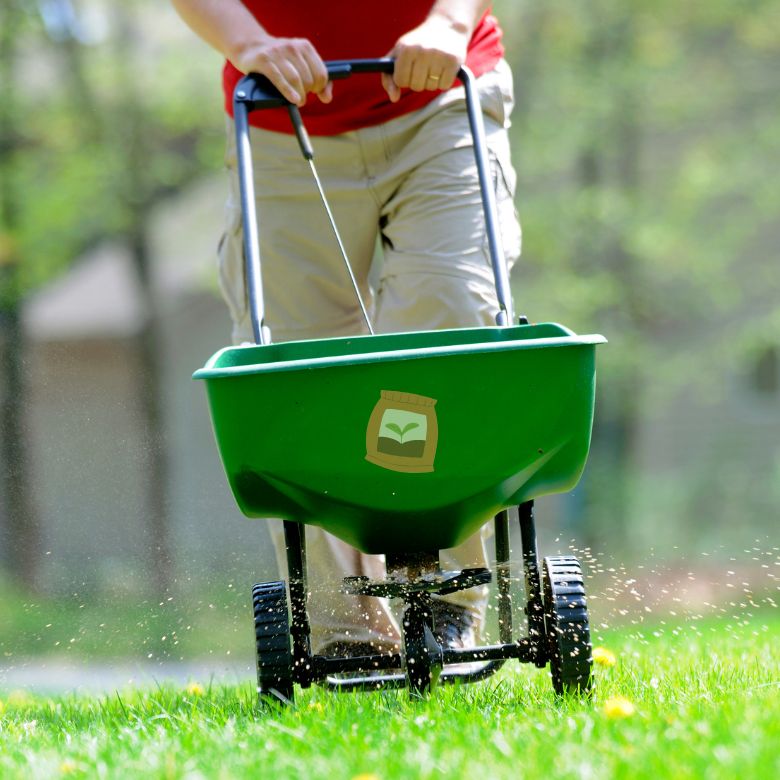
An FWD (Front Wheel Drive) mower powers its front wheels, which pull the mower forward. Its rear wheels are free to move. You can easily store and transport this kind of mower because of its lightweight.
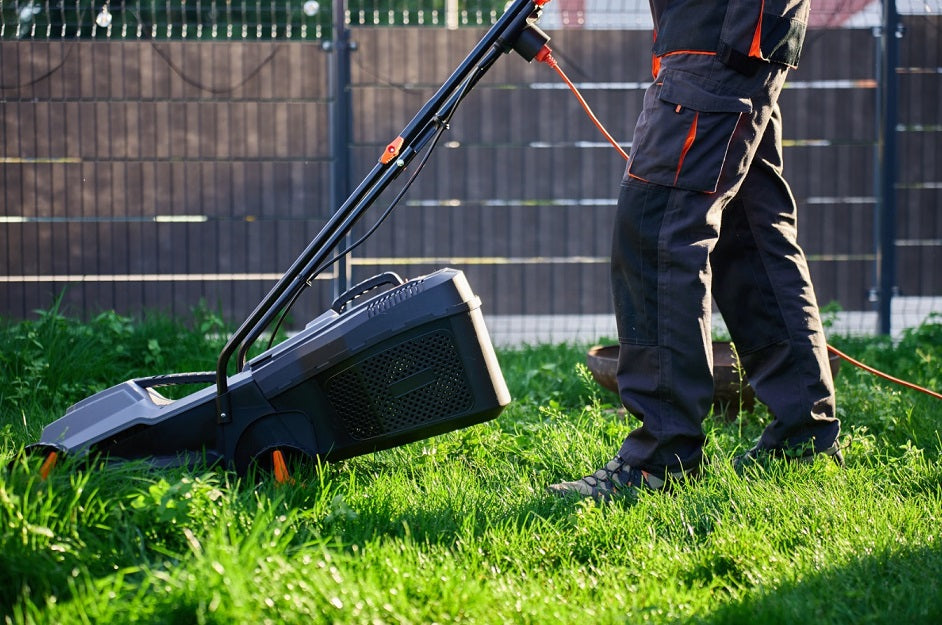
An RWD (Rear Wheel Drive) mower delivers power to the rear wheels that push the mower forward. It's the most common kind of self-propelled mower.
In AWD mowers, all four wheels are powered at the same time and contribute to the movement of the mower. It addresses the limitations of FWD and RWD mowers and ensures excellent mowing in any situation.
Let's compare FWD, RWD, and AWD lawnmowers in detail.
RWD Mower vs AWD Mower vs FWD Mower
Power and Performance
FWD mowers pull the mower from the front. They have a very simple mechanism to run the front wheels and move the mower. Mowing with it requires relatively less energy, which is why it is an energy-saving mower. It is a good option when the lawnmower is lightweight. It can perform well in even lawns.
RWD mowers are more powerful. Their rear-wheel drive system gives more power to the mower. It requires more fuel or energy to move the mower, but it is capable of offering excellent performance. It also utilizes the operator's push or weight in the direction of movement and enhances the mower's drive.
AWD mowers are the best when it comes to power and performance. Their power is transmitted to all wheels through a complex gearbox, which gives them immense power. They distribute torque to all four wheels. It's just like having two extra hands for work. Thus, it can do better than FWD and RWD mowers. Just keep in mind that it will consume more energy/fuel.

Traction
FWD mowers have the lowest traction. The reason behind it is that they steer and move with the help of the front wheels. While their rear wheels are free to move. When their weight shifts to the rear wheels, they lose traction. That said, their traction is very weak.
RWD mowers are better in terms of traction. When the weight is shifted to the rear side, the traction is enhanced as the mower is driven by the rear wheels. Due to excellent contact of the rear wheels with the ground, they do not slip on uneven surfaces.
AWD mowers showcase optimal stability. As their load is distributed between all wheels, the traction is enhanced. Even if one or two wheels slip, the remaining wheels maintain the traction and keep the mower moving forward. That's the reason AWD mowers are ideal for any kind of terrain.

Maneuverability and Obstacle Handling
The best mower for handling obstacles is FWD. With its front-wheel drive system, the user can easily steer the mower. Just push the handle of the mower downward. It will lift the front wheels to disengage the drive, and now you are free to turn the mower. We can call it a manual zero-turn mower, as you can take a sharp turn instantly.
With all that said, FWD mowers are superior when it comes to handling obstacles. They can mow around the flowerbeds, trees, and other lawn obstacles. You will not have any issues while maneuvering it.
RWD mowers are poor in terms of maneuverability. If you want to turn it, you must stop the mower first. The rear wheels should be stationary to take a sharp turn. Otherwise, it will require more effort from the operator and will tear the turf. Therefore, RWD mowers are not good for obstacle handling. They cannot easily move around, and the user has to put in a lot of time and effort. Lastly, the operator could also suffer from fatigue.
AWD mowers come in the middle. They are good in terms of handling obstacles. They are stable and can turn smoothly. But you can't pivot them instantly. The reason is the heavyweight and the drivetrain. For turning, you must take a wider turning radius.
Hill Performance
FWD mowers are a big NO on hills. They can't mow if the slope is over 10-15⁰. The reason is that they are driven by the front wheels. When you move them on a slope, the weight shifts towards the rear wheels and the mower loses traction. It becomes unstable on slopes, so you must avoid it in hilly areas.
RWD mowers have better traction, so they can handle mild slopes around 15⁰. It becomes stable on hills because the weight of the mower (and some of the operator's weight) shifts to the rear wheels and improves traction. The contact of the wheels with the ground is excellent. That's why it can mow in hilly areas.
AWD mowers have unmatched stability on hills. They can mow even on steep hills and offer incredible performance. Due to all-wheel drive, the traction is incredible. There is no way the mower can slip or lose its balance, as all wheels do their job. If the slope is above 20⁰, you should use an AWD mower.

Bagging
You can't use an FWD mower for bagging. Because a filled bag has a weight, this adds to the rear part of the mower. And when you do that, the front wheels lift up slightly. It reduces the contact between the front wheels and the soil. Thus, the mower loses traction. In the worst case, the bag is too heavy, and the mower can't move forward. Then, the operator has to push the mower, and it starts working like a traditional push mower vs a self-propelled mower.
You can use an RWD mower for bagging. When the weight of a filled bag is added, it increases the weight of the rear section and exerts pressure on the rear wheels. The traction is further improved, and the mower can carry the bag easily.
An AWD mower is also suitable for bagging. It does not have any effect of a filled bag on its performance.

Complexity and Maintenance
The simplest kind of self-propelled mower is FWD. The motor power is transferred to the front axle directly through the drive belt or gear train. That's the reason it's quite easy to maintain and repair. They are meant to last for a long time.
In an RWD mower, the power from the engine is transferred through a belt and driveshaft/chain to the rear axle. It involves more components, which is why the frame of the mower should also be robust. The maintenance cost is a bit higher.
An AWD mower has a complex mechanical system. It has a gearbox and differential system to transmit engine power to the wheels. The power is equally routed, or torque is controlled. All this involves complicated parts, and it requires heavy maintenance and is also a burden on the lawn owner's pocket.

Cost
The most affordable option is an FWD mower. It is simple and lightweight. It's a traditional type of self-propelled mower and is accessible to everyone. Its running cost is also low as it uses less energy.
Then, we have the RWD mower. It's a bit costly because of its mechanical system, robust frame, and heavy engine. It has the best performance-to-cost ratio and is considered a go-to option for common lawn owners.
AWD mowers are the premium. They are expensive because of their complex mechanical system. They are extremely powerful and versatile. It's not only higher in the upfront cost but also in the running cost.

RWD vs AWD vs FWD: Which Mower is Right for You?
Even Lawns
If you have an even lawn, the best option would be an FWD mower. It's affordable and easy to use. You will be able to maintain it on your lawn, and it lasts ages. You don't need to spend more and buy RWD or AWD mowers.
Uneven Terrain
For uneven terrains, you can go with an RWD mower. It does not lose control on bumps and dips because the front wheels are only for steering, not moving the mower.
If the terrain is extremely complex, like rough patches, gravel transitions, huge dips, and exposed roots, the only option you have is an AWD mower. It handles almost any kind of terrain because of its powerful four-wheel drive. And its high price is totally justified for that.
Mulching and Bagging
You can do mulching with any kind of mower. However, bagging can only be done using an RWD or AWD mower. We have already discussed why FWD isn't a suitable option for that.
An RWD mower can bear the weight of bagging and get a better grip of the soil, while an AWD mower can take on heavy bags without any hassle.
Lots of Obstacles
If there are too many obstacles in your lawn, you can go with an FWD lawnmower, given that the lawn is flat. It is easy to move around obstacles, and you can take sharp turns just like a zero-turn mower.
But if the terrain is also worse, you can go with an AWD mower. It can handle obstacles as well as harsh terrains.

Hilly Areas
If the hill is 15⁰ or less, you can opt for an RWD mower. It works well in mild hills. You don't need to spend money on an AWD mower, as it won't be able to justify its cost.
But if the hill is over 20⁰ inclined, the only option you have is an AWD mower. Do not waste your money on RWD in this case.
Wet Lawn and Thick Grass
FWDs don't have enough power and traction to cut thick and wet grass.
That's why you have to go with an RWD mower. It's powerful enough to cut thick grass, and due to better traction, it can also handle wet grass.
But if the soil is damp or slightly muddy, AWD is the best option. It remains stable and does not slip or tear the turf.

RWD vs AWD vs FWD: A Quick Comparison
|
|
FWD |
RWD |
AWD |
|
Power Transfer |
Front Wheels |
Rear Wheels |
All Wheels |
|
Traction |
Mediocre |
Good |
Excellent |
|
Maneuverability |
Excellent |
Mediocre |
Excellent |
|
Hill Performance |
Poor |
Good |
Excellent |
|
Bagging |
No |
Yes |
Yes |
|
Cost |
Low |
Medium |
High |
|
Best for |
Flat lawns with obstacles |
Lawns with mild slopes and uneven areas |
Steep hills, rough terrains, and wet lawn |
RWD vs AWD vs FWD: Which Robotic Lawnmower is Better?
Robotic lawn mowers are also available in RWD, FWD, and AWD wheel drive systems. And they also share the same capabilities, advantages, disadvantages, etc.
In robotic lawnmowers, FWD is very rare. You can definitely find some, but they have limited traction and off-road capabilities.
While choosing a robotic mower, you will mostly revolve around AWD and RWD. There is no denying that RWD is quite common. The reason behind this is that it is simpler than AWD and has a lower cost. Most robotic mowers have RWD, and they offer excellent performance. They are more reliable than FWD.
However, AWD robotic lawnmowers have no competition. They take lawnmowing to the next level. They offer robust performance even in large lawns. They cover hilly, bumpy, and all kinds of terrains while detecting obstacles and maneuvering around them. They are definitely a bit expensive, but they are worth the money.
If you want to automate lawnmowing and free your time and weekends, a robotic mower is the way to go. It saves you from the gasoline expense, frequent maintenance, loud noise, and harmful emissions. They are lightweight and extremely portable, and ideal for people who want to maintain a perfectly cut lawn year-round without putting any effort.
AWD Mower for Large Lawns—The Navimow X4
The Navimow X4 is suitable for large lawns up to 1.5 acres. It’s equipped with the Xero-Turn™ AWD technology. Because of the AWD, all four wheels of the mower are powered, and the mowers are capable of working on any kind of terrain.

- Most advanced four-wheel drive with dual suspensions for all-terrain control, crossing obstacles up to 2.8 inches and climbing slopes up to 84%(40°) with confident stability.
- Pioneering lawn-safe steering using eccentric front-wheel control and patented turf-safe intelligence for clean, damage-free manoeuvring.
- Ultra-efficient dual-disc mowing powered by two 180W high-performance motors, delivering a wide 17-inch cut and a professional finish even on dense or tall grass in a single day.
- Antenna-free, hands-free setup with one-tap Auto Mapping and full real-scene map editing for truly wire-free deployment.
- Elite positioning with tri-frequency RTK and 360° AI vision for inch-level accuracy and reliable detection of more than 200 obstacles.
Network RTK included at no extra cost, and the required cellular data is provided free of charge.
Connect+ service: 1 year free for X430 and 2 years free for X450, renews annually at $32.90.
Up to 3-year warranty.
Be it a waterlogged lawn, potholes, pitted surfaces, border curbs, or gravel paths, the mowers conquer every difficult terrain. It can even work on steep slopes up to 84% (40⁰) and maintains incredible traction through the patented Traction Control System. Your mower does not slip or become unstable on wet, uneven, or muddy terrains.
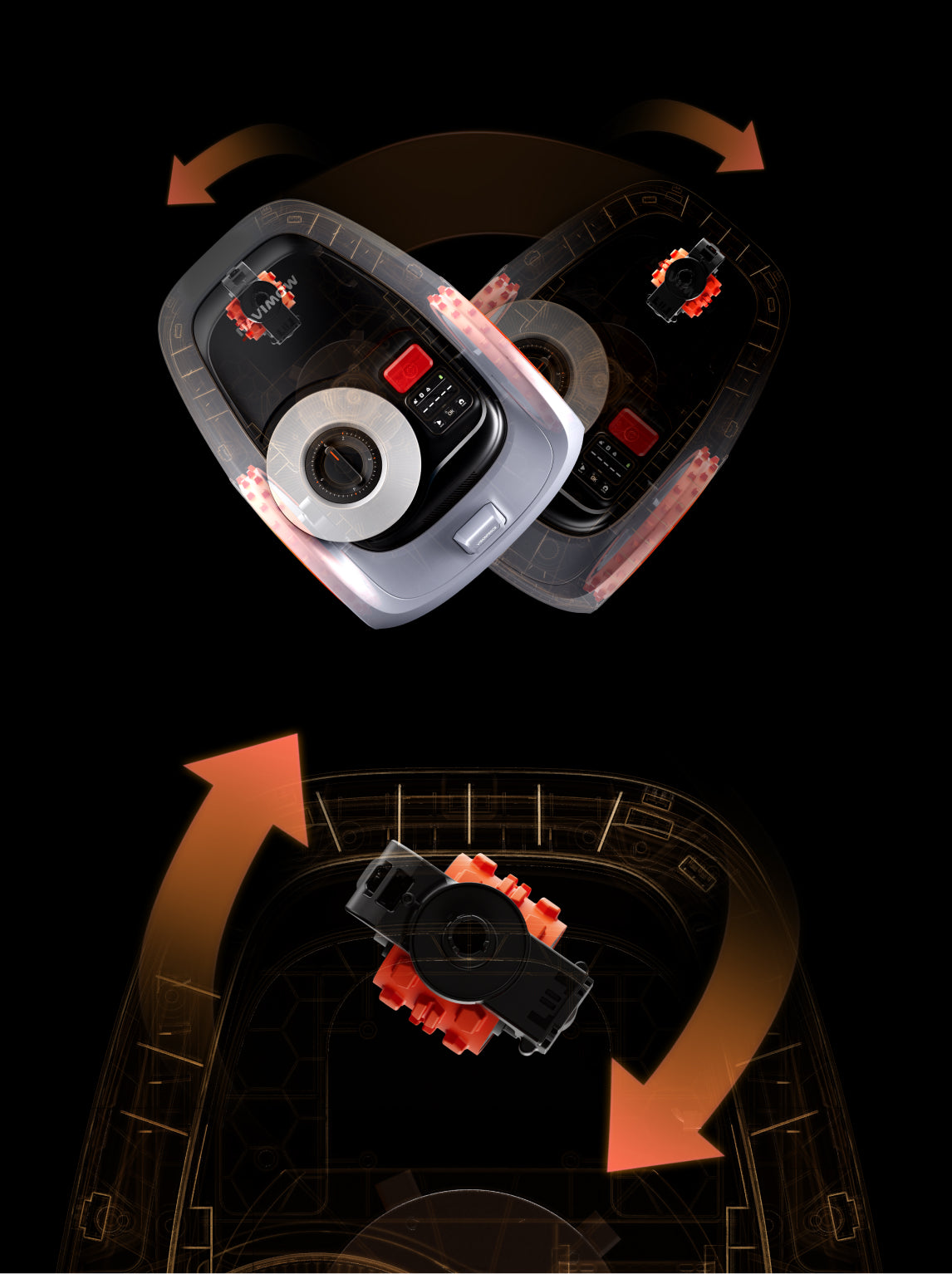
The Xero-Turn™ allows the mower to take a 180⁰ turn like a zero-turn mower without damaging the turf. It can mow tight and difficult areas without any hassle. The best part is that the mower has two powerful cutting motors that can cut long, thick, and dense grass effortlessly. X4 mowers are extremely powerful and ideal for large lawns.

AWD Mower for Small-to-Medium Lawns—The i2 AWD
Navimow has introduced AWD for the first time in small-to-medium lawnmowers. The Navimow i2 AWD lineup has All-Wheel Drive for all-terrain dominance. All three wheels are powered to work on uneven paths, root-covered areas, and lawn steps/curbs. It’s an on-demand all-wheel drive in which the rear wheel is activated when needed to save up to 30% of energy.

Navimow i2 AWD Robotic Lawn Mower
- All-wheel drive with off-road wheels delivers confident traction and stability across slopes, uneven paths, and complex terrain.
- Antenna-free setup with auto mapping for fast, hands-free installation.
- Automotive-grade ESC adjusts wheel behavior in real time, ensuring smooth, precise movement—even on slopes up to 45%(24°).
- Zero-turn third-wheel steering enables tight, precise pivots without scraping or damaging the grass.
- Upgraded tri-frequency Network RTK fused with vision technology provides stable, centimeter-level positioning. Network RTK access is included at no extra cost, with required cellular data provided free of charge.
It can even work on slopes up to 45% (24⁰). It can climb lateral and diagonal hills easily. It can also make turns and go backward on slopes. Despite being a compact mower, it’s equipped with Xero-Turn™, so it can take a 180⁰ turn without scraping or damaging the lawn. It’s powerful yet lawn-friendly.

The i2 AWD series is suitable for lawns up to 0.25 acres. It navigates with Network RTK and visual technology and mows your lawn automatically despite its complexity.
FAQs
What is the difference between AWD and RWD mowers?
AWD mowers power all wheels, and they are exceptional in steep hills, uneven terrains, and almost any kind of lawn. They are easy to maneuver and the best in traction, but come at a higher price. In contrast, RWD mowers only power the rear wheels. They can handle mild hills and have good traction. They are affordable and easy to maintain. However, they are difficult to maneuver.
Are AWD lawn mowers worth it?
AWD lawnmowers are totally worth it. If you have a medium to large lawn with different terrains and too many obstacles around, it is perfect. They can work in any kind of lawn and in any condition, even if the lawn is wet. Their traction is unmatchable, and you can precisely maneuver them around the flowerbeds, edges, and obstacles.
What is the advantage of a high rear-wheel mower?
A high rear-wheel mower has better traction. Its high wheels improve its maneuverability and enable it to work in hilly areas and uneven terrains. They are better than normal rear-wheel mowers.