Across the U.S., nonprofits and municipalities can't find enough seasonal workers to maintain their grounds.
By Megan DeMatteo for Navimow
Children who play sports are used to competing, but the fight is supposed to be over the ball—not the field on which teams play. Yet, around the country, athletic field access is becoming increasingly scarce as non-profit and municipal recreation centers face staffing shortages and struggle to keep grounds playable, despite a rising demand for youth programming.
In one Florida community, a municipal center called its sports-field shortage a “turf war” after having to turn away 700 children due to insufficient access.
A major condition putting non-profit sports fields in danger is a staffing shortage across parks and recreation agencies nationwide. Nine in 10 agencies struggled to hire or retain seasonal staff in 2023, according to the National Recreation and Park Association. More than 58% of YMCA facilities said staffing issues were their top concern in 2025, according to Recreation Management magazine.
Staffing issues hit states and communities differently across the U.S. Often, the problem is budgetary—Baltimore City, for instance, recently allocated $1 million towards administrative jobs, but left one of its 14 municipal districts without a recreation center or pool, a choice that attracted scrutiny.
When centers deprioritize facility maintenance, children feel the consequences most. It’s a public health matter, as participation in childhood sports is closely linked with benefits like mood improvement and social bonding, and even a reduction in chronic disease.
Ahead, Navimow examines how staffing shortages are hitting community facilities in unexpected ways.
At One Ohio YMCA, the Problem is Measured in Acres
The YMCA of Central Ohio operates 12 locations, including the Hilliker YMCA in Bellefontaine. The Hilliker location has about four acres of turf, and nearly three of them are used for outdoor programming. Staff use the lawns for summer camps, youth sports and outdoor activities like teen leadership clubs, which means the grass needs regular mowing.
The facility’s full-time maintenance employee already has plenty on the to-do list, says Alan Little, the YMCA of Central Ohio’s executive director of capital asset advancement.
More than 40 hours of the employee’s week are devoted to keeping the building and indoor spaces, including the pools, gym and fitness areas, clean and operational.
The same grounds employee also handles HVAC, plumbing and electrical work.
Four acres of grass are a lot to add to that workload.
The Problem isn’t Only Labor–It’s Also Timing
Hilliker isn’t the only YMCA location dealing with the scheduling headache. At the Hilliard and Grove City locations of the YMCA of Central Ohio, outdoor pool lawns are used by swim teams in the early morning and members relaxing around the pool in the afternoon.
Such a tight schedule leaves landscaping contractors a narrow window for mowing, and sometimes, the opportunity never lines up.
The result is an unkempt lawn, along with a few other pests. “It not only makes the area look unkept, but increases the pressure from broadleaf weeds and the stinging insects that frequent the weed’s flowers,” Little said.
Nonprofits Are Stretched Thin
For nonprofit community centers, staffing strains often stem from a culture of doing more, with less. Employees wear many hats, which means one staff member might in a single day coordinate programs, answer emails, manage volunteers, mail marketing blasts and keep the books—all while helping run daycares, afterschool clubs and sports lessons. Routine groundskeeping in the summertime becomes just one more job for an already-stretched staff.
Of course, seasonal hiring is difficult. The NRPA found that 70% of agencies in its Summer Seasonal Hiring Report cited a lack of interest among younger workers as one of the most detrimental recruiting obstacles.
Half said that organizations also struggle to offer liveable wages to attract qualified candidates, and about a third described the non-profit hiring process as so slow that candidates sought out other opportunities after waiting too long.
Relief from Robotic Mowers
Little says Hilliker has been paying an outside landscaping contractor to mow 28 times per year. The annual cost for that is $9,372, or just under $335 per week during the non-winter months.
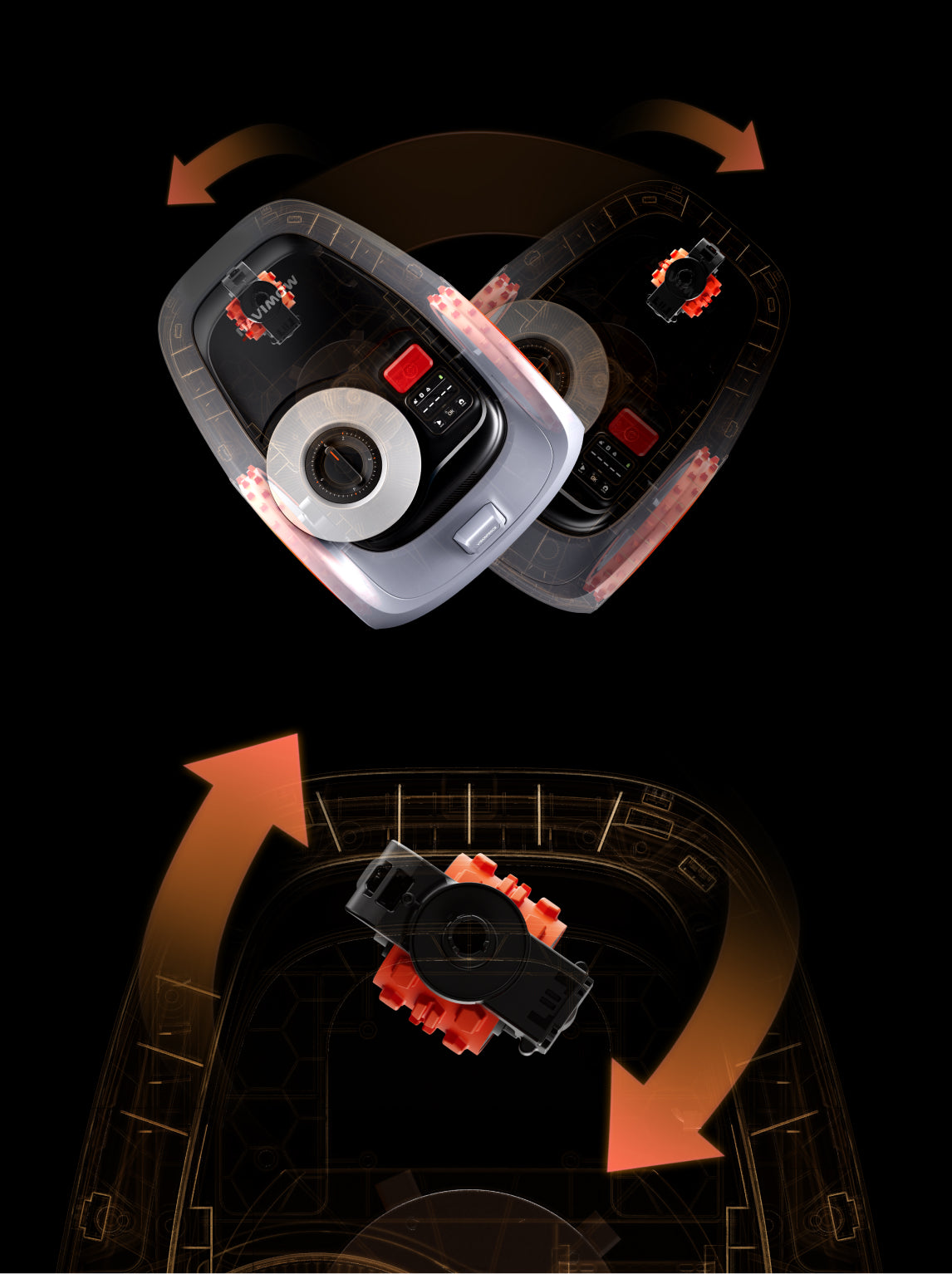
In an attempt to help curb this cost, Navimow donated five autonomous mowers to handle some of that work in-house across the YMCA of Central Ohio’s 12 locations. The YMCA tested it on a portion of the four acres, and Little says the robotic mowers have shaved off enough of that cost that he plans to buy a second robo-mower to help.
“Our plan is to purchase an additional unit and maintain the entire property for the 2027 season moving forward,” he said, adding that the autonomous mowers are expected to save the YMCA “almost $10,000 in contract service annually.”
Aside from the cost savings, Little says the biggest benefits of robotic mowers are saving time and allowing maintenance staff to mow whenever—even in “rain, without shoes!”
Less Time Mowing Also Means Less Time in the Sun
Robotic mowers also provide a less visible, but important health perk, too. People who work outdoors can accumulate significant ultraviolet exposure over time. One study found that one in three non-melanoma skin cancer deaths worldwide can be linked to working outdoors in the sun.
Reducing the number of hours a worker spends mowing can reduce their sun exposure during that particular task.
Still, Automation Has Limits
Robotic mowing comes with an upfront cost ranging from $500 to $5,000, depending on its features. They require maintenance and still need someone to monitor the equipment. Some properties also may not be suitable for it.
When There Aren't Enough Workers, the Grass Still Grows
The labor shortage facing parks and recreation departments is part of a larger workforce problem. The U.S. Chamber of Commerce reported in May 2026 that the labor force participation rate has been on the decline for 26 years. It sat at about 66% in 2000 and fell to the low 60s during the pandemic.
Since 2021, it’s hovered between 62% and 63%, as compounding factors—people taking early retirements, families struggling to pay for child care and immigrants arriving in lower volumes—reduced the number of available workers.
Parks departments have felt those shortages in very practical ways. In St. Paul, Minnesota, the city normally hires 55 to 60 summer park workers but had just 17 in 2022, forcing mowing crews to fall behind in their usual 10- to 14-day schedule. In total, Minneapolis was down 70% in seasonal park maintenance staff, for jobs paying roughly $25 per hour.
In Plymouth, Minnesota, the parks department hired 14 seasonal workers in 2021, instead of the 23 it typically needed. And in 2026, West Palm Beach, Florida, officials said the Parks and Recreation Department struggled to hire maintenance workers, tree trimmers and irrigation technicians.
To that end, cost of living is part of the problem, too. West Palm Beach officials said some candidates accepted city jobs but later couldn't find housing they could afford. Human Resources Director Renee Goc said the city had lost "exceptional candidates" who arrived ready to work but couldn't find a place to live. City officials have since discussed workforce housing as one possible response.
Still, it’s not all doom and gloom. The labor market is moving in the right direction, even if it’s not exactly sprinting there. The U.S. Chamber of Commerce reported that the labor force participation rate for new workers entering the workforce has pushed the rate for prime-working-age workers (ages 25 to 54) to 83.9% in August 2024, its highest level in 20 years.
But community centers and parks don’t get to wait for the labor market to catch up. The grass still needs mowing, and children’s memories still need to be made.