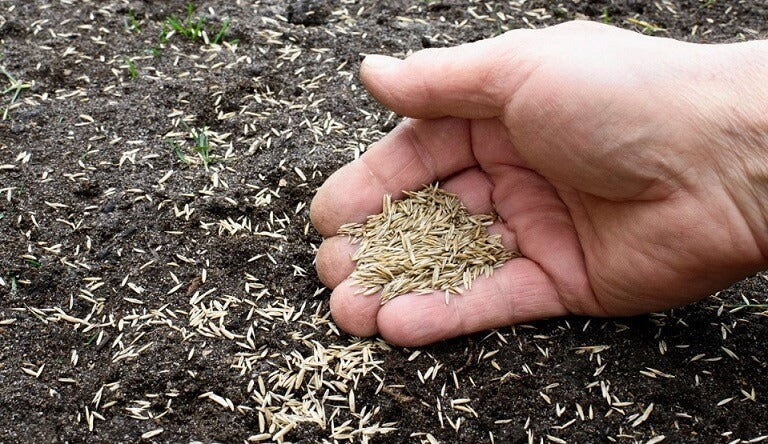
Grass seed germination is a growth phase that requires extra care and patience. But often, lawn owners feel anxious after planting grass seeds because they don't see quick results.
The seed could germinate in 3 to 30 days, and it depends on the grass variety and various other factors. As a lawn owner, you must have an idea of the germination time and what to expect.
Let's see how long grass seeds of different grass varieties take to germinate and what factors affect the germination time.
Cool-season Grass Seed Germination Time
Cool-season grasses vary greatly in germination time. They can start growing as quickly as in 3 days, or they could take a 30-day period.
The fastest cool-grass variety is Perennial Ryegrass. It takes 3 to 10 days to germinate. If you want quick results in your lawn, this is the best choice.
Kentucky Bluegrass takes the longest time to germinate. The time could be from 14 days to 30 days.
Here's a quick overview of the germination time of different cool-season grass varieties.
|
Grass Type |
Germination Time |
|
Perennial Ryegrass |
3 – 10 Days |
|
Annual Ryegrass |
5 – 10 Days |
|
Tall Fescue |
7 – 14 Days |
|
Fine Fescue |
10 – 20 Days |
|
Creeping Red Fescue |
10 – 14 Days |
|
Kentucky Bluegrass |
14 – 30 Days |
|
Rough Bluegrass |
7 – 10 Days |
|
Creeping Bentgrass |
10 – 14 Days |
Warm-season Grass Seed Germination Time
Warm-season grass seeds need a little bit more time to grow compared to cool-season grasses. The reason is the high temperature they need for germination. Unless the soil is at the optimal temperature, they won't germinate.
Generally, these grasses could take 7 to 30 days to germinate after planting. And sometimes, they could take a bit more because if the temperature is not right, they could stay dormant under the soil.
Check out the germination time of some warm-season grass varieties.
|
Grass Type |
Germination Time |
|
Bermuda Grass |
7 – 12 Days |
|
Zoysia Grass |
14 – 21 Days |
|
Centipede Grass |
14 – 28 Days |
|
Buffalo Grass |
14 – 30 Days |
|
Bahia Grass |
21 – 28 Days |
|
Carpetgrass |
14 – 21 Days |
|
Seashore Paspalum |
10 – 17 Days |
|
Blue Grama |
7 – 12 Days |
Factors that Affect Seed Germination
Seed Quality
While buying seeds, make sure you buy the highest quality available to ensure excellent germination results. The quality of seeds matters a lot. Low-quality seeds can put all your effort down the drain.
You'll have to pay a little more for high-quality and premium seeds. But it is worth it.
Time of the Year
Cool-season and warm-season grasses have their respective growth seasons. You can't plant them at any time of the year.
If you are planting cool-season grasses, the best time is late summer to early fall, which is late August to mid-September. These grasses grow aggressively in the fall, and the conditions are extremely favorable. You can also plant them in early spring. It's the second-best option, but the grass seeds will have to compete with weed seeds.

Warm-season grasses can be planted in late spring to early summer, which is May to June. It's the best time for these grasses as they love extreme heat and scorching sun. They grow rapidly in this season.

Soil Temperature
The most critical factor is soil temperature. Without the correct soil temperature, the seed will not sprout.
If the temperature is too low, the seed will stay dormant. And if the temperature is too high, the seed is cooked before sprouting.
For cool-season grasses, the soil temperature should be between 50°F and 65°F. In the case of cool-season grasses, the soil temperature should be between 65⁰F and 85⁰F.
However, the required temperature solely depends on the variety of grass. For instance, Bermuda is a warm-season grass that requires temperatures between 70⁰F to 80⁰F. Seashore Paspalum is also a warm-season grass, but it requires temperatures between 75⁰F to 85⁰F. Thus, you must check the best temperature according to the seed.

Do not go with the air temperature, because it's always different from the soil temperature. Use a probe thermometer and push it into the soil to 2 inches to get the exact temperature.
Moreover, make sure the temperature remains consistent at the recommended level. It means you must record it for several days, and once it is consistent, you are ready to plant seeds. For more details, check out how to plant grass seed.
Moisture
Seeds require adequate moisture to grow. If the moisture is low, their growth slows down, and if the soil dries out, the seeds die instantly.
It is necessary to keep the 1-inch layer of soil always moist. Never let it dry, as you cannot reverse anything once the seeds die.
Water the lawn 2-3 times a day. Frequent and shallow watering is recommended. We have detailed guides on how long to water new grass seed and how often to water grass seed.

Adequate Sunlight
Sunlight is the biological trigger for seeds. Without it, seeds don't receive the signal to wake up. They require a specific amount of light to start and carry on the germination process.
Different grass seeds have distinct requirements for sunlight. For instance, Bermuda grass requires 8+ hours of sunlight, while Fine Fescue can even germinate with 4+ hours of sunlight.
If your lawn receives less sunlight, you should opt for shade-tolerant grass. Check out the best grass for shade.
Seed-to-Soil Contact
For germination, the seed has to land on the soil, not thatch or debris. For optimal results, there should be a good seed-to-soil contact.
That's why it is recommended to dethatch the lawn before seeding. It removes the thatch layer. Secondly, lawn aeration is also helpful because it creates cavities in the soil so seeds can easily be planted.
The seed should neither be just over the soil nor too deep. It should be between 1/8 and 1/4 inches.

Soil Quality
Soil is the habitat of germination, which is why its quality matters. Seeds get warmth, water, air, and nutrients through the soil, and all these things are necessary for germination. If anything is affected, they might not germinate.
Firstly, the texture of the soil should be adequate. If it has too much clay, it will make your lawn waterlogged and cause seed rot. And if there is too much sand, the soil will dry out quickly. A perfect balance of sand, silt, and clay is required.
The soil pH should also be within the optimal range, between 6.0 and 7.0. If it is too high or too low, the soil will block the nutrients. The grass seeds will receive nothing, no matter how much fertilizer you apply.
You should test the soil pH using a digital testing probe or a DIY testing kit. Then, improve the pH levels by adding lime or elemental sulfur.

Also, test the soil for nutrients. You can get an idea of macronutrients through a DIY test, but it's not accurate. It's better to submit a soil sample to a lab. It provides the exact values of macronutrients and micronutrients and gives solutions to fix the issues.
We have created a comprehensive guide on lawn soil testing. Learn how to take samples from your lawn and do DIY tests.
Air Exchange
Seeds also need to breathe. Without proper oxygen exchange, the seed cannot break down the internal food storage. Secondly, it also needs to exhale CO2, which gets trapped if the soil is compact.
Thus, the soil should not be compact. Use a screwdriver and push it into the soil. If it glides easily, the soil is in good condition. But if you need to exert too much pressure to push it to 2-3 inches, it means the soil is compact, and you must aerate it before seeding.
Another cause of poor air exchange is overwatering. A waterlogged lawn becomes tight, and the seed suffocates.
Competition with Weeds
Weeds create multiple problems for seeds. For instance, broadleaf weeds block the sunlight and create shade, which affects the seed growth.
They also steal water and nutrients from seeds. If you have added a starter fertilizer, some of it will be consumed by weeds. And the same happens with the water you provide.
Thus, grass needs to compete with weeds, which affects its growth. You need to ensure there are no weeds in the lawn for optimal results.

How to Improve Grass Seed Growth
With a few best practices, you can improve grass seed growth.
Pre-germination
Pre-germination is a technique that speeds up germination. It's used for different grass varieties, especially Kentucky Bluegrass, which takes a long time to germinate.
Usually, when you plant the grass seeds, it takes a few days to soak up water. In pre-germination, this phase is completed before seeding to shorten the germination period.
Put grass seeds in a mesh bag and submerge it in a bucket full of water. Change water every 12 hours. It's necessary for the air exchange.
You can soak seeds for a few days, but the actual time depends on the variety of the grass. Soak Kentucky Bluegrass for 3-5 days, tall fescue for 2-3 days, etc. Check the recommendations to know a suitable time.
Just make sure to keep the seed moist while seeding. Pre-germination activates the seed, so you can't let it dry out in the soil. Otherwise, the germination will fail.
Improve Sunlight
Try to improve the sunlight in the area. If there are branches, you can trim them to improve direct sunlight. Get rid of weeds and remove shade for some time.
Use a Starter Fertilizer
A starter fertilizer provides the essential nutrients to the grass seeds. It releases the nutrients slowly. Secondly, it contains a high amount of Phosphorus, which enhances root growth.

Reduce Activity
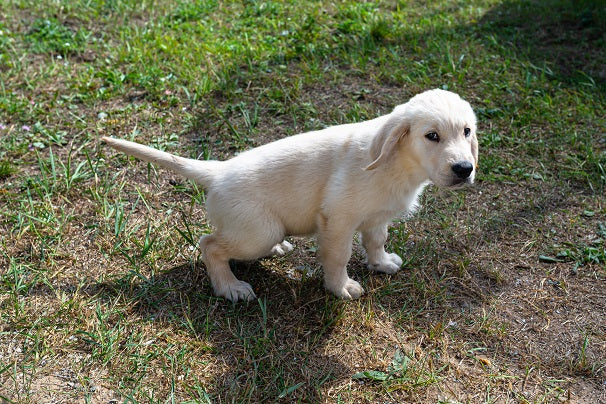
Limit activities in the area after seeding. Do not let kids and pets play. You should also avoid walking, mowing, and other activities.
Control Weeds
Wherever you see weeds, just pull them out of the ground. They block sunlight and steal water and nutrients. You can also spot treat them.
Use a Lawn Roller
A lawn roller helps in improving the soil-to-seed contact. Use it after seeding to push the seeds a bit into the soil. Just make sure to use a light water-filled roller. Excess weight compacts the soil and pushes seeds too deep.
Top Dress the Soil
Top dressing on the soil protects seeds. They keep the area moist for a long time and do not let the seeds dry out. Secondly, they prevent washouts due to rain and watering and stop birds from eating the seeds.

Regular Mowing: The Secret to a Healthy Lawn
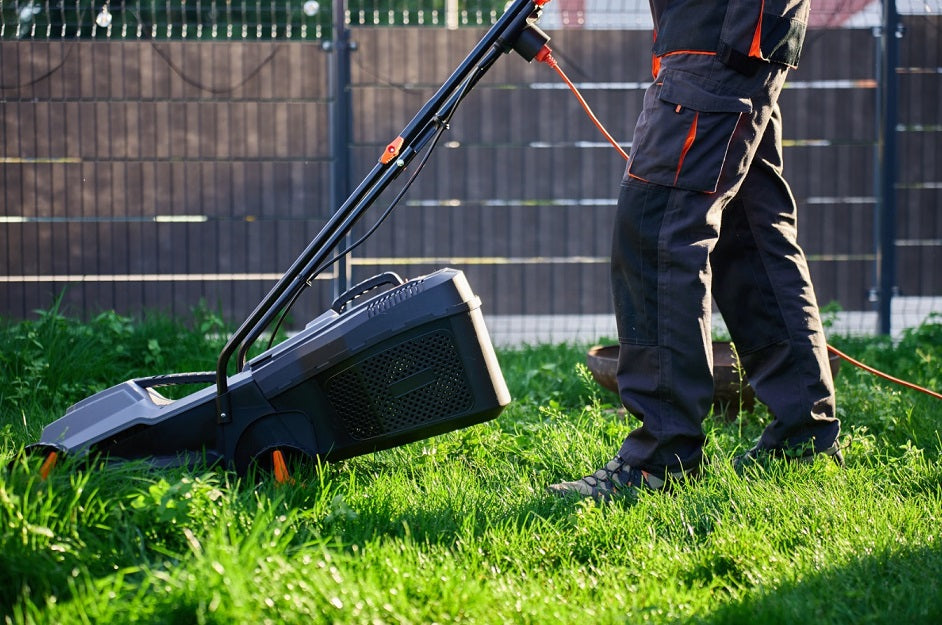
Planting and germinating seeds is easy, but maintaining grass is the biggest issue. Without regular mowing, the lawn overgrows. Not only does it steal the aesthetic appeal, but it also ruins the health of the lawn.
If you do not take care of your lawn after seeding and once the grass grows, you will eventually have to reseed the lawn. That's because the grass will fail and reach a condition where it cannot be revived.
Robotic lawn mowers address this issue and allow lawn owners to automate mowing. Without even lifting a finger, it's possible to maintain the grass at the perfect height year-round. It saves your weekends and keeps the lawn ready for visitors.
The Navimow i2 AWD Series—Up to 0.25 Acres
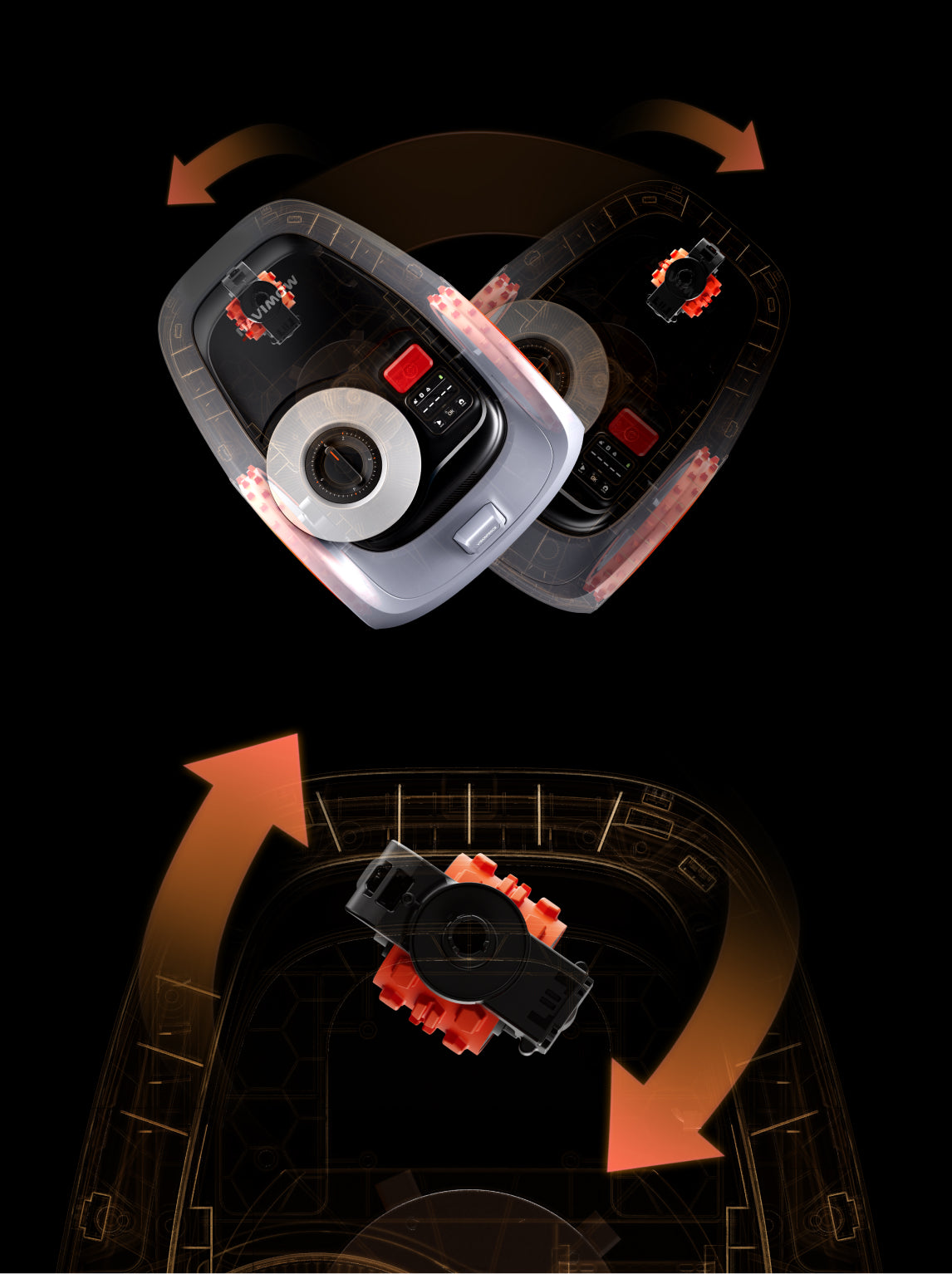
The Navimow i2 AWD series is suitable for small-to-medium residential lawns. It works on difficult terrain with All-Wheel Drive (AWD) and mows on slopes up to 45% (24 °). It features Xero-Turn™, which allows the mower to make a quick 180⁰ turn without harming the lawn.
It mows safely, even if there are animals and kids around. It detects 150+ obstacles instantly and maintains a safety buffer. With NRTK, it navigates your lawn precisely without the need for wires or antennas.

The Navimow H2 Series—Up to 0.5 Acres
The Navimow H2 series is made for complex lawns. It has an AI triple fusion system that combines high-res solid-state LiDAR, Network RTK, and vision for absolute precision, regardless of how many obstacles are on the lawn. You just need to drop the mower, and it automatically creates a 3D map of the area to mow every corner and edge.
It works on slopes up to 45% (24⁰). With Terrain Adapt technology, it analyzes the lawn, divides it into optimized zones, and plans the ideal route, even on slopes. Its VisionFence™ detects 200+ obstacles with 0.4-inch detection accuracy. It identifies over 20 animal types, and slows down from 3.3 ft away. Its noise level is only 60 dB(A), which means it won't disturb your neighbors and family members.

The Navimow X4—Up to 1.5 Acres
For large lawns, the best option is the Navimow X4 series. It conquers difficult terrain, including pitted surfaces, waterlogged lawns, gravel paths, and steep slopes up to 84% (40°). It is equipped with All-Wheel Drive (AWD), dual suspensions, and a patented Traction Control System (TCS) to work on any lawn and terrain. Its powerful motors cut thick, long, and dense grass without any hassle.
It features Xero-Turn™, which means it can turn 180⁰ in its place and mow tight and narrow areas. With EdgeSense™, it precisely cuts edges along fences, walls, and boundaries. It has AI-Powered 360° VisionFence™ and Animal Protection, which detects 200+ obstacles and mows safely. The best part is its navigation system, which combines Tri-frequency Network RTK, 360⁰ VSLAM, and VIO (Visual Inertial Odometry) to mow large lawns with precision.

FAQs
How do I speed up grass seed germination?
You can speed up the grass seed germination by pre-germination (soaking seeds in water), keeping soil moist, improving soil-to-seed contact, adding starter fertilizer, and putting on top dressing. All these efforts improve germination speed.
Why is my grass seed not germinating?
For germination, the seeds should have proper contact with the soil, enough moisture, and appropriate soil temperature. Without these, the seed won't grow. Often, seeds die and do not germinate when you forget to water them. Even a single dry spell kills grass seeds.
How long after planting grass seed will you see grass?
Grass seeds take 3-30 days to germinate, depending on the grass variety. If the conditions are favorable, the seeds grow quickly.
Do I need to cover grass seed?
It's better to cover grass seeds to retain moisture longer, protect them from birds, and prevent washout because of watering and rain. It serves as a protective layer; just make sure to do it properly.
What triggers grass seed to germinate?
The first trigger is the moisture as seeds soak up water to become active. Secondly, they need adequate soil temperature to start sprouting. Along with these, other triggers include oxygen, sunlight, and nutrients (Phosphorus) that are essential for germination.