To make your grass greener within 24–72 hours, apply chelated iron or water the lawn deeply with 0.5 to 1 inch of water. For a long-term green-up solution, adjust the soil pH, correct nutrient deficiencies, water properly, mow high, and keep your lawn aerated and pest-free.
This comprehensive guide will help you make your lawn green. We will share quick and long-term solutions, along with the exact steps you need to follow. By the end of this article, you will have a complete idea of how to make your grass greener.
Quick Lawn Check: Why Is Your Grass Yellow?
Before making any decision or taking a step, inspect your lawn for a minute or two to understand the probable cause.
Footprint Test: Walk on your lawn and look back at the grass. If the footprints are visible for more than a minute and the grass does not bounce back, it means the lawn needs water. You might also notice a dull blue-gray color on the blades.
Tug Test: Grab a handful of yellow turf and gently pull upward. If the grass comes out easily with almost no roots, it means there are grubs and chinch bugs beneath the soil.
Check Blade Tips: Look at the grass blades carefully. If the top part of the grass is tan and shredded and the bottom is green, it means the mower’s blade is dull.
Check Yellowing Pattern: Observe the yellowing pattern in the lawn. If the whole yard is yellow, the reason could be low nitrogen, iron deficiency, or an imbalanced soil pH. But if there are circular yellow rings with spotted blades, it’s a clear sign of fungal disease.
Dormant or Dead: Warm-season grasses turn tan in the fall and wake up late in the spring. Cool-season grasses turn straw-colored during the summer heatwave. So, if your grass is yellow or tan, it might be dormant. If you try to pull some grass blades with your hand, it will resist if it’s not dead.
|
Scenario/Condition |
Probable Cause |
|
Dull blue-gray blades and footprints stay flat |
Dehydration / drought stress |
|
Uniform pale yellow-green color and slow growth |
Low nitrogen, iron, or off-balance soil pH |
|
Frayed, brownish tips 24–48 hours after mowing |
Dull mower blade or cutting too short |
|
Turf comes out easily without resisting and no roots |
White grubs or root-feeding pests |
|
Circular rings, spots, or cobweb-like fuzz |
Fungal lawn disease |
How to Green Up Grass Fast?
If you want to green up your lawn fast for a party or event, or for any other reason, try one of the following quick fixes.
It will make your lawn green for a short period, but it will turn back to its unwanted color because of an underlying condition you haven’t addressed.
1) Spray Chelated Iron
Results in: 24 to 72 Hours
Color lasts: 3 to 5 weeks
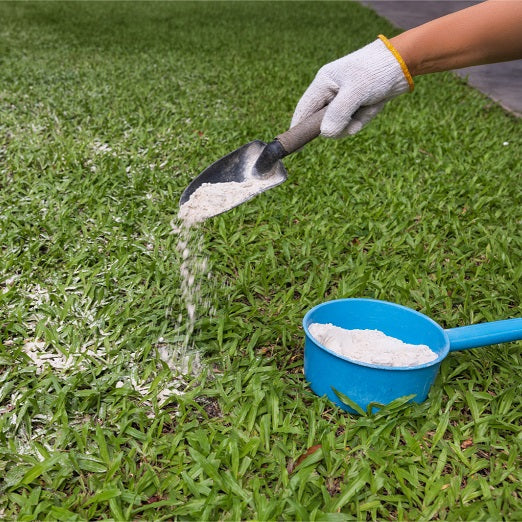
Chelated iron offers the quickest green-up, and it’s also a safe option. The iron turns pale grass to deep green without forcing top growth. Once you spray it, it’s absorbed directly through the grass blades. That’s the reason it shows quick results.
You only need to use a hose-end sprayer or pump to spray it on the lawn. Do it early in the morning when the temperature is below 85°F. It will make your lawn green again within a day or two.

2) Apply Quick-Release Nitrogen Fertilizer with Iron
Results in: 5 to 10 days
Color lasts: 4 to 6 weeks
Sometimes, your grass is actively growing, but it’s not green enough. It could happen in spring or fall, especially when your grass wakes up from dormancy. In this case, use a quick-release nitrogen fertilizer with added iron. It not only makes your lawn greener but also feeds it. It will improve grass density within a week or two.
Never apply quick-release nitrogen fertilizer in summer. Make sure the temperature is below 85°F. Otherwise, it will cause fertilizer burn.
After applying the fertilizer, water the lawn properly. It’s essential because granular fertilizer dissolves in water to reach the roots.

3) Deep Water in the Morning
Results in: 24 to 48 hours
Color lasts: 5 to 7 days (until next watering session)
When you don’t water your grass enough, it changes its color. The blades curl inward and have a visible blue-gray or straw tint. It needs nothing but water.
Just water your lawn in the morning between 5:00 am and 9:00 am. Water deeply about 0.5 to 1 inch in a single session.
It will rehydrate the roots. The evaporation rate is slower in the morning, so the grass has enough time to absorb water. You will see a color difference in a few days.
4) Use Biodegradable Turf Paint
Results in: 1 to 2 hours
Color lasts: 2 to 3 months
This method is for lawn owners who can’t water their lawns because of a state ban on heavy watering. It also works if your warm-season grass is dormant, but you still need green color. In such cases, fertilizer won’t work, as it needs actively growing grass and proper watering.
You can go with non-toxic and eco-friendly turf pigments. They coat the grass with a natural-looking green color. It even lasts during rain.
You just need to apply it evenly on the lawn and let it dry. After that, you will have the perfect green color. But it’s not a treatment or a perfect solution for green-up. It’s only suitable when you have no other choice to turn your lawn green.
Long-Term Steps to Keep Your Grass Naturally Green
We have seen quick fixes to turn grass green, but the color fades after a while. For long-term green color, you need to address the underlying issues in your lawn. Once you fix the actual problem, your grass stays healthy, lush, and green.
Follow these steps to identify the root cause and any existing lawn issues, then act accordingly.
Step 1: Identify the Grass Type and Climate Zone
Start by identifying the right grass type.
Cool-season grasses are common in the Northern US and Transition zones. You could have Kentucky bluegrass, tall fescue, fine fescue, perennial ryegrass, etc.
If you live in the Northeast, Midwest, or Pacific Northwest, you will most probably have one of these. They turn green faster in the spring and stay green longer in the fall, but they lose their color in summer, during the heatwave.

Warm-season grasses are found in the Southern US and Transition zones. Common varieties are bermudagrass, zoysiagrass, St. Augustinegrass, bahiagrass, and centipedegrass.
They are found in the Southeast, Gulf Coast, and Southwest. They wake up late in the spring, but they remain green and grow aggressively in summer. They go dormant and turn tan or straw-brown when the temperature falls below 55°F in fall.

Step 2: Test the Soil
To understand what your lawn needs and identify the real problem, you need a soil test. It helps you figure out whether your lawn is dealing with nutrient deficiency or unbalanced pH levels. You can use DIY test kits, but lab testing is the best option.
The lab report shows the nutrient levels in the soil. You can tell what's deficient. It also shows the pH level. The best part is that it explains how to improve soil conditions if something is wrong.
Imbalanced pH
The lawn soil should have a pH between 6.0 and 7.0. For centipedegrass and bahiagrass, it can be 5.5–6.0.
If the pH is higher or lower than the optimal range, the soil binds essential nutrients to its particles. So, even if there are enough nutrients, the grass cannot absorb them.
If the pH is below 6.0, you can use palletized agricultural lime in fall or spring. But if it’s above 7.0, apply elemental sulfur and top-dress with organic compost. These changes will bring the pH to its optimal range within 2 to 3 months.

Step 3: Apply the Correct Fertilizer
If you have received the lab report, apply the recommended fertilizer. It will make up for any deficiencies.
Usually, you can safely apply slow-release nitrogen fertilizer with added iron. Look for polymer- or sulfur-coated fertilizers that slowly release nitrogen into the soil. The best time to feed cool-season lawns is fall. If you have warm-season grasses, you can feed them in late spring and mid-summer. For more details, check out Lawn Fertilizer Schedule for the US.
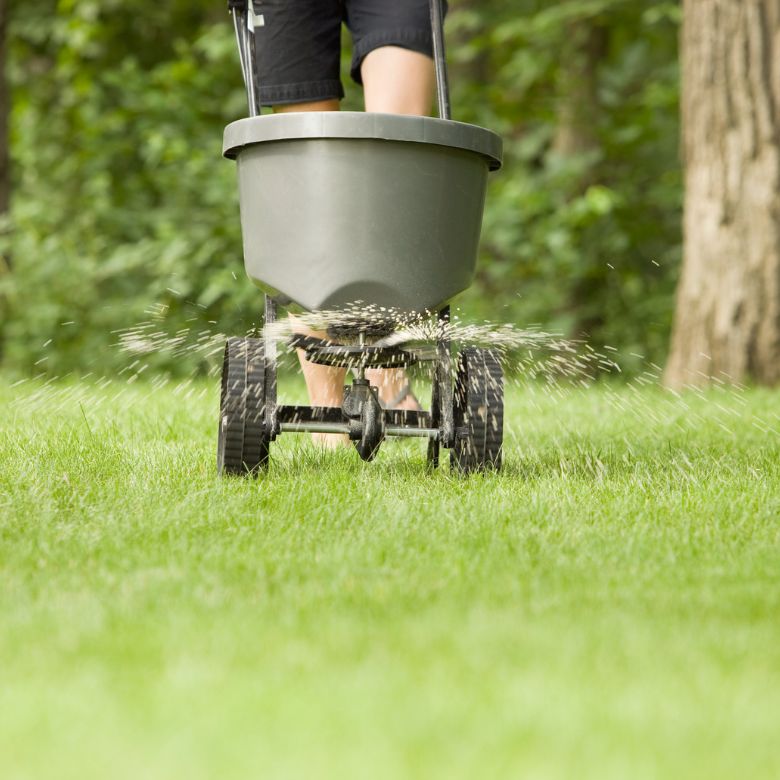
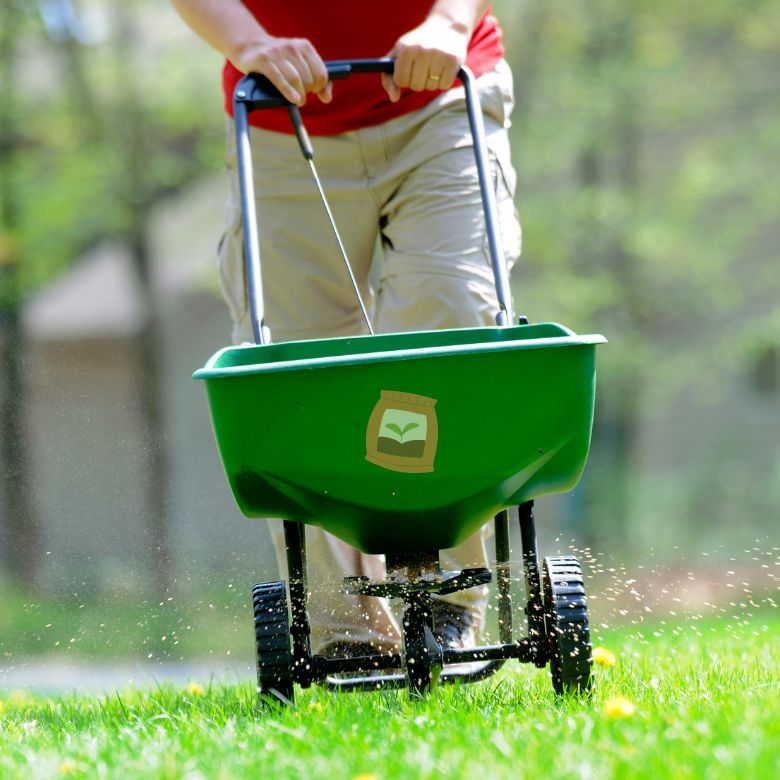
Use a spreader to apply fertilizer evenly across the lawn. It’s recommended to apply in a criss-cross pattern. Fill the spreader with half of the recommended amount and go north-south. Then, apply the remaining fertilizer east-west.
Step 4: Water Deeply
This is an important but often overlooked step. Rather than watering your lawn frequently, water it deeply once or twice a week.
Most US lawns require 1 to 1.5 inches of water per week. You can split that into two deep watering sessions. It improves root growth and makes your lawn greener.
Water the lawn in the early morning. 5:00 am to 9:00 am is the perfect time. Do not water late at night, as it keeps the grass wet for a long period and invites fungal diseases.
If you are not sure how much to water the lawn or how to calculate sprinkler output, check out How Long to Water Grass.

Step 5: Mow High
Regular mowing keeps your grass healthy and green. Keep the grass height within the recommended range.
For a better green appearance, mow your grass high. Do not scalp the lawn or cut more than one-third of the grass at once. Taller grass blades contain more chlorophyll surface area, so they look greener.
Every grass type has an optimal mowing height. Check the following chart to know the best mowing height for your lawn.
|
Grass Type |
Recommended Height Range |
|
Tall Fescue |
3.0 – 4.0 inches |
|
Kentucky Bluegrass |
2.5 – 3.5 inches |
|
Perennial Ryegrass |
2.0 – 3.0 inches |
|
Fine Fescue |
2.5 – 3.5 inches |
|
St. Augustine |
2.5 – 4.0 inches |
|
Zoysia |
1.0 – 2.5 inches |
|
Bermuda |
0.5 – 2.0 inches |
|
Centipede |
1.0 – 2.0 inches |
Another thing to consider is the blade sharpness. Mow with a sharp blade, as it slices grass tips cleanly. Dull blades tear and rip the grass and make it vulnerable to fungal diseases.
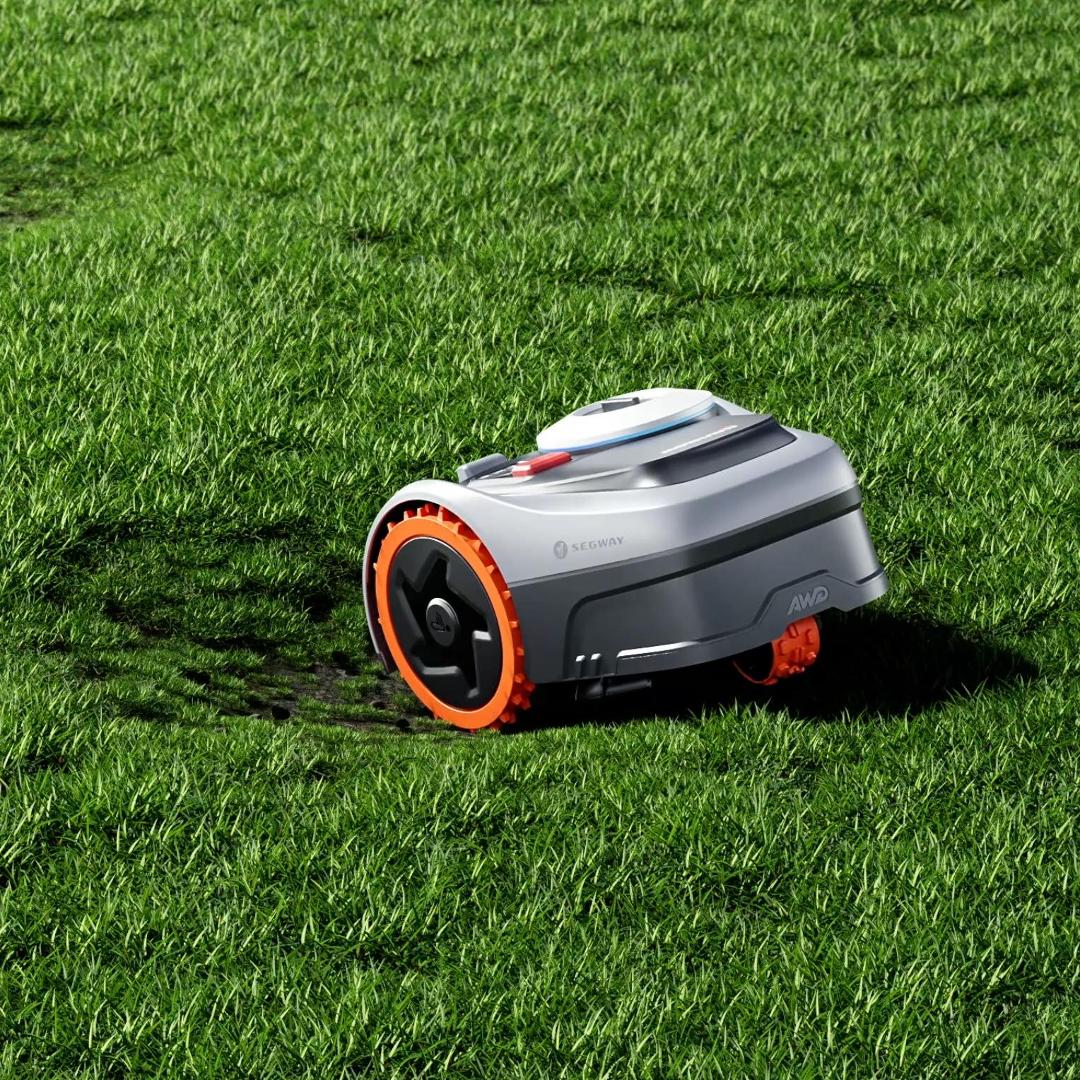
It’s difficult for most lawn owners to keep their lawn maintained. Irregular mowing schedules affect grass health. The best way is to have a robot lawn mower. You need to schedule the mowing time, and it cuts your lawn precisely. It won’t let it overgrow and produces fine clippings that provide free nitrogen to your lawn.

Step 6: Aerate, Dethatch, and Overseed
Aeration
Over time, the lawn gets compacted because of the foot traffic, mower’s weight, and other activities. Therefore, the lawn struggles to breathe and absorb water and nutrients and loses its green color.
You can check compaction by pushing a screwdriver into the soil. If it glides easily in the soil, it means the soil is fine. But if you have to exert too much force to push the screwdriver 2-3 inches, the soil is compacted.
Lawn aeration helps in reversing soil compaction. Use a core aerator to remove soil plugs from the lawn. You should do it once a year. Aerate cool-season lawns in early fall and warm-season lawns in late spring or early summer.

Dethatching
Inspect the lawn’s thatch layer. It’s the layer of dead organic matter above the soil. If it’s too thick, it blocks nutrients from reaching grass roots and turns your grass pale.
If it’s more than 0.5 inches, you should dethatch the lawn. Use a dethatching rake or power rake before aerating. For more details, check out lawn dethatching.
Overseeding
After lawn aeration and dethatching, it’s the perfect time to overseed the area. This increases grass density and makes your lawn greener.
Spread grass seeds according to the existing variety. Lightly rake after spreading. Water new seeds properly. It’s necessary to keep the topsoil moist for germination. Check out How to Overseed Lawn.
Step 7: Prevent Weeds, Grubs, and Fungal Diseases
Weeds steal nutrients from your grass, grubs eat the roots needed to absorb nutrients & water, and fungal diseases destroy grass blades that produce chlorophyll.
In all these cases, your lawn suffers and loses its natural green color. That’s why you have to deal with them for long-term green-up.
Apply a pre-emergent herbicide in early spring. Do it when the temperature is about 55°F. It won’t let weeds grow. If weeds have already grown, spot-treat them. We have a detailed guide on How to Get Rid of Weeds.
If you did a tug test earlier and found out there are grubs or chinch bugs in the lawn, apply a targeted pest control treatment first. Do not apply any fertilizer at this stage. Get rid of these pests and let the grass roots regrow. After that, you can apply an appropriate fertilizer if needed.

Common Mistakes That Keep Grass Yellow
Avoid these mistakes if you want to keep your lawn green.
Over-fertilizing: If you add excess fertilizer to the lawn, it will absorb the moisture from grass leaves and turn them yellow. Apply according to the label on the bag or lab recommendation.
Scalping: Do not mow your lawn too low. If you go under the recommended grass height, you will remove the grass leaves and expose the stems. It will dry up the lawn faster, and the grass will strive for water.
Late Watering: Do not water at night. The evaporation rate is quite low, so the grass will stay wet for too long. This can affect grass color and invite fungal diseases.
Using Weed & Feed in Heat Wave: Applying fertilizer during high temperatures causes fertilizer burn. If the daytime temperature is over 85°F, do not fertilize. Wait for the right time.
Fertilizing in Dormancy: Dormant grass does not absorb fertilizer. If you apply fertilizer, it will be consumed by weeds and stress the grass.
FAQs
What helps grass turn green fast?
For a quick green-up, use chelated iron spray. It acts as a catalyst and speeds chlorophyll production. It will turn grass green within 24 to 72 hours.
How can I make the grass grow greener?
Your lawn should have a balanced soil pH level and no nutrient deficiency. Ensure the soil is not compacted and is not dealing with pests. After that, apply a slow-release nitrogen fertilizer with iron and water deeply about 1 to 1.5 inches of water every week in two sessions. While mowing, keep the recommended height of the grass and leave fine clippings for free nitrogen.
Why is my grass still yellow even though I water and fertilize it?
In most cases, the soil has imbalanced pH levels, so it cannot absorb nutrients. Also, check for soil compaction and pests. Submit a soil sample for testing, then apply the recommended fertilizer and act as advised.
Is there a spray to make your grass greener?
Liquid iron spray makes your grass greener. It’s absorbed by the grass leaves and shows results within 24 to 72 hours. But if you have a dormant or drought-stressed lawn that requires green-up, use a biodegradable turf colorant. It will make the grass greener within a couple of hours.