Your dog doesn't stop you from having a lush, green, and healthy lawn shining in the neighborhood. It's the wrong choice of grass that leads to a damaged, muddy, and unhealthy lawn that requires constant and expensive repairs.
As a dog parent and a lawn owner, you have to pick the right grass for your lawn that can bear heavy foot & paw traffic and dog activities in the lawn. Otherwise, your lawn will suffer from frequent wear, bare patches all around, and a lot of mess.
This guide will explain how to select the best grass for dogs. We will share some excellent grass varieties for dog owners and explain why they are better than others. We will also unveil how lawn owners can maintain their lawns and enjoy them along with their dogs.
How to Select the Best Grass for Dogs?
While selecting the best grass for dogs, lawn owners need to pay special attention to these important factors.
Climate
The first thing you need to consider is the climate. Depending on the region you live in, you have to select either a warm-season or cool-season grass.

Cool-season grasses are meant for cool Northern regions where the temperature is between 15⁰C (60⁰F) and 24⁰C (75⁰F). They cannot handle high temperatures.
Warm-season grasses thrive in higher temperatures for Southern regions where the temperature is 27⁰C (80⁰F) to 35⁰C (95⁰F).

Figure out which type of grass can thrive in your lawn and then consider other factors.
Further reading: Cool-season vs Warm-season Grass
Growth Habit
Growth habits decide whether your grass can recover on its own. Some grasses can repair themselves, while some can't.
Grasses that have both or either one of the above-ground and below-ground runners are capable of self-repairing. The above-ground runners go above the soil and grow roots downward in patches, while the below-ground runners run underground and pop up in other spots.
Suppose your dog digs a hole in the lawn. These grasses will automatically grow back and cover the area. They are mostly warm-season grasses.
Some grasses grow in bunches. They do not spread to other locations. If any of them are dead, you have to do overseeding to grow a new bunch. They do not heal on their own. But they can germinate quickly and grow faster in the form of bunches. Most cool-season grasses belong to this category.
It's good to have grass that can heal itself, but it's not mandatory.
Foot Tolerance
This is the most important factor to consider. At the end of the day, your lawn has to bear the paw traffic of dogs. If the grass can't tolerate that, it won't survive.
Some grasses can't handle high foot traffic, while some can bear a lot of wear and tear. For dogs, you must opt for a high-tolerance grass. You have to ensure the grass can bear high traffic before its blades break and the area becomes thin.
Urine Tolerance
Dog owners often notice yellow patches in their lawn. It's because of the dog's urine. It contains a high amount of nitrogen, which burns the grass and changes its color.
The affected area with dog urine is like a circle. The middle portion is extremely yellow, and it lightens as the circle goes outward. Keep in mind that not every time a yellow patch means dog urine, check out Why is my grass turning yellow?.
You should opt for a grass variety that can handle urine a bit more than others. For instance, the deep-rooted grasses are less affected as their roots remain away from the surface salts in the lawn.

Shade
If your lawn receives less than eight hours of sunlight every day, you need to pick a shade-tolerant grass, which should be suitable for dogs.
Common grasses require 6-8 hours of sunlight, while shade-tolerant grasses can survive in 4-6 hours of sunlight. They can also make their food from dappled light.
Grass Texture
For the optimal comfort of your dog in the grass, pick a variety with a fine texture. Their sensitive paws will feel relaxed in the lawn, and they will love to play more.
Some grasses have thick and coarse blades. They can hurt a dog's sensitive paws during frequent and high-speed play.
Maintenance Requirements
Each grass variety has a distinct requirement for care and maintenance. If you have a busy and tight schedule, you should opt for a low-maintenance grass. It will require less mowing, watering, fertilizer, etc.
On the other hand, some grass varieties need too much care to thrive, and often, they give a hard time to dog owners.
For choosing the best grass for dogs, you should consider mowing, dethatching, fertilization, watering, overseeding, and other maintenance requirements of the grass.

Best Cool-season Grasses for Dogs
Tall Fescue
If you live in a cool region or transition zone, tall fescue could be the perfect choice. You don't need to worry about pets or kids playing on the lawn.
Not only does the grass handle high foot/paw traffic, but it also handles drought and shade to a moderate level. You can opt for this grass if your lawn receives 4-6 hours of sunlight.
The notable feature of tall fescue is its urine tolerance. It has an incredibly deep root system, so it can collect water and nutrients from depth and has minimal effect from dog urine. It processes urine deep into the soil and prevents yellowing.
It has a little coarse, wide, and dense blades. It grows in bunches and becomes quite thick. All these features make it a durable grass that can handle pet activities. It's perfect for the playful activities of medium to small dog breeds. Secondly, it is a bit hard for a dog to tear it out and dig in the ground.

Before planting tall fescue, you should know that it's not a self-healing grass. If any bunch dies, it won't regrow on its own. You have to overseed the area manually. But the good part is that it can grow quickly after overseeding. Check out how to overseed a lawn?
As it is a cool-season grass, it stays green for a longer time in winter. It also requires less frequent fertilizing. You need to mow it more frequently, and since it does not produce excessive thatch, there is less frequent dethatching required.
Keep in mind that tall fescue goes dormant in extreme heat. It starts to struggle, but still stays alive. You just have to take care of watering.
Kentucky Bluegrass
Kentucky Bluegrass is another excellent variety for dogs. It's suitable for cool regions and has an incredible wear tolerance. It can bear high food and paw traffic throughout the year.
Mostly cool-season grasses can't self-repair. However, Kentucky Bluegrass is the only cool-season grass variety that can heal on its own.
It grows through Rhizomes (underground runners), which is the reason if there is any patch or bare area, it will fill it up automatically. You don't need to overseed the lawn. Thus, if your dog digs a hole or damages the grass, you don't have to worry about it.
If your lawn receives too much shade, it's better to avoid this grass. You can look for other options. But it's great if the lawn often suffers from drought. It can go dormant, turn brown, and stay alive in low water. Thus, it's not a drought-resistant grass, but it can survive.

It's a bit of high-maintenance grass. It requires more frequent watering than tall fescue. Because of the shallow root system, it can't take water from deep. Moreover, it grows aggressively and builds more thatch than usual. If your dog pees on thick thatch, the odor will stay longer.
Perennial Ryegrass
Perennial Ryegrass is another dog owner's favorite. It is a tough grass that handles the high foot traffic of your pets. Most importantly, it's one of the most urine-resistant grass varieties. It can handle high nitrogen levels of dog urine to an extent, and when you dilute it on time, it can recover quickly.
It grows in bunches and does not repair on its own. However, it's a fast-growing grass, which means you can see quick germination within a week after seeding. You can repair dead spots in no time.
It has a fine-to-medium leaf blade with a distinct gloss. It makes your lawn more attractive. The best part is that you can mow this grass very low, which gives a golf course look. At the same time, the blades have high levels of vascular fiber, so they will be a bit difficult to mow. You need to sharpen lawn mower blades more often.
Just keep in mind that Perennial Ryegrass is sensitive to heat. It goes dormant early in the summer.
Best Warm-season Grasses for Dogs
Bermuda Grass
Bermuda grass is loved by dog owners, and if you live in the southern region, it could be an excellent choice without any doubt. It's considered the best grass variety for active dogs. It's excellent for large dog breeds and heavy foot/paw traffic. It's usually used for football and soccer fields, so you can contemplate how wear-resistant it is.
It's known for its dual-spreading mechanism. It grows with stolons (above-ground runners) and rhizomes (below-ground runners). Which means not only does it repair itself, but it also does so at a fast rate. Even if the dog rips the grass on top, the underground runners will help it grow within a few days.

It also handles dog pee as it can bear high nitrogen. When a dog pees over it, it utilizes the excess nitrogen as a fertilizer. It turns dark green rather than brown. Thus, there is no bad effect on the lawn's aesthetics.
It has an extremely deep root system, which is the reason it can handle drought well. Even if you stop watering in the scorching heat of summer, it will still be alive, though dormant.
Just make sure your lawn gets 6-8 hours of sunlight every day, as it cannot bear shade. Otherwise, it will thin out quickly and won't survive. It spreads aggressively in the summer, but in the winter, it turns straw-tan way quicker than other grass varieties, and also takes more time to wake up in the spring.
Bermuda's growth rate is extremely fast, which is why you have to mow it more frequently. It won't take long to overgrow if you skip mowing. Lastly, it needs more fertilizer to support its aggressive growth.
Zoysia
Zoysia is a dog-friendly grass that makes your dog feel luxurious with its carpet-like feel. It's extremely dense and feels like walking on an expensive rug. Your dogs would love to enjoy the lawn. It handles high foot traffic. The grass blades bounce back after you walk over them.
Like other warm-season grasses, it also heals itself. It grows through above-ground and underground runners. But it does not grow as aggressively as Bermuda. That's why the recovery is slow.
Its high density also helps in reducing weeds in the lawn. Thus, you will not have to apply chemicals quite often. It survives in drought and shade as well. It has a deep root system that allows the absorption of water and nutrients from depth.

As the grass grows slowly, it requires less frequent mowing. Plus, it requires less watering. However, its high density increases the thatch layer quickly, so you have to dethatch more often.
It's a warm-season grass, so it goes dormant in winter early. And it does not turn green in spring until the temperature is above 65°F.
Centipede Grass
Dog owners like centipede grass because of its low-maintenance requirement. It grows slowly, so you need to mow it less frequently. Secondly, it requires very little nitrogen fertilizer to thrive.
It grows through stolons (above-ground runners), which means it can automatically repair itself. If your dog damages any area, you don't have to do anything. However, the repair is quite slow as it is a slow-growing grass.
Another excellent feature of the grass is that it can thrive in acidic soils where other grasses struggle. If the lawn pH is 5.0 to 6.0, which is lower than the recommended range of 6.0 to 7.0, you can opt for this grass, and it will make your lawn green. Do lawn soil testing before making a decision.
Dogs like the texture of centipede grass. It has medium-to-coarse blades that feel soft under the paws. But it can only handle little to medium paw traffic. It's suitable for small dog breeds and dogs with less activity.
It's also sensitive to dog urine. Naturally, it needs low nitrogen fertilizer, and the high nitrogen content of dog urine can turn the grass yellow quickly. You have to be more careful in this respect and dilute the area as soon as possible.
How Dog Owners Can Maintain Grass?
Scoop Poop Before Mowing
Dog poop is dangerous for your lawn. It's better to scoop it as soon as possible to prevent lawn damage, unpleasant odor, disease spread, and various other issues.
You can't mow over dog poop. It will spread the poop all over your lawn, and the parasites might reach inside your garage along with the mower. Scoop before mowing.
Further reading: Can you mow over dog poop?

Dilute Dog Urine Quickly
Whenever your dog urinates on the lawn, water the area as soon as possible. It will dilute the nitrogen and salts and reduce their effect on the soil.
Even if you have not noticed your dog urinating, it's better to water the favorite spots regularly.
Repair Bare Spots
You have to repair bare spots and damaged areas. If the grass grows in bunches, overseed the area. If it is a self-repairing grass, you can add a balanced fertilizer to boost growth.
Do not leave the area, as it becomes a favorite spot for weed growth.
Improve Soil Structure
If the soil is dealing with excessive thatch over 0.5 inch, you should consider dethatching your lawn.
If the soil is compact, you must do lawn aeration. With the help of a core aerator, you can reverse soil compaction by pulling out plugs from the lawn.
Check out our lawn care calendar to do these at the right time.

Mow Regularly
Mow your lawn regularly and maintain the best height to cut grass according to the grass type. It not only makes your lawn aesthetically pleasing but also improves its overall health.
Always follow the one-third rule for mowing. Never cut more than one-third of the grass blade to prevent stressing your grass. Otherwise, the grass won't be able to recover from the constant stress.
The biggest problem for dog and lawn owners is the busy schedule. It's difficult for them to maintain the optimal grass height and mow the lawn regularly. Often, the lawn overgrows and affects the aesthetics and its own health.
A robotic lawn mower is the perfect solution to keep your turf maintained. Once you set the mowing schedule and desired mowing height, it handles everything on its own. It saves you a lot of time and effort.
It mows your lawn regularly and provides fertilizer to the lawn in the form of microclippings. Thus, your lawn is always ready for pets, kids, and guests. With regular maintenance, your lawns become thicker and greener.
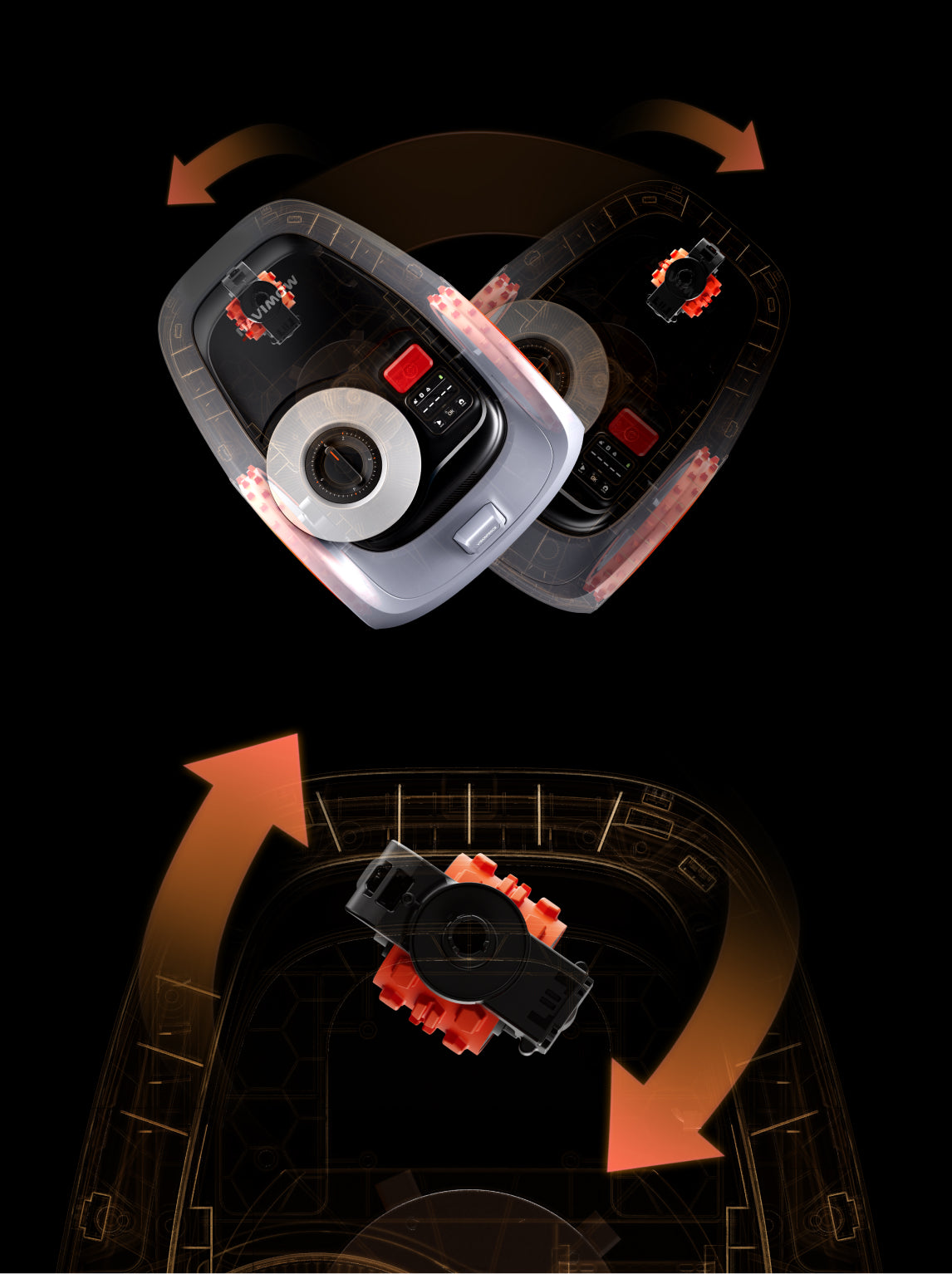
If your lawn is under 0.25 acres, the Navimow i2 AWD series is the best. It's an affordable mower that mows difficult terrains with Xero-Turn™ AWD. It can mow on slopes up to 45% (24⁰) and take 180⁰ quick turns without damaging the lawn. Its VisionFence™ makes it a pet-friendly lawn mower. It can detect 150+ obstacles, reroute within 0.1 seconds, and maintain a safety buffer. Despite being a compact mower, it navigates your lawn with Network RTK to ensure optimal accuracy.

For medium and complex lawns up to 0.5 acres, the Navimow H2 series is exceptional. With high-res solid-state LiDAR, Network RTK, and vision technology, it offers absolute precision and reliability. It mows every corner of your lawn with perfection while avoiding pets, kids, and obstacles. It can detect 200+ obstacles with 0.4-inch detection accuracy. It identifies over 20 animal types, automatically slowing down from 3.3 ft away, maintaining a safe distance.

For large lawns up to 1.5 acres, you can go with the Navimow X4 series. It conquers any terrain with its Xero-Turn™ AWD. It works on uneven surfaces, waterlogged lawns, stone paths, and steep slopes up to 84% (40⁰). It can make a 180⁰ turn in your lawn without damaging the turf, which is why it mows in tight and narrow spaces.
Its dual cutting motors cut thick, dense, and long grass without any hassle. It has AI-Powered 360° VisionFence™ and Animal Protection that detects 200+ obstacles and ensures safe mowing. It navigates your massive lawn precisely with NRTK, 360° Vision, and Visual Inertial Odometry (VIO).

Final Thoughts
Your dogs can also enjoy your lawn along with your kids if you have the right grass. You have to go with a variety that handles paw traffic and stays green despite pet and children's activities. We have explained how you can select the best grass for dogs. Consider those factors and select one of the grass varieties we have shared in this article. Once you select and plant the correct variety, your lawn stays healthy and green with minimal care.